
Understanding the Difference Between Fully Battened and Leech-Battened Mainsails
Choosing the right mainsail configuration is one of the most important decisions a sailor can make. Beyond cloth choice and reefing layout, the batten arrangement plays a major role in how a sail performs, how long it lasts, and how easy it is to live with day to day. One of the most common questions we are asked is a simple one: should I choose a fully battened mainsail or a standard leech-battened main? Both options offer clear advantages, and neither is inherently “better” in all situations. Understanding how they differ and what those differences mean on the water is the key to making the right choice for your boat, sailing style and priorities.
What Do Battens Actually Do?
Battens provide structure to the mainsail by supporting the roach which is the area of sail that sits outside a straight line drawn between the head and clew. Without battens, this area would flap uncontrollably, accelerating cloth breakdown and degrading sail shape.
Beyond simply supporting roach, battens:
- Help the sail hold its designed shape under load
- Reduce flogging during hoists, drops, and reefing
- Improve longevity by limiting repeated hinging of the cloth
- Contribute to smoother airflow and more consistent performance
The difference lies in how far those battens extend into the sail and what loads they carry as a result.
Standard Leech Batten Mainsails
A standard batten mainsail uses short battens that extend in from the leech, typically aligned perpendicular to the leech or, in some cases, parallel to the boom where reef positions dictate. This configuration has formed the backbone of cruising mainsail design for decades.
Benefits
- Lower overall cost
- Reduced compression loads at the mast
- Easier hoisting, reefing, and lowering on boats without advanced luff systems
- Simpler construction and maintenance
For boats with:
- Modest roach
- Conventional backstays
- Smaller mainsails
- Owners who value simplicity
Considerations
Because standard leech battens stop short of the luff, the compression loads they generate are transferred into the sailcloth itself. Over time, this can lead to:
- Leech ‘hinging’ at batten inboard end
- Draft moving aft as the sail ages
- Increased flogging when depowered
These effects do not make a standard batten sail bad, but they do limit how much roach and long-term shape stability can realistically be achieved.
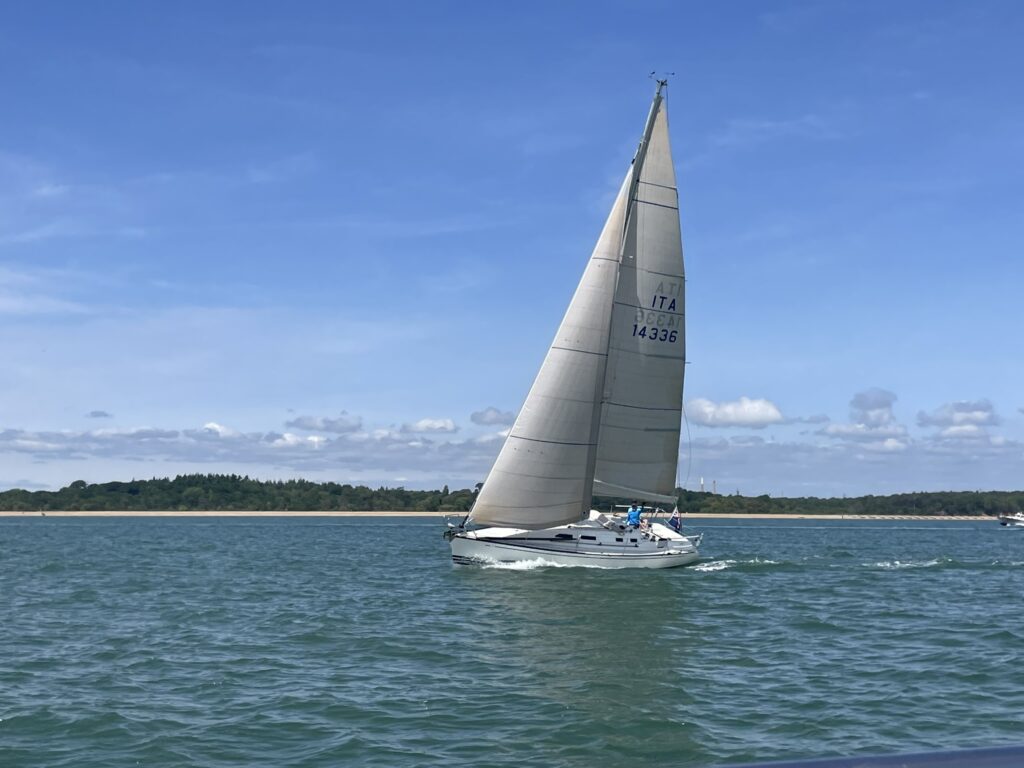
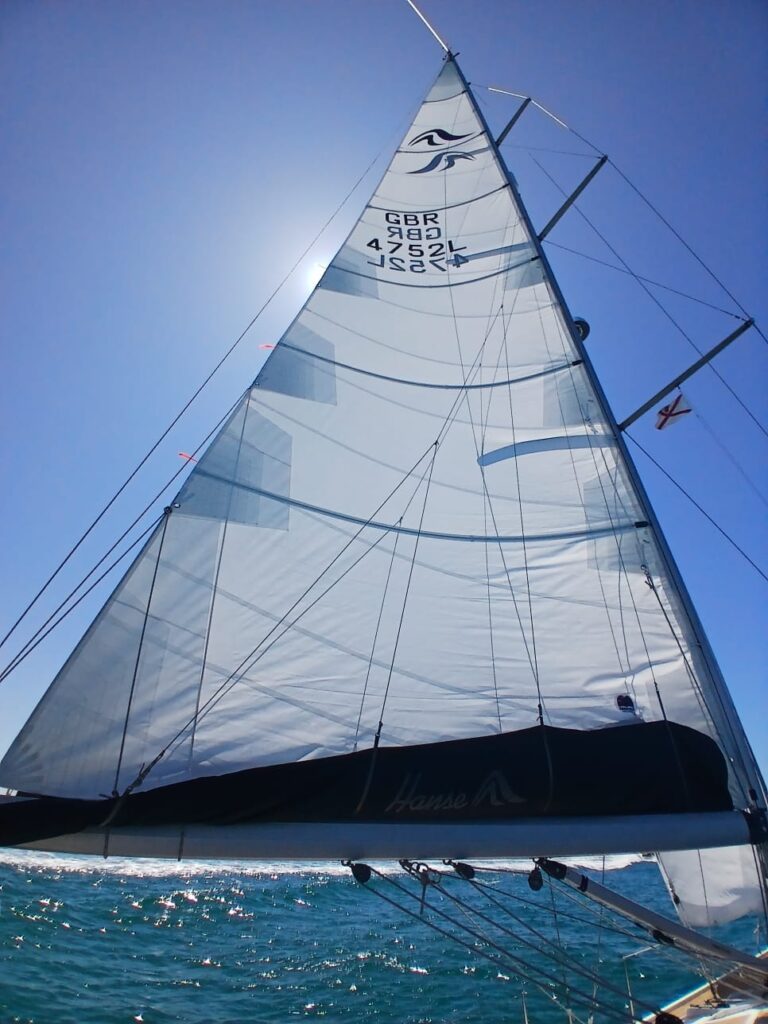
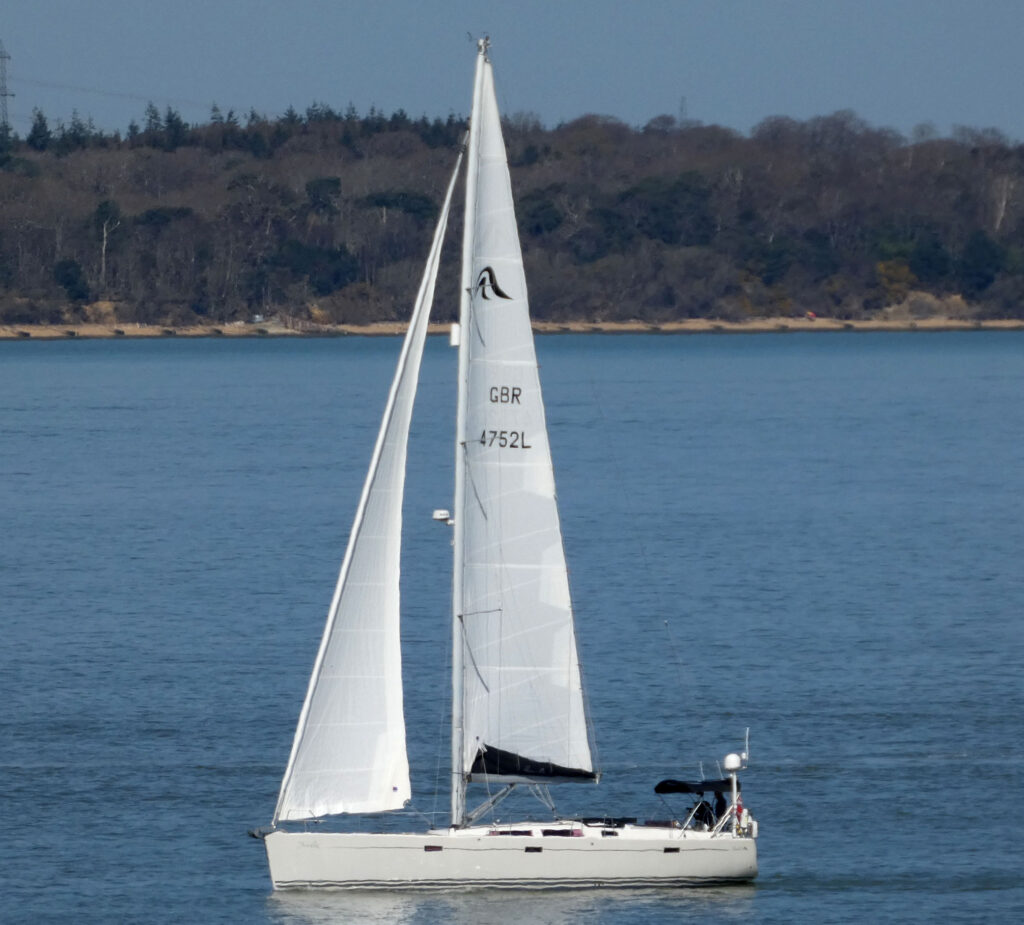
Fully Battened Mainsails
A fully battened mainsail uses battens that run from leech to luff, carrying loads directly into the mast via batten cars or slides rather than into the sailcloth.
Key Advantages
Superior Shape Retention
Full-length battens act as a structural framework, supporting the sail’s designed sail shape and resisting distortion as loads increase. This helps:
- Keep draft forward
- Maintain an open, efficient leech
- Preserve performance as the sail ages
Reduced Flogging & Increased Durability
By stabilising the sail during luffing, reefing, and manoeuvres, full length battens dramatically reduce flogging which is one of the primary causes of sail wear. Less flogging means:
- Longer sail life
- Quieter, calmer handling
- Less stress on seams and fabric
Improved Handling for Short-Handed Sailing
A fully battened mainsail naturally falls into lazy jacks or a stackpack, making controlled, fast drops far easier, which is particularly valuable when sailing short-handed or in rising breeze.
More Roach, More Power (Where Appropriate)
Fully battened mainsails allow additional roach to be supported safely, increasing sail area and efficiency which can be especially useful on:
- Boats with small headsails
- Modern cruising designs
- Rigs without backstays (such as multihulls)
The Trade-Off: Load and Friction
The primary consideration with a fully battened mainsail is compression load at the mast. Full-length battens push forward when the sail is loaded, increasing friction between the sail and mast. Without an appropriate low-friction car or slide system, this can make hoisting, reefing, and lowering more difficult – particularly on larger boats or older mast sections.
Our Advice at Sanders
To truly enjoy the benefits of a fully battened mainsail, the luff system matters.
- Modern ball-bearing or low-friction systems transform handling
- Some older mast sections may need upgrading
- External low-friction track systems can make fully battened mainsails viable on boats where they otherwise wouldn’t be, with solutions such as those offered by Tides Marine.
This is why we always consider the sail and the mast as a system, not in isolation.
Batten Design Matters Too
Not all battens behave the same. Well-designed battens are:
- Matched to the sail’s intended shape
- Appropriately stiff aft and more flexible forward
- Tuned to support the sail’s draft position rather than fight it
Poorly specified battens can unintentionally force shape aft or create excess compression. Getting this balance right is a key part of how we design cruising mainsails at Sanders.
A Balanced Option: Hybrid Batten Layouts
For many cruisers, the ideal solution sits between the two extremes. Using full length battens in the upper sections of the sail, where roach and loads are greatest and shorter leech battens lower down can:
- Protect the most vulnerable areas from flogging
- Improve long-term shape retention
- Reduce cost and luff friction
- Maintain easier handling
This approach is particularly effective on moderate-roach cruising mainsails.
Which Should You Choose?
There is no universal answer: only the right solution for your boat and sailing.
A fully battened mainsail may be ideal if you:
- Sail short-handed
- Value easy drops and tidy flaking
- Want maximum shape longevity
- Are fitting or upgrading a low-friction luff system
A standard leech batten mainsail may suit you better if you:
- Prefer simplicity and lower cost
- Have a smaller sail or conservative roach
- Are working with limited mast hardware options
The Sanders Approach
At Sanders Sails, we don’t believe in ‘one-size-fits-all’ solutions. Every cruising mainsail is designed by considering:
- Your rig geometry
- Your handling priorities
- Your mast hardware
- How and where you sail
Our role is to help you choose a sail that not only performs well when new, but continues to work beautifully for years to come. If you’re considering a new mainsail or upgrading your existing setup, we are always happy to talk through the options.