
Sailing has an extraordinary ability to challenge us. To take us outside our comfort zone, demand resilience and teamwork, and show us what we are capable of. Few organisations understand the power of that better than CatZero. For our latest Meet the Sailors, I was delighted to sit down with Danny Watson, co-founder and CEO of CatZero — an organisation that has taken the lessons and challenges of life at sea and used them to make a very real difference to people’s lives.
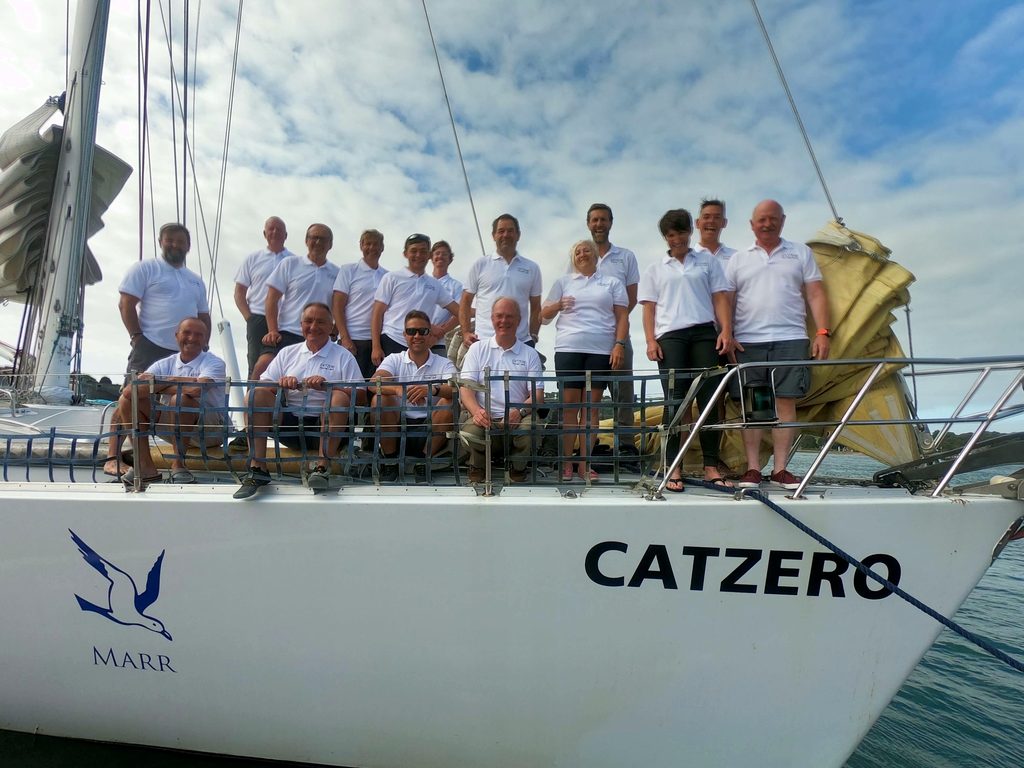
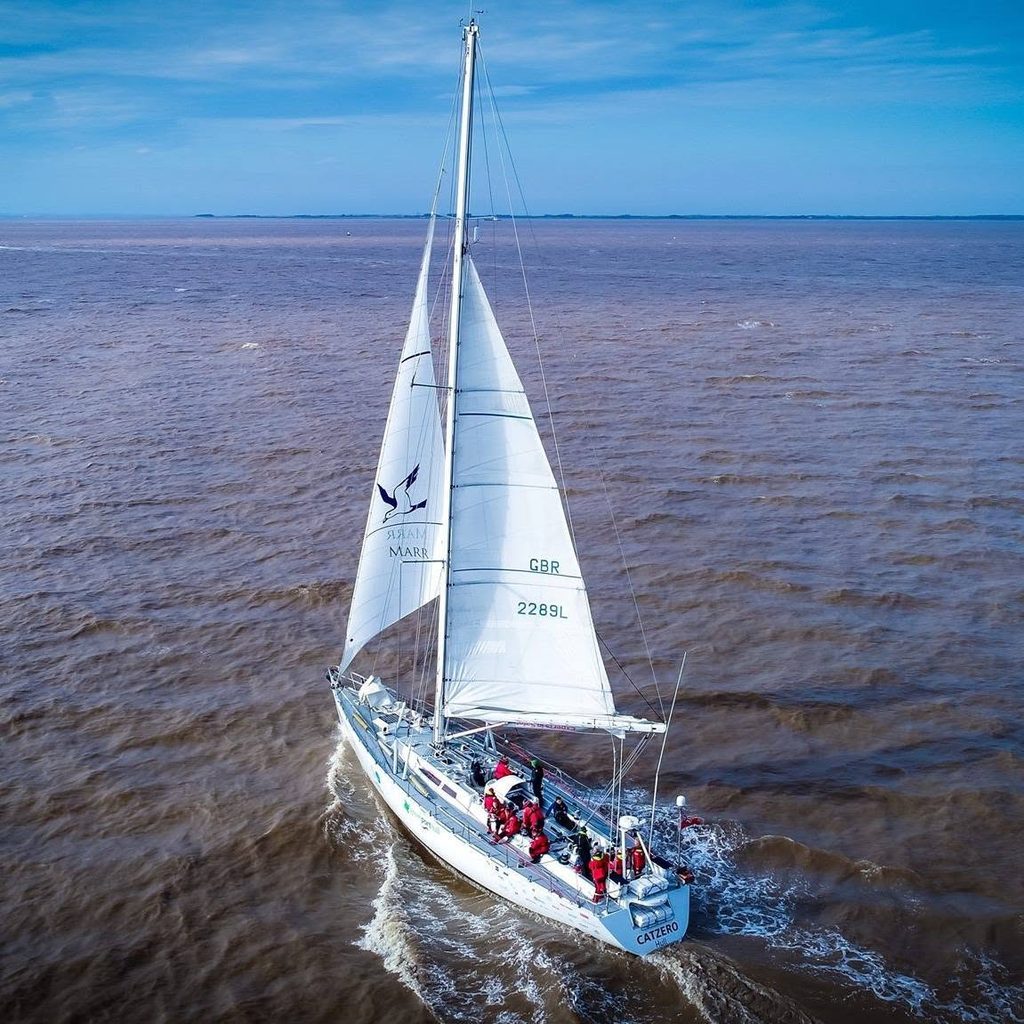
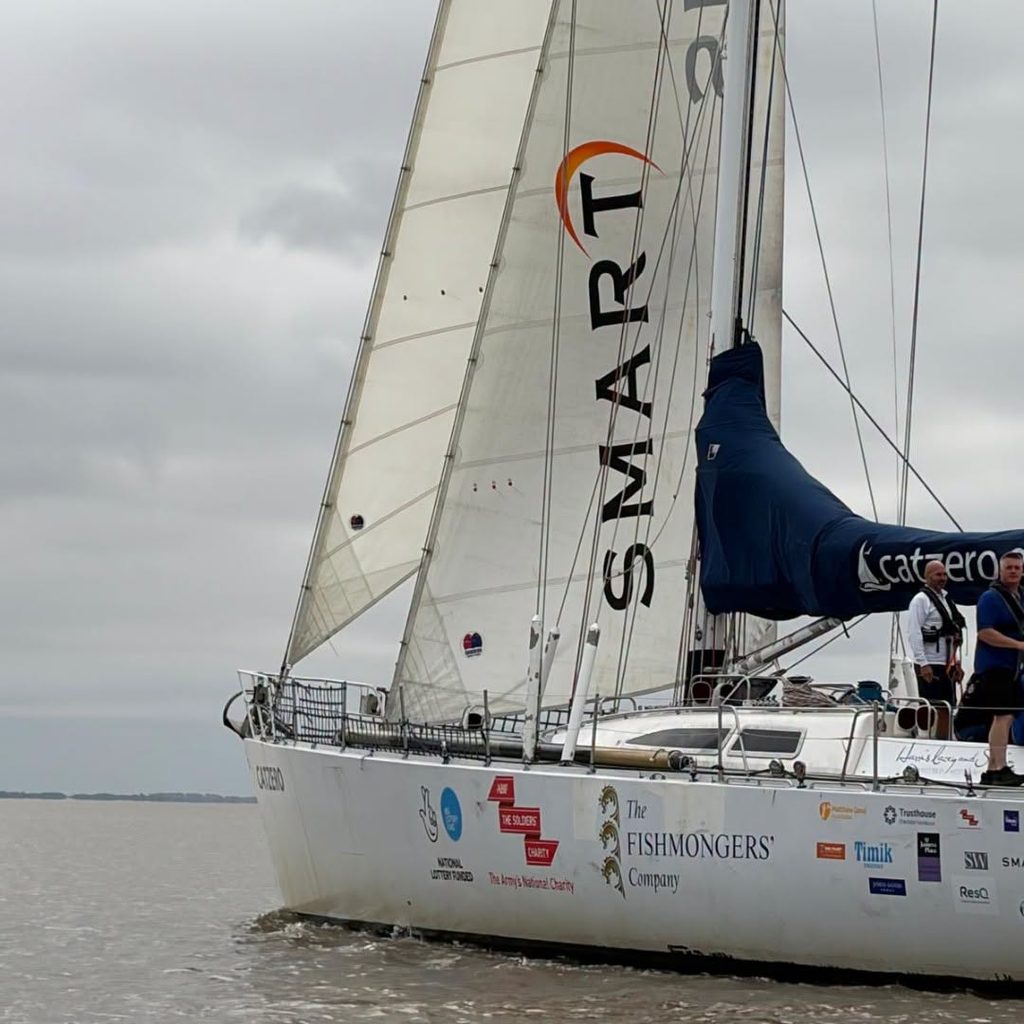
From an idea born during a round-the-world yacht race to an organisation now helping people build confidence, resilience and new opportunities, CatZero has a remarkable story to tell. There is also a very special connection between CatZero and Sanders Sails. At the heart of their work is an imposing 72-foot Challenge yacht, sailed hard throughout the year and trusted with something considerably more important than simply winning races. We are enormously proud that Sanders Sails form part of the equipment Danny and his team rely upon to do that work. But behind the yacht, the voyages and the miles sailed is a much bigger story about people, opportunity and the extraordinary things that can happen when someone is given the chance to discover what they are truly capable of. I couldn’t wait to hear more. Danny, let’s start at the beginning…
CatZero’s origin story is powerful – a conversation mid-ocean during the Clipper Round the World race that turned into a real organisation back home. When you look back, what was the specific realisation you had at sea that made you think: “We have to build this”? And what did you learn from those first young people on the programme that still shapes how you lead today?
The catalyst for CatZero actually came during the Clipper Round the World Race. On the Hull and Humber Clipper, we had 10 young people involved in the race, with one or two young people joining us on each leg. They were getting an extraordinary opportunity – to sail across oceans, experience something completely different and, perhaps most importantly, discover that they were capable of much more than they thought.
It was on the second leg, sailing from Brazil towards South Africa through the Roaring Forties, that I was talking with Jim Dick, who would later become CatZero’s Chairman. I remember asking a very simple question: “This is great for these 10 young people, but how do we take this to a much wider audience?”
That was really the moment the idea for CatZero was born. We could see the transformational effect that challenge, responsibility, teamwork and being part of something bigger could have on young people. But we also recognised that it couldn’t just be an amazing experience for a handful of individuals. We needed to find a way of taking those principles and creating something that could reach people back home in Hull and across the Humber. When we returned, that conversation became a commitment, and CatZero grew from that original idea into an organisation focused on creating lasting personal change through challenge, sailing and personal development.
CatZero’s approach isn’t “a sailing trip”; it’s personal development first, with the sail as the culminating challenge and reward. What is it about sailing (and life onboard) that creates such honest change – especially for people who’ve been let down by systems, confidence, or circumstance?
CatZero’s residential programme is built around a structured 12-week journey, combining 10 weeks of shore-based personal development with an intensive 8-day offshore sailing voyage. Every stage of the programme is intentionally designed to build confidence, develop resilience and create sustainable positive outcomes.
Following an initial information presentation, participants begin their journey with an introductory residential experience. They work together to build their own camp, prepare and cook their own meals, and take part in a range of team-building activities. This immersive introduction provides an authentic experience of the programme while fostering trust, teamwork and a sense of achievement from the very beginning. It also allows participants to make an informed commitment to the programme, creating genuine motivation to engage and resulting in participant retention rates of more than 95%.
At the start of the programme, every participant completes a comprehensive multi-needs assessment. This enables the team to look beyond presenting behaviours and understand the underlying barriers that may be preventing individuals from moving forward. Rather than focusing solely on symptoms, the assessment identifies the root causes of challenges, providing the foundation for personalised support throughout the programme.
Working alongside experienced staff, each participant develops a personalised development plan. Together, they identify the challenges they want to overcome, set realistic goals and agree practical actions that will be supported throughout the programme. Our approach is built on a philosophy of high challenge combined with high support. Participants are encouraged to step outside their comfort zones while knowing they are supported every step of the way. A key principle running throughout the programme is helping participants move from a fixed mindset to a growth mindset. We encourage the belief that abilities can be developed through effort, reflection and perseverance. Success is not viewed as simply winning or losing. Instead, we promote the mindset of “win or learn”, where every experience, setback and challenge becomes an opportunity for personal growth.
The 10-week shore-based element develops the knowledge, behaviours and confidence needed to succeed beyond the programme. Participants explore self-awareness, emotional resilience, communication, teamwork and leadership while gaining a greater understanding of the world of work. They also have opportunities to achieve recognised training and qualifications that improve their employability. As participants prepare for the offshore voyage, they meet on a one-to-one basis with a qualified coach to review their personal development plan, reflect on the progress they have made and explore the challenges they continue to face. Together, they identify meaningful personal development objectives and agree a series of tailored challenges to be undertaken during the voyage. These individual challenges are designed to stretch participants beyond their comfort zones, reinforce their learning and translate personal development into meaningful action.
The 8-day offshore sailing voyage brings all of this learning together in a challenging real-world environment. Living and working together at sea requires participants to communicate effectively, solve problems, take responsibility and support one another under pressure. The voyage provides a powerful opportunity to put new skills and behaviours into practice while achieving something many participants would previously have believed impossible.
Each participant’s personal development challenges are supported throughout the voyage through ongoing coaching, observation and reflection. At the halfway point, a formal one-to-one review provides an opportunity to assess progress, celebrate achievements and, where appropriate, adapt individual goals based on the participant’s experiences. This ensures that learning remains relevant and that every participant continues to receive the right balance of challenge and support.
At the end of the voyage, every participant takes part in a final one-to-one coaching debrief. This session explores the distance they have travelled, both personally and practically, celebrates the progress they have made and identifies areas for continued development. Together, the coach and participant also revisit the participant’s aspirations beyond CatZero, agreeing clear next steps towards education, employment or training, along with any additional support needed to help them achieve those goals.
The programme does not end when participants step ashore. Progression support continues beyond the voyage, helping participants successfully transition into education, employment, training or volunteering. This ongoing support ensures that positive outcomes are sustained and that participants continue to build on the confidence, skills and aspirations developed throughout their CatZero journey.
The CatZero programme is intentionally designed as a journey rather than a series of disconnected activities. Each stage builds on the last, combining evidence-based coaching, experiential learning and meaningful challenge to enable participants to develop the confidence, resilience and self-belief needed to create lasting change in their lives.
Your yacht is a 72-foot Challenge round-the-world design, and CatZero explicitly links that “Category Zero / can go anywhere” capability to the charity’s identity and ambition. What does that yacht allow you to do, both practically and psychologically, that a smaller “safer” platform never could?
Our sailing ground is the North Sea, from March through to November, so right from the beginning we knew we needed a vessel that could genuinely handle the elements. We weren’t looking for the easiest or most comfortable option – we wanted a boat that would allow us to operate safely in challenging conditions and give our participants a real sense of what they are capable of.
The Challenge 72 gives us that capability. It is a serious ocean-going yacht, designed to sail around the world, and that gives us enormous flexibility in the North Sea. We can take people into conditions that provide genuine challenge without compromising our ability to operate professionally and safely. Practically, the size of the yacht is also really important. We can accommodate up to 12 participants alongside six crew, which creates a proper crew environment. Everyone has a role, everyone has responsibilities, and everyone has to contribute. It becomes a small community at sea.
The layout below deck is just as important as the sailing capability. We have the space to bring everyone together for briefings, debriefings and reflection, but also somewhere to relax, talk, laugh and simply enjoy being together. Those informal moments can be just as important as the structured development work. The name CatZero – Category Zero – reflects that ambition. It represents the idea that there shouldn’t be an artificial limit placed on what someone can achieve – there are no limits!
For us, the Challenge 72 offers everything we need: the capability to handle the North Sea, the space to bring a large crew together, the environment for personal development and, perhaps most importantly, a platform that challenges people to think bigger about themselves.
We’re honoured to make the sails that get pushed hard on your expeditions and racing. When you’re taking people to sea who are building skills, resilience and self-belief in real time, what do you need from a sail wardrobe beyond speed?
For us, reliability is probably the most important thing. When you are taking people to sea who are developing skills, resilience and self-belief in real time, you need equipment that you can trust completely. We sail the North Sea hard from March through to November, and conditions can change very quickly. Our sails need to perform in a wide range of conditions and, just as importantly, they need to be durable enough to withstand the amount of use and abuse they receive. We can’t afford to be constantly worrying about whether a sail is going to stand up to the next passage.
Performance is obviously important. We want the boat to sail well, and when we are racing or undertaking longer expeditions, every bit of performance matters. But for CatZero, it’s about much more than speed. It’s about confidence and consistency. Our crew and participants need to know that when they put a sail up, it is going to work. That reliability becomes part of the learning environment. It allows us to focus on the people, the sailing and the challenge rather than the equipment.
We also need a sail wardrobe that is versatile. One day we might be working with participants who are sailing for the first time in relatively gentle conditions; the next, we could be offshore in strong winds and challenging seas. The sails have to give us the flexibility to manage those different environments safely and effectively. Ultimately, our sails are an important part of the platform that allows us to do what we do. The boat, the crew and the equipment all have to work together. If we can trust the sails completely, it gives everyone onboard the confidence to push themselves, learn and take on the next challenge. There is only one sailmaker we would trust and that is Sanders Sails.
You’ve got an incredible set of patrons: round-the-world skipper, charity co-founder, and politicians. How do they impact how you treat every sailing voyage. When things get hard onboard – fatigue, fear, conflict, weather, mistakes; what are the leadership principles you come back to every time? And what’s the biggest change you’ve seen in someone during a voyage that still sticks with you?
Our patron, Sir Robin Knox-Johnston, has always been a huge inspiration. One thing that has stayed with me from his involvement with the Clipper Race is his belief that it should be the best thing you have done… so far. The important part is ‘so far’. The question is always: what’s next? That philosophy fits perfectly with CatZero. The name comes from the yacht’s Category Zero classification – meaning she is built for unrestricted service and can, in effect, go anywhere. For us, that is more than a technical classification. It represents what we want to engender in every participant: there are no limits beyond the ones we place on ourselves.
When things get difficult onboard – whether that is fatigue, fear, conflict, bad weather or simply making a mistake – we come back to some very simple leadership principles. Stay calm and deal with the situation in front of you. Look after the people around you. Communicate. Take responsibility. And, when it is over, ask: what have we learned from this, and how can we grow? At sea, you cannot always control what happens. You can control how you respond. We try to move people away from seeing difficulties as failures and towards seeing them as situations to deal with, learn from and grow through.
I often say that life begins when we get comfortable being uncomfortable. That is where the real growth happens. A voyage deliberately takes people outside their normal environment and, sometimes, outside their comfort zone. They discover that they can cope with more than they thought, contribute more than they believed, and overcome challenges they may once have avoided. The biggest changes are often in the people who arrive convinced that they cannot do it. You can see it in small moments at first, taking the helm when they were frightened of it, speaking up in a watch, climbing out of their bunk after a difficult night, or simply refusing to give up. And that stays with you. Because once someone has discovered that capability in themselves, they do not leave it behind when they step off the boat. The voyage may finish, but the question Sir Robin would ask remains:
That was the best thing you’ve done so far… so, what’s next?