
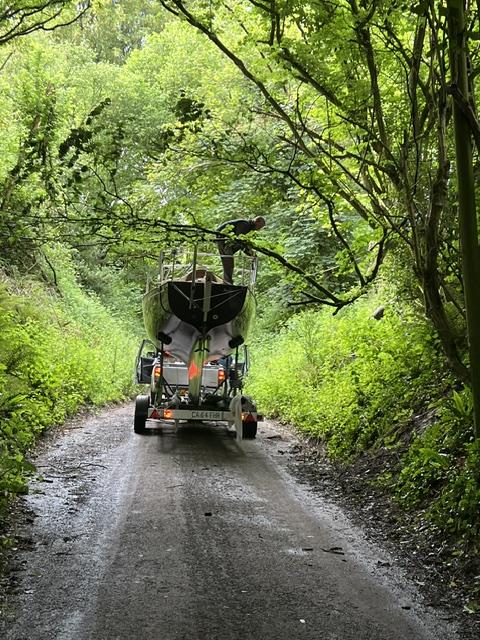
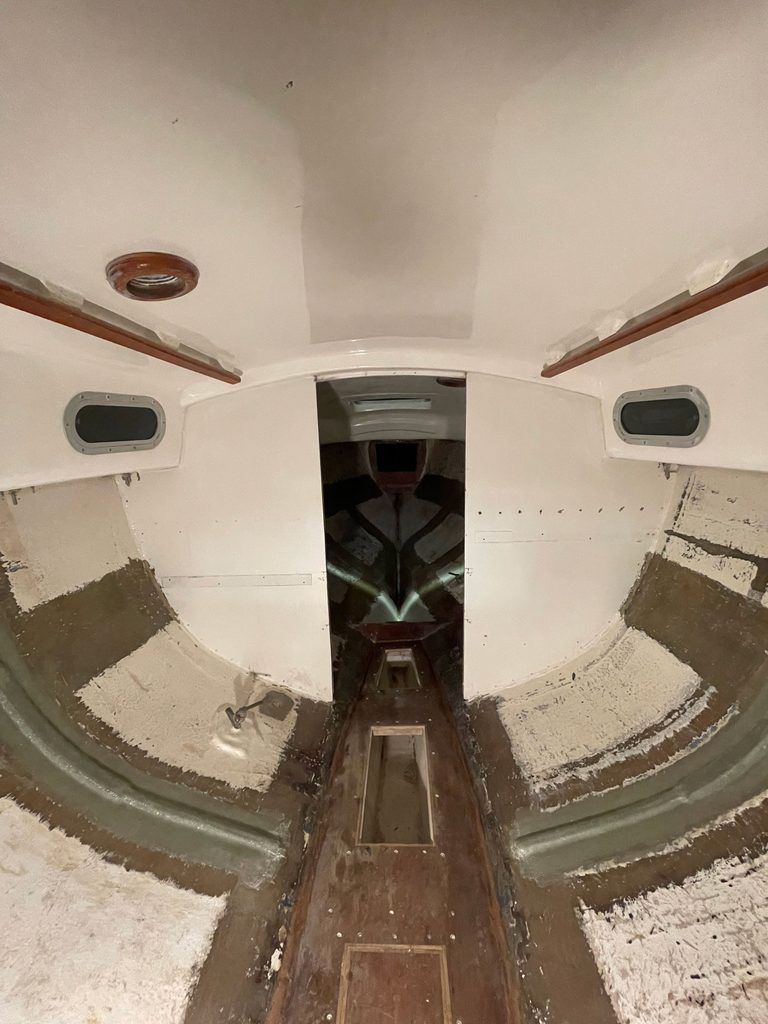
Some sailors spend years dreaming about sailing around The British Isles. Others buy a boat, spend their savings rebuilding it, work every job imaginable to keep the dream alive, and then head off into the Atlantic on their own. Meet Joe Bainbridge. A jazz drummer by trade, boatbuilder by necessity and offshore adventurer by choice, Joe is proving that you don’t need a huge yacht, an enormous budget or decades of experience to pursue extraordinary adventures. You do, however, need a remarkable amount of determination, a healthy appetite for learning and, as Joe discovered, a willingness to accept that things don’t always go according to plan. His companion is *Tarka*, a 1977 Contessa 26 with a fascinating history of her own. Having spent decades ashore and eventually been stripped back to little more than a hull, she became the centrepiece of an ambitious restoration project that would consume two years of Joe’s life. With a combination of savings, hard graft, boatbuilding and furniture making courses, and an assortment of jobs to keep the finances afloat, Joe transformed Tarka into a yacht capable of serious offshore adventures.
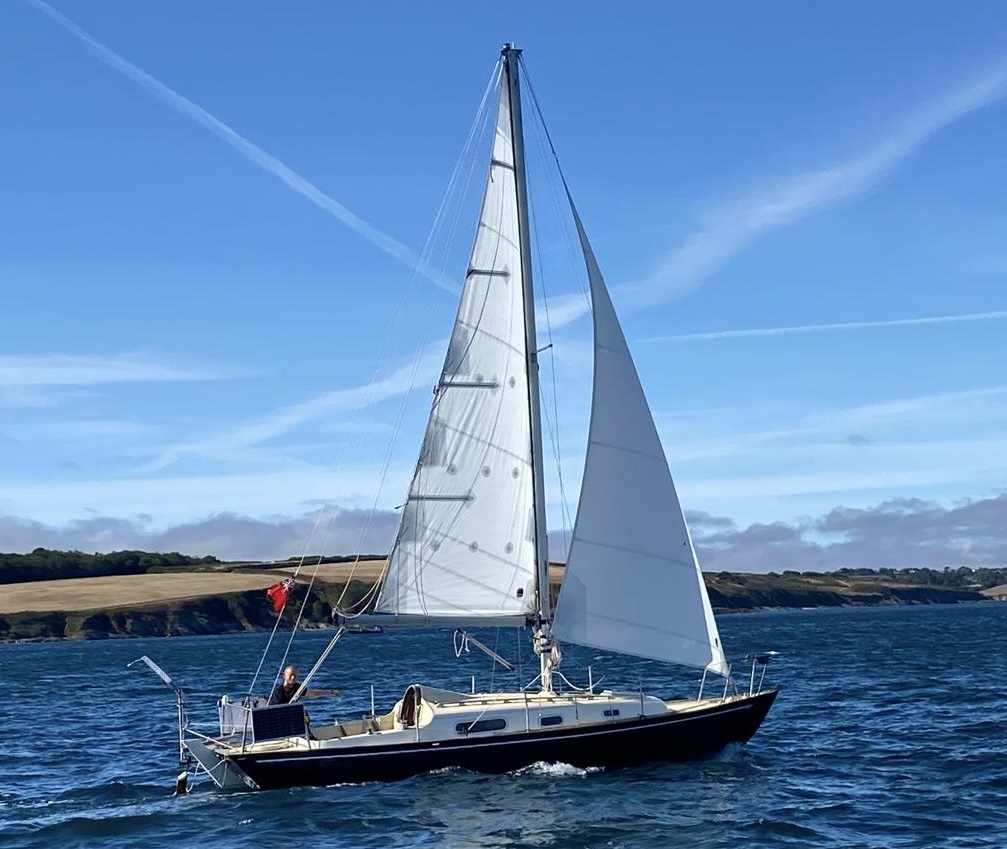
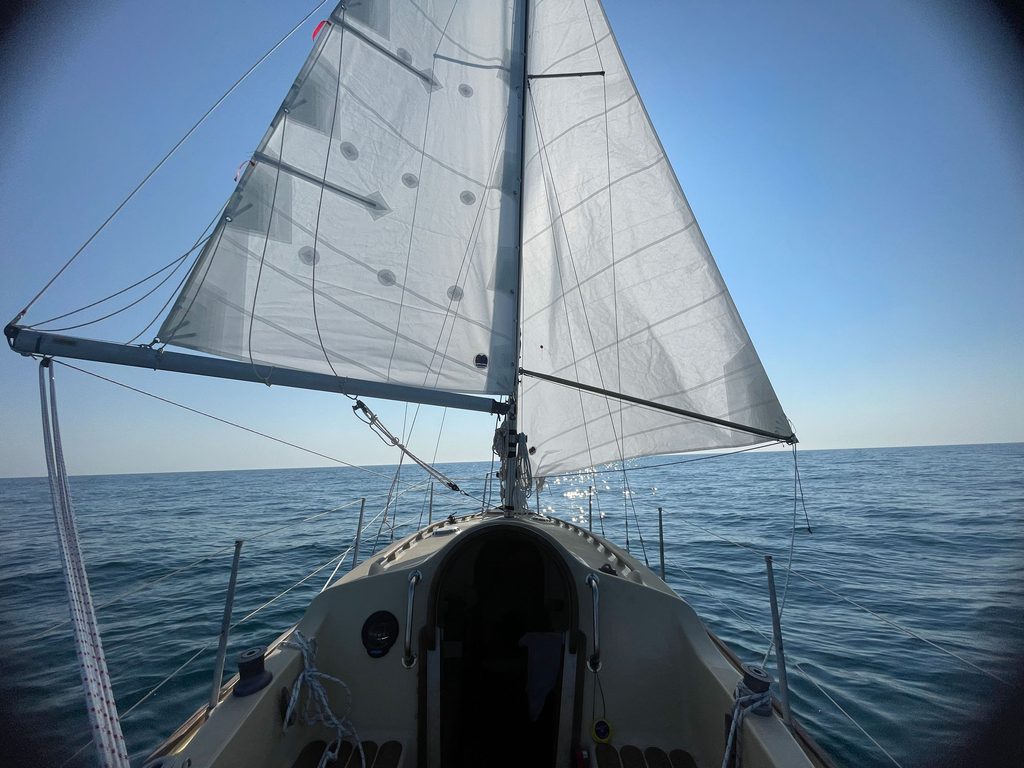
At Sanders Sails, we were delighted to be chosen to provide her new sails, helping prepare this remarkable little boat for the miles ahead. And what an adventure followed. In July 2026, Joe set off alone to circumnavigate Britain and Ireland, taking the rather adventurous option of heading out into the Atlantic towards Rockall before rounding the northernmost reaches of Shetland. Along the way came spectacular wildlife, mountainous seas, moments of complete isolation, and the sort of experiences most sailors only encounter in books. There was also an electrical fire in the North Sea, an unexpected visit from the RNLI and a return to Lowestoft for repairs. But the adventure didn’t end there. Joe got Tarka back to sea and completed his circumnavigation, emerging with an extraordinary collection of stories, hard-earned lessons and, we suspect, a rather different perspective on life. We caught up with Joe to discover what really happened, what he learned along the way and, perhaps most importantly, what comes next.
Joe, most people finishing their studies at a London music conservatoire are probably thinking about their first proper job, moving into a flat or what they’re doing next weekend. You decided to buy a stripped-out Contessa 26, spend two years rebuilding her and head off into the Atlantic alone. Where on earth did that idea come from? Was there a particular moment when you realised this was what you wanted to do, or have you always been slightly drawn towards the more adventurous side of life?
Life would certainly be simpler if I was content with that! I’ve always been restless, and have really struggled to find satisfaction unless I’m giving 110%. Growing up, music and sailing ran in parallel, and having pulled the music string, to a greater or lesser degree, I knew I wanted to give sailing some proper time. The question was whether to pursue it professionally or earn my living another way and fund my own adventures. I’d been a fan of the Contessa 26 for a while and had been dreaming of sailing around the world. The passage around the British Isles and Rockall was a stepping stone in building the miles and experience I’d need. The refit was Mum’s idea. She thought rightly that if I was going to do any serious offshore sailing I’d better know the boat inside out. What none of us had quite grasped though, was the absolutely ridiculous amount of work involved.
You’ve described how Tarka went from a stripped-out hull to a fully equipped offshore cruising yacht, with an extraordinary amount of the work undertaken by yourself. What was the biggest challenge during the restoration? And looking back, was there ever a moment when you stood in the middle of the project, surrounded by tools, dust and unfinished jobs, and wondered what on earth you’d got yourself into? We’re also curious: what was the most satisfying part of the entire rebuild?
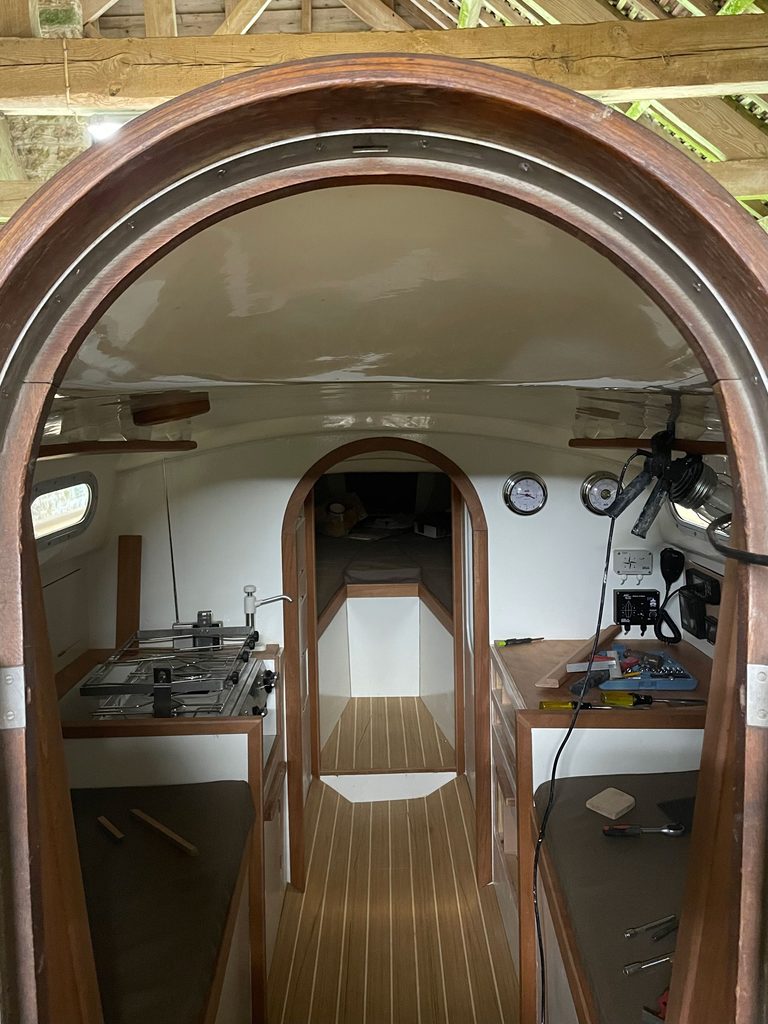
I’d be lying if I said I didn’t have that thought most mornings! But I built a life around the refit, working evenings as a kitchen porter in the local pub; I disconnected the Wi-Fi at home… There was really not much else to do with my time! I suppose the biggest challenge was giving myself space to breathe and permission to do other things in the face of a frighteningly long list of jobs. I’d have loved the launch to be the climax, but inevitably there was still much to do before she was ready to sail. The tunnel vision required to finish the job meant I rarely stopped to appreciate the satisfaction of completing any particular chapter. I relish it now, though: looking down through the companionway under sail, watching the kettle boil, seeing the electrics and everything else working in harmony. That’s incredibly satisfying.
Your 2026 circumnavigation makes for quite extraordinary reading. From phosphorescent dolphins and pilot whales to enormous seas off Shetland and threading your way through offshore wind farms in the darkness, there are some incredible moments. If you could take us back to just one moment from the entire adventure, one that you’ll remember for the rest of your life, what would it be? And at the other end of the spectrum, what was the most ridiculous, frustrating or downright comical moment that you can laugh about now?
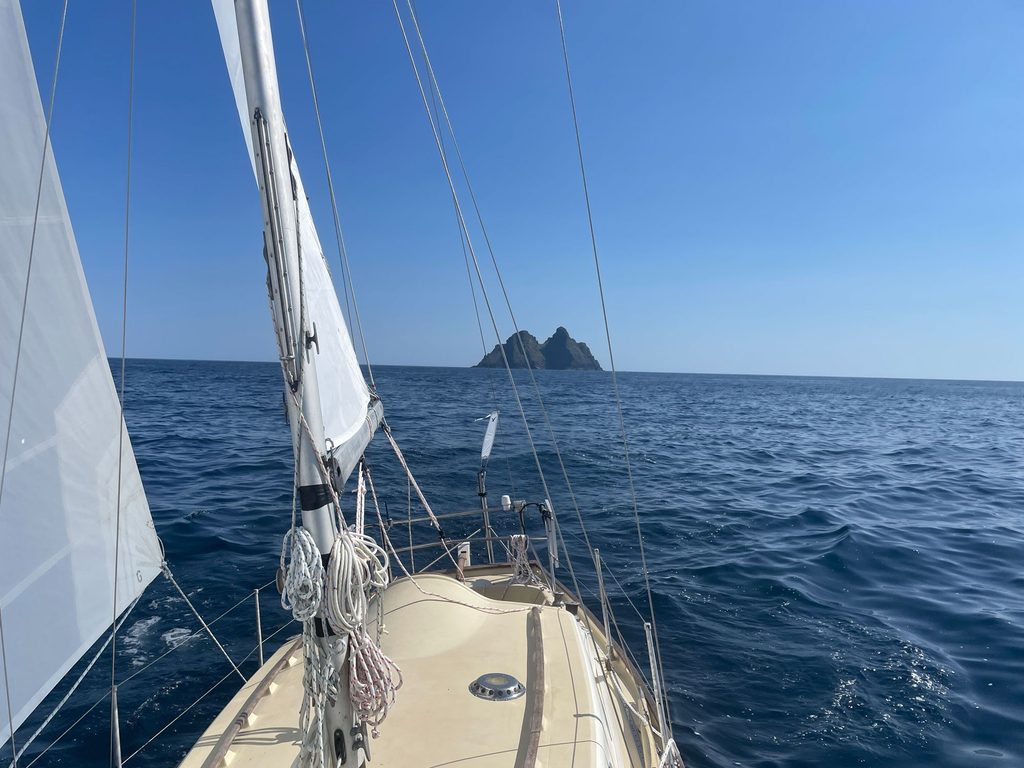
It’s difficult to isolate a single moment. I’ll never forget the pilot whales, sailing through the wind farms, and the extraordinary sight of Rockall, an improbable black speck in the otherwise featureless seascape. But what stays with me the most is a feeling that lies at the heart of my motivation: the sublime freedom of sailing to a free wind, land falling away astern, stretching out into a space of incomprehensible vastness. A space where thoughts of love and war can take their rightful place, subordinate to devotion to the present tense.
The ridiculousness and comedy are in the act itself. It’s a ridiculous thing to do! But we don’t have much time to play with, and it’s as good a thing to do as any other: to be an active participant, a witness to time and space.
One of the things we particularly enjoyed about your blog was your openness about the difficult moments. The electrical fire in the North Sea must have been an extraordinary experience, particularly after investing so much of yourself in rebuilding Tarka. Can you talk us through what was going through your mind when you first realised something was wrong? Looking back, what did the experience teach you about preparation, decision-making and your own limits? And perhaps most importantly, did it change the way you approach sailing alone?
Fortunately, I was in the cockpit at the time, just north of the East Anglia Array wind farm, trying to make progress to the south-west. I smelt smoke and jumped below to investigate. The first question was where it was coming from. I suspected an electrical fault, as it so often is.
I set about isolating the system and putting out the fire. While the fire safety stick was doing its work, and before I’d established that we weren’t sinking, I threw the life raft, grab bag, EPIRB and handheld radio into the cockpit, and made a Mayday call. The call received no response despite a tanker passing less than a mile off at the time. Thankfully, shortly afterwards, the smoke stopped pouring out and I could assess the damage. The hull was sound, but the batteries had broken free from their box, resulting in a dead short and an electrical fire behind the engine control panel.
It taught me that, despite leaving no stone unturned in preparation, you can never completely eradicate risk. It highlighted the value of having procedures and an action plan to fall back on when your mind is still grappling with the gravity of a situation. And in that moment, I had a profound clarity: no amount of determination or drive to reach the finish line stands up to the cold reality of a life-threatening situation. There is a time for fun and games, and a time to call it a day. The fire reinforced my awareness of the risks of offshore sailing, but it hasn’t diminished my desire to do it. It’s irresponsible to go out in a small boat without understanding the fragile situation you’re putting yourself in, even close to home. You have to be prepared for things to go wrong, and to respond accordingly.
We were incredibly proud to be chosen to make Tarka’s sails, particularly knowing the adventures you had planned for her. Having now spent so many miles offshore together, how has your relationship with Tarka developed? Have you discovered things about the boat, her sailing characteristics or the way you handle her that you could never have anticipated before setting off? And how have you found the new sails as you’ve learned to get the very best out of her? What are your next plans with your sails for 2027?
My relationship with her has changed enormously. Not until we were a few days sailing did she feel like a sailing boat. Before then she was just a soulless complicated mass of systems. After that point and with each mile, my trust in her grew. She’s a really great little boat. She sails I suppose how you’d expect a small long-keeler to: terrible in marinas, but tracks like a freight train, and she heaves-to perfectly! She feels remarkably solid – partly due to my reinforcements and partly due to her thick construction, and very safe, despite her low freeboard. One quirk she has is a slight tendency to turn to port, due to the fractionally offset position of the gudgeons – makes her unique.
The sails have been great. I couldn’t ask for better quality or ease of handling. I have made life hard for myself, with hank-on foresails and a slab-reefed main, but the sight of her under sail makes it all worthwhile—as does the excuse to get drenched up on the foredeck! And the labour-intensive reefing process, at least in theory, means I should take extra care to reef early. As for 2027, the plan is a big step up. I intend to sail from Falmouth across the Atlantic to Newport, Rhode Island, on the predominantly upwind great-circle route. From there I’ll make the long return journey on the Viking Route, calling at St John’s in Newfoundland, Qaqortoq in southern Greenland, and Reykjavik in Iceland, before returning to Falmouth.
It’s a daunting prospect, terrifying and incredibly exciting at the same time.