
For some sailors, the ultimate ambition is to win races. For others, it is to cross oceans, discover distant coastlines or enjoy the simple freedom of being afloat. For Basil Papadimitriou, owner of the remarkable Swallow BayCruiser 26 ‘Muddy Waters’, the pursuit is something a little different: creating a cruising yacht in which every detail has been considered, every component has a purpose and exceptional performance is never sacrificed simply because the destination matters more than the stopwatch. Having owned an impressive variety of yachts over the years, from larger cruising boats to compact trailer-sailors, Basil developed a clear understanding of what he wanted from his ideal yacht.
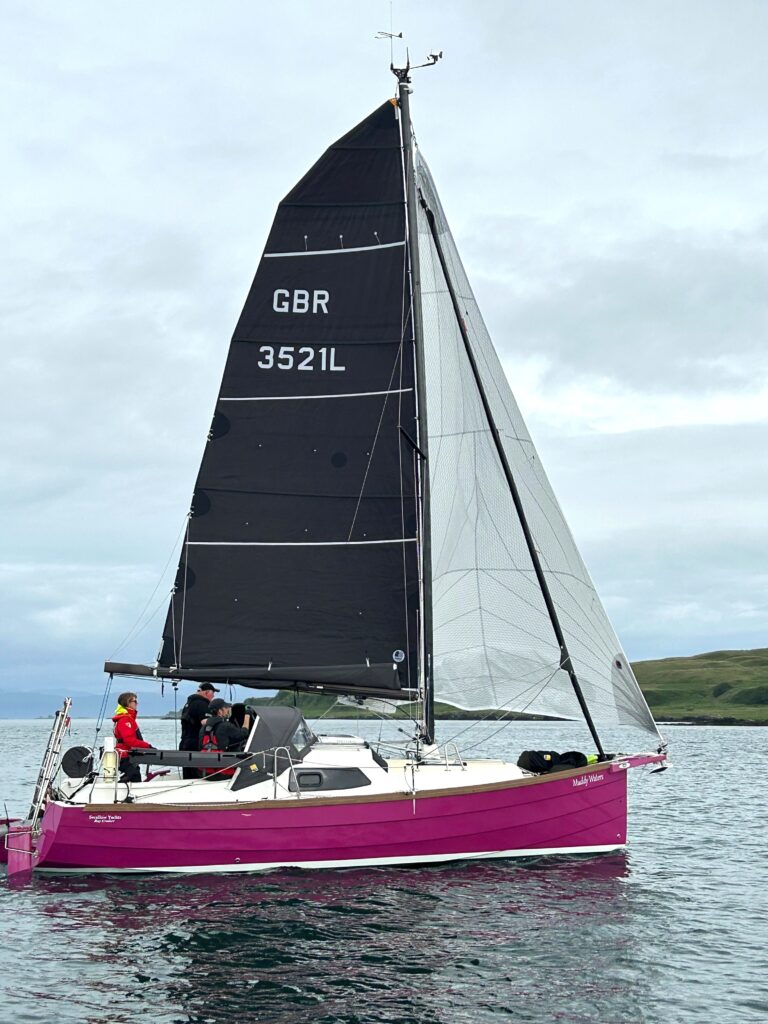
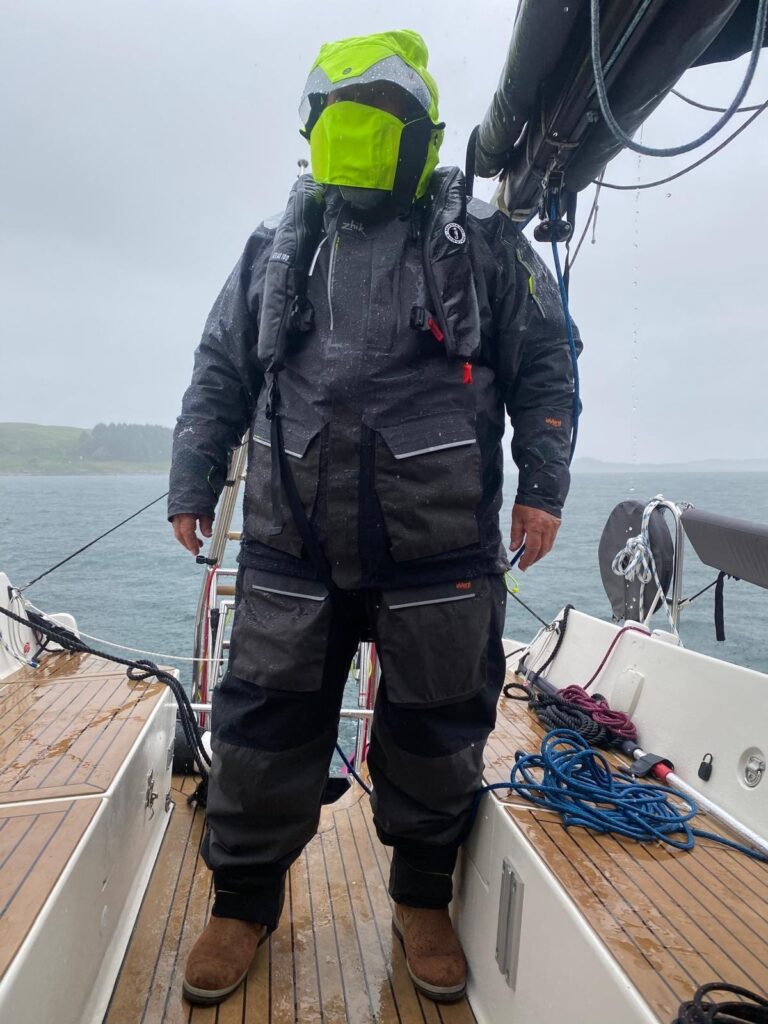
His vision would ultimately contribute to the development of the BayCruiser 26 itself, working with Matt Newland and the team at Swallow Yachts. The resulting ‘Muddy Waters’ is a fascinating combination of traditional craftsmanship and modern sailing technology. Built in mahogany plywood, she incorporates carbon spars, an innovative lifting-keel and water-ballast arrangement, twin rudders and an exceptionally thoughtful interior designed for comfortable, independent cruising. Yet what makes this boat particularly special is the philosophy behind her. For Basil, efficient sailing, beautifully engineered systems and the freedom to explore are not separate ambitions. They are essential parts of the same experience.
It is a philosophy we greatly admire at Sanders, and one that has seen ‘Muddy Waters’ equipped with our bespoke SFM sail technology, with further developments planned for the coming season. In this edition of Meet the Sailors, we discover the story behind one of the most individual cruising yachts we have encountered, explore Basil’s passion for uncompromising design and learn why, sometimes, the pursuit of perfection is every bit as rewarding as the voyage itself.
From Experienced Cruiser to Yacht Development – The Birth of ‘Muddy Waters’: Basil, your sailing history includes an impressive variety of yachts, from larger cruising boats such as the Southerly 115 and Voyager 40 to smaller, more versatile designs including the BayCruiser 23. I was fascinated to discover that your experiences and discussions with Matt Newland at Swallow Yachts helped inspire the development of the BayCruiser 26. What prompted you to move away from larger cruising yachts, and what was missing from the boats already available that encouraged you to become involved in developing something new? Looking back at those early conversations, how closely does the finished ‘Muddy Waters’ reflect the original vision you had for your ideal cruising yacht?
As the family grew up and developed their own hobbies and interests, and following an amicable divorce, I found myself with the freedom to reconsider what I really wanted from sailing. I was looking for a boat that I could enjoy independently, without the expense of owning a larger yacht, the reliance on crew, the demands of handling heavy equipment or the inevitable big bills! In the early 2000s, I flirted with a dinghy and then a small trailer-sailor. Neither quite satisfied my ambitions, as both came with too many compromises. However, those experiences were invaluable in helping me formulate a much clearer idea of what my ideal sailing boat might look like. Then, in 2010, I came across Swallow Yachts at the Southampton Boat Show and their rather pretty BayCruiser 23. She seemed to tick many of the boxes I had been looking for, so I arranged a test sail that autumn. The boat was an absolute delight to sail and fulfilled almost all my requirements, although I felt the interior could be improved. Matt Newland had told me how much he valued customer feedback, so I took him at his word! I suggested that if he could improve the interior, I would happily buy one. That sparked a wonderful collaboration, with Matt and me working together to redesign the accommodation. Remarkably, those changes remain largely unchanged today, so we must have struck the right balance. The subsequent success of the BayCruiser 23 certainly suggests we were on the right track.
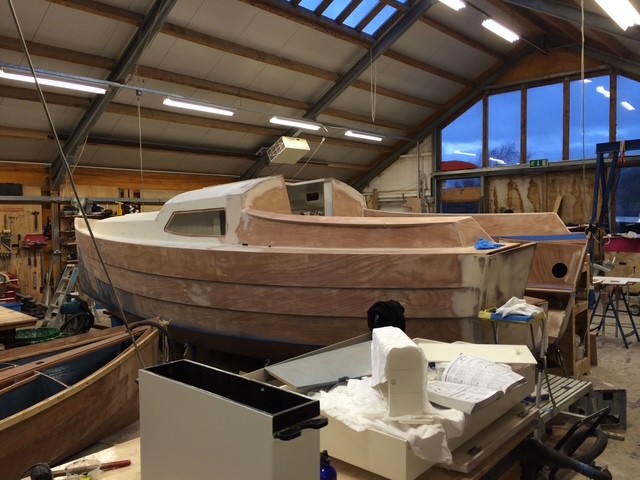
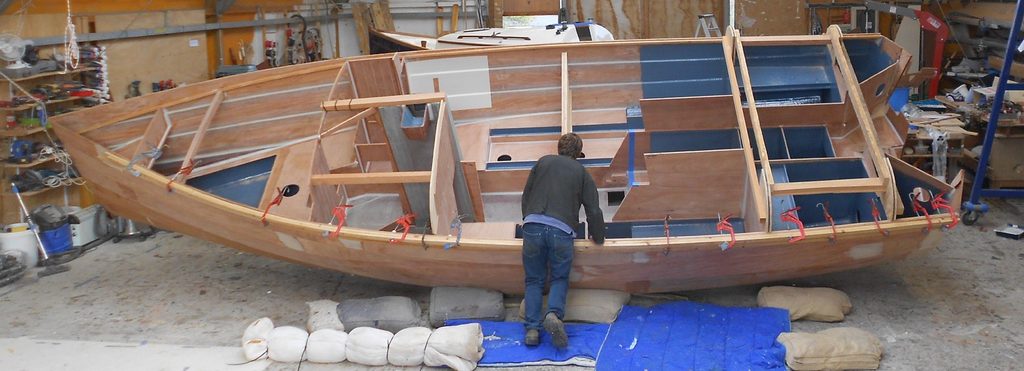
However, after a season of sailing, I began to appreciate just how much the centreboard casing compromised the accommodation, and the wheels started turning again. As it happened, Matt was already keen to develop a larger BayCruiser, and so another collaboration began. This time, we had the luxury of starting with a completely clean sheet of paper. Heaven! We wanted to address all the little compromises we had identified, while remaining faithful to the fundamental principles that made the original BayCruiser so appealing. We even built a full-scale mock-up from plywood offcuts, allowing us to explore the layout and make adjustments before committing to the design. When designing a compact cruising yacht, every millimetre matters. The challenge is to make a relatively small space fulfil an extraordinary number of roles without compromising comfort, practicality or sailing performance. Wherever possible, we looked for opportunities to give things more than one purpose, ensuring that every inch of space earned its keep. I sometimes wonder whether Matt regrets telling me, all those years ago, how much he welcomed customer input. I certainly took full advantage of the invitation!
Looking back, I have often asked myself whether, given the same opportunity to help design my perfect yacht again, I would do anything differently. And I can honestly say that I wouldn’t. That doesn’t mean the boat has stood still. Quite the opposite. One of the greatest pleasures of ownership has been the opportunity to continually refine and improve the systems aboard. The fundamental design and principles remain exactly as we intended, but technology never stands still, and neither does my enthusiasm for making things better. Whether it’s developments in sail design, electric propulsion, battery technology, rigging or electronics, there is always something new worth exploring. Much of that ongoing evolution can be seen aboard M/W today. And perhaps that’s one of the most appealing aspects of owning a smaller yacht. Not only is she easier to handle and less dependent on crew, but the equipment is generally smaller, simpler and considerably more affordable. Replacing a wardrobe of sails on a 35- or 40-foot yacht represents a substantial investment, whereas on a 26-footer like M/W, experimenting with new ideas and upgrading equipment becomes far more manageable. For me, that is a huge part of the enjoyment. I have a boat that suits the way I want to sail, offers all the comforts I need and gives me endless opportunities to tinker, experiment and improve. I don’t think I could ask for much more!
The Pursuit of Perfection – When Every Detail Matters: One of the things that has always impressed us about Muddy Waters is your extraordinary attention to detail. From the carbon spars and innovative keel arrangement to the mainsheet system, deck hardware and beautifully considered accommodation, very little appears to have been left to chance. I would love to understand the philosophy behind your approach. When selecting or developing equipment, what matters most to you: performance, engineering quality, simplicity, reliability or something else entirely? Are there particular innovations or modifications aboard ‘Muddy Waters’ of which you are especially proud, and have any relatively small changes made a surprisingly significant difference to your enjoyment of the boat?
All of the points I’ve mentioned are important, but there are a few particular features aboard M/W that I think deserve a special mention. Each reflects the philosophy behind the boat: clever engineering, simplicity, practicality and making the very best use of the space available.
One of my favourites is the self-launching electric anchor windlass. It’s a wonderful triumph of engineering, particularly when you consider how much we’ve managed to squeeze into such a compact space. The entire system is cleverly integrated into the bowsprit, incorporating an Ultra anchor and swivel. The holding power is exceptional, and the ability to operate everything electrically from either the bow or the cockpit makes anchoring remarkably straightforward, particularly when sailing single-handed.
Another feature I wouldn’t want to be without is the electric propulsion system. Its sheer simplicity, quietness and reliability have been a revelation. Range was initially a consideration, but this year I replaced the original ePropulsion batteries, which offered a range of approximately 35 miles, with Fogstar lithium batteries. These have twice the capacity, occupy just a third of the space and weigh virtually the same! It’s a perfect illustration of how quickly technology is progressing. I wouldn’t be surprised if battery capacity doubles again in the coming years. Because M/W has such a light, efficient hull, electric propulsion works exceptionally well. Achieving something similar on a much larger yacht would be considerably more expensive, which is another wonderful advantage of keeping things relatively small.
The stern gantry and boarding ladder are another example of making one piece of equipment serve several purposes. Beyond providing safe and secure access when getting in and out of the dinghy, the arrangement incorporates a folding platform designed to carry my folding electric bicycle. It’s one of those thoughtful little details that makes cruising so much more enjoyable, particularly when exploring somewhere new. Perhaps one of the more unusual innovations aboard is the Japanese-designed, American-supplied electric dry-bag toilet system. It might not sound like the most glamorous subject, but its installation has made an extraordinary difference!
By moving away from a conventional marine toilet, I was able to dispense with the freshwater flushing supply, holding tank, much of the associated pipework and an underwater seacock. Collectively, this saved approximately 70kg and, perhaps more importantly, freed up a surprisingly useful amount of space. That newly available space enabled me to install a Honda EU22i generator, complete with a properly vented exhaust arrangement. The system can be refuelled and started in situ, providing a valuable backup should I ever need to recharge the batteries while away from shore power. We completed this modification last year, and it has added another layer of reassurance when cruising independently.
What I particularly enjoy about all these developments is that none of them fundamentally changes the character of the boat. They simply make her easier, safer and more enjoyable to use. That, to me, is the real pleasure of M/W: a beautifully manageable little yacht that continues to evolve as new ideas and technologies become available.
The Freedom to Explore – Why Cruising Should Be an Adventure: One of the great attractions of ‘Muddy Waters’ is her ability to combine the comforts of a capable cruising yacht with the freedom of a trailerable boat. I enjoyed reading about your adventures to places such as the Gulf of Morbihan and Falmouth, and the independence that comes from being able to launch, rig and explore without relying on a permanent home berth. What have been some of your most memorable cruising adventures aboard ‘Muddy Waters’, and how has having such a versatile yacht changed the places you can visit and the way you enjoy your sailing? Is there a particular destination, passage or experience that captures everything you love about cruising?
One of M/W’s great advantages is her versatility. She sits right at the maximum size and weight that can be towed on a standard driving licence, and her trailer has been specifically designed with that in mind. Of course, it also helps to have a substantial 4×4 to do the towing! Last year, I took her all the way up to Oban for four weeks of cruising around the west coast of Scotland. Unfortunately, the weather wasn’t quite as enthusiastic about the adventure as I was, but that’s sailing for you! This year, I’m contemplating South Brittany in May, Scotland in June and perhaps Holland in July. It all sounds wonderfully ambitious, although I appreciate that making plans from the comfort of a warm office at this time of year is rather easier than carrying them out! Having said that, one of the things I appreciate most about M/W is that I don’t actually need to travel far to enjoy her. Being based in Lymington Yacht Haven means I can be out sailing in the Solent within 15 minutes. There is something enormously appealing about being able to decide to go sailing on a whim, without the need to organise crew or undertake a lengthy preparation. When a yacht is as manageable as M/W, the barriers to getting out on the water almost disappear.
Of course, every year brings its own challenges, and at 77 I’ve learnt that sometimes you simply have to go with the flow. This year, for instance, I made a conscious decision to concentrate on my own fitness, lose a considerable amount of weight and get myself back into better shape. I’m delighted to say I’ve achieved that, and I’m looking forward to enjoying the benefits when I’m back on the water next season. Ultimately, I think that’s the beauty of having a boat like M/W. Whether I’m exploring the Scottish islands, planning a summer adventure across the Channel or simply slipping out into the Solent for a few hours, she gives me the freedom to enjoy sailing entirely on my own terms. And frankly, even when I’m not sailing, I get an enormous amount of pleasure from simply tinkering away on her. There’s always something to improve, adjust or experiment with, and for me, that’s all part of the enjoyment of owning a boat.
Performance Without Competition – Why Choose Sanders SFM? One aspect of your approach that I find especially interesting is your commitment to sailing performance, despite having no particular interest in racing. ‘Muddy Waters’ has benefited from an exceptionally carefully considered sail wardrobe, and we are immensely proud that you have chosen Sanders Sails and our SFM membrane technology to complement the rest of the boat. What originally attracted you to our sails, and how important are factors such as sail shape, weight, durability and ease of handling in your cruising? With plans to upgrade to our latest SFM Vectis construction over the winter, alongside the addition of a new Code S, what improvements are you particularly hoping to achieve? And perhaps most importantly, what would you say to cruising sailors who believe that sophisticated sail technology is something reserved exclusively for racing yachts?
Swallow Yachts design and build remarkably fast, efficient boats, and when you consider the thought that goes into their hull designs, carbon rigs and water ballast systems, it seems only right to complement all that engineering with equally efficient sails. For me, sailing performance isn’t simply about going faster; it’s about making the boat as enjoyable and effortless to sail as possible. The more efficient the sails and handling systems are, the more inclined you are to sail rather than reach for the engine. That has always been an important part of my philosophy.
Sanders Sails came highly recommended by several people I know from the racing community, and your reputation for producing high-performance sails certainly caught my attention. When I moved M/W from Chichester to Lymington, it seemed the obvious opportunity to get in touch. I’m delighted I did, and I certainly haven’t been disappointed! Of course, sail shape is enormously important, but so too is ease of handling, particularly when you’re sailing single-handed. We’ve been working towards achieving beautifully smooth, wrinkle-free mainsail and jib shapes through additional support and improved control. The ability to maintain an efficient sail shape as the wind increases makes an enormous difference, allowing the boat to continue sailing quickly and comfortably over a much wider range of conditions.
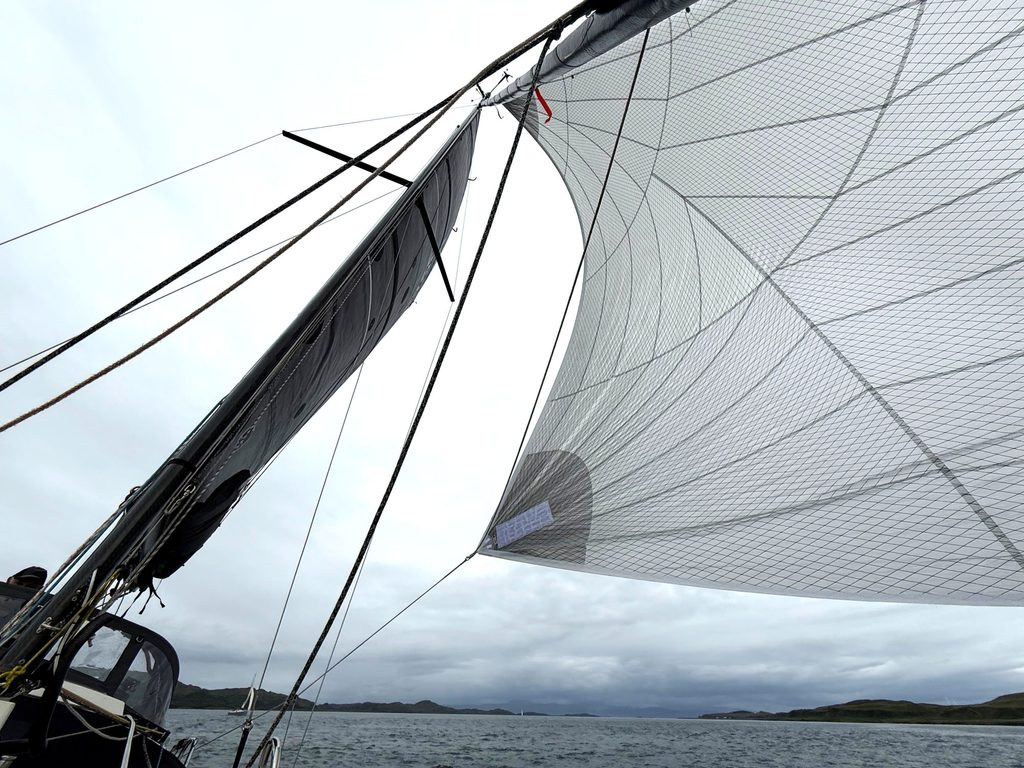
Interestingly, despite the BayCruiser’s clever water ballast system, I’ve never really felt the need to use it on M/W. The one memorable occasion when I did use water ballast was during a Round the Island Race aboard my previous BayCruiser 23. We were punching into a particularly stubborn headwind and, being relatively light, were struggling to make the progress we wanted. Taking on water ballast gave us that extra weight and momentum to punch through the conditions. I’m not entirely sure that was quite the purpose the designer originally had in mind, but it certainly worked! Our latest development is replacing the asymmetric spinnaker with Sanders’ new Code S sail. The attraction is the ability to furl the sail safely and leave it hoisted, making deployment and retrieval far more manageable when sailing alone. It’s another example of improving performance without introducing unnecessary complication.
I’ve always believed that downwind sails can transform a boat’s performance, particularly on a light, easily driven hull like M/W. There is something wonderfully satisfying about sailing down the Solent and overtaking much larger yachts that are struggling along goosewinged. Occasionally, you can almost see the puzzled expressions as they look across, wondering where on earth the rest of my crew might be! I suppose that rather neatly sums up my sailing philosophy. It’s about combining efficient sails with intelligent, easy-to-use handling systems so that you can get the very best out of the boat, without making life unnecessarily complicated. Whether you’re racing or simply enjoying a leisurely cruise, I think there’s enormous satisfaction in knowing that your boat is sailing efficiently and performing as well as she possibly can. You don’t have to be racing to appreciate good sail trim, and you certainly don’t need a large crew to enjoy a little extra speed! For me, that’s what makes sailing M/W such a pleasure. She’s manageable, responsive and wonderfully rewarding to sail, and with the right sails and systems, I can enjoy all that performance entirely on my own terms.
The Next Chapter – Can Muddy Waters Ever Be Finished? Having spent so many years developing, refining and enjoying Muddy Waters, I am curious whether a boat like this can ever truly be considered finished! With a new generation of sails on the horizon and your continued enthusiasm for finding improvements, are there still aspects of the boat you would like to develop or rethink? What adventures are you planning for the coming seasons, and are there any cruising grounds you have yet to explore that are particularly high on your list? Finally, having experienced so many different yachts over your sailing life, what advice would you offer someone setting out to find or create their own ideal cruising boat?
The answer to that question is probably not! Every year, I confidently declare that M/W is finally finished, that everything is just as I want it and there really can’t be anything left to improve. Yet, almost inevitably, by the time autumn arrives, I find myself reflecting on the season, considering what has worked well and identifying little things that could be made even better. To be perfectly honest, that process is half the fun for me! Technology is constantly evolving, and each year brings new equipment, innovations and clever solutions to problems we perhaps hadn’t even considered before. If something promises to make sailing more efficient, more enjoyable or, importantly, easier to manage single-handed, then I’m always interested in exploring it. Of course, M/W is much more than simply a sailing boat. She’s a weekend cottage, a trailer-sailer, a capable little cruising yacht, a means of exploring new places and, occasionally, somewhere to indulge my enthusiasm for cooking! She has to fulfil an extraordinary number of roles within a relatively compact space, which means there’s almost endless scope for finding new ways to make life aboard that little bit better.
As for offering advice to other sailors, that’s slightly more difficult. My approach is very much shaped by my own circumstances, interests and the way I enjoy spending my time on the water. What works wonderfully for me might not necessarily suit somebody else. However, there is one piece of advice I would happily share, and it comes down to that familiar expression: size matters. Except, in my case, I would argue that smaller is often better! Over the years, I’ve seen far too many people gradually give up sailing, not because they’ve lost their love of being on the water, but because their boats have simply become too demanding to manage. Larger yachts are wonderful when you’re young, fit and have an enthusiastic crew available, but as the years pass, handling heavy sails, managing powerful sheets, stepping down from high freeboards and arranging crew can all become increasingly challenging. What was once an adventure can slowly begin to feel like a chore.
That’s precisely what I’ve tried to avoid with M/W. At 77, I still want the freedom to go sailing whenever the mood takes me. I don’t want to be dependent on finding crew, worrying about handling heavy equipment or spending half the morning preparing the boat before I can leave the pontoon. I want to be able to arrive, cast off and enjoy being on the water. And perhaps that’s the most important lesson I’ve learnt. The best boat isn’t necessarily the biggest, fastest or most expensive. It’s the one that suits your life, encourages you to get out sailing and continues to give you pleasure year after year. For me, M/W does exactly that. And if I can continue enjoying her, improving her and occasionally surprising a few much larger yachts along the way, I’ll be a very happy sailor indeed! Although, of course, I really must stop finding things to change… at least until next autumn!