
Introduction: It’s Not Just a Sheet and a Prayer
At first glance, sailing seems wonderfully straightforward. Hoist a triangular piece of cloth, pull on a few ropes, point vaguely in the right direction and let nature do the rest. If only! If sailing were simply a matter of hanging fabric in the breeze, we’d all be Olympic champions by lunchtime. And yet, somehow, we’ve all experienced the frustration of watching another boat sail past in exactly the same wind.
So, what’s going on?
The answer lies in something rather clever. A sail isn’t just a piece of cloth designed to catch the wind. It’s an aerodynamically engineered wing, constantly changing shape, generating lift and converting moving air into forward motion. In fact, a good sail has more in common with an aircraft wing than your average bedsheet. Although we wouldn’t recommend attempting to fly either. At Sanders Sails, we spend an extraordinary amount of time studying how sails interact with the wind. And while the science can get rather complicated, the basic principles are surprisingly fascinating.
Let’s unravel a little of the magic.
1. A Sail Is a Wing (Just One You Can Roll Up)
Here’s something that surprises plenty of people: a sailing boat doesn’t simply move because the wind pushes it along. Admittedly, when you’re running directly downwind with a spinnaker flying, there’s a fair amount of pushing involved. But when sailing across the wind or beating upwind, something rather more sophisticated is happening. Your sail is acting as an aerofoil. Just like an aircraft wing, a properly trimmed sail creates a pressure difference between its two sides. As air flows around the curved shape of the sail, the pressure on the leeward side generally becomes lower than the pressure on the windward side. Together with the way the sail redirects the surrounding airflow, this creates an aerodynamic force known as lift. And before anyone reaches for their old physics textbooks, yes, Bernoulli gets some of the credit. So does Newton. Fortunately, neither needs to be aboard. The clever part is what happens next. Much of this aerodynamic force tries to push the boat sideways. Thankfully, the keel has other ideas. By resisting sideways movement, the keel and hull allow part of the sail’s force to drive the boat forwards. This is why a yacht can sail towards the wind at an angle, rather than simply being blown wherever the breeze fancies taking it. Not directly into the wind, mind you. Even the finest sailmaker hasn’t quite managed to negotiate that particular arrangement with physics.
2. Shape Is Everything: Camber, Draft and Twist
If a sail is a wing, its shape is what determines how efficiently it works. And here’s where things get interesting. Unlike an aircraft wing, which usually has a relatively fixed structure, a sail must maintain an efficient aerodynamic shape while being pulled, twisted, stretched, shaken, reefed and occasionally subjected to some fairly questionable steering. There are three particularly important characteristics.
Camber: A Little Belly Goes a Long Way
Camber is simply the depth or fullness of the sail. Think of it as the difference between a flat sheet of paper and a gently curved spoon. A deeper sail generally produces more power, particularly in lighter winds, but it also creates more aerodynamic drag. A flatter sail can be more efficient as the wind increases, helping to reduce heeling and keep the boat under control. The secret is finding the right amount of depth for the conditions. Too flat in light airs and your boat may feel rather reluctant to get out of bed. Too deep in a strong breeze and you’ll spend the afternoon hanging onto the tiller wondering whether sailing was quite as relaxing as the brochure suggested.
Draft Position: Where You Put the Power Matters
Draft position describes where the deepest part of the sail sits between the luff and leech. For many upwind sails, designers aim to position the maximum depth somewhere around 35–45% aft of the luff, although the ideal position varies with sail type, wind conditions and the desired aerodynamic characteristics. A well-positioned draft helps create predictable power and efficient airflow. If the draft moves too far aft, however, the sail can become harder to control, increasing drag and potentially contributing to excessive weather helm. In simple terms, your boat starts developing rather strong opinions about which direction it would prefer to go. One of our primary objectives when designing sails is to control this movement of draft as the wind increases and the loads change. This is where clever material selection, fibre orientation and construction techniques begin to make an enormous difference.
Twist: Because the Wind Isn’t the Same Up There
Now for one of the most misunderstood parts of sail shape. The wind at the top of your mast isn’t necessarily behaving like the wind near the boom. Wind speed generally increases with height above the water, while the apparent wind angle can also change. This means the upper sections of your sail often need to operate at a different angle to the lower sections.
Enter twist.
Twist allows the leech to open progressively towards the head, helping different sections of the sail maintain efficient airflow. Too little twist and the upper sections can become over-trimmed and stall. Too much and you can end up spilling valuable driving force. It’s a delicate balancing act. And this, incidentally, is why we have tell-tales. Those innocent little pieces of yarn aren’t there to make the sail look sporty. They’re remarkably effective airflow indicators, quietly revealing whether your sail is working properly. Think of them as the most honest members of your crew. They rarely agree with your excuses, either.

3. Apparent Wind: The Wind You Actually Sail In
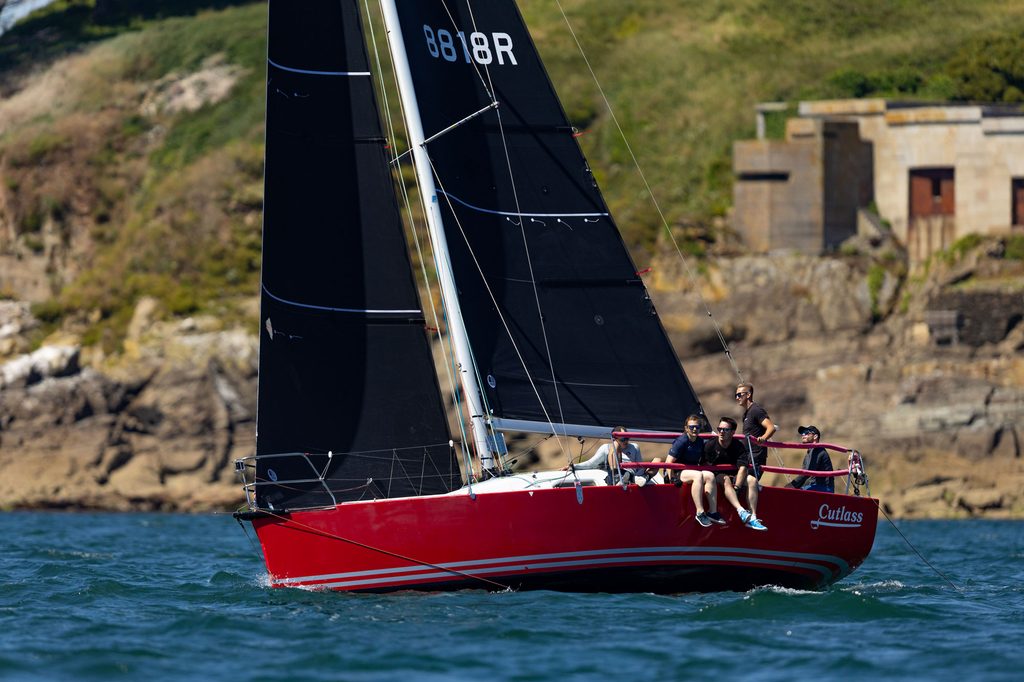
Here’s another wonderful sailing paradox. The faster your boat travels, the more the wind you experience changes. This is called apparent wind, and it’s the combination of the true wind and the airflow created by the boat’s own movement. Imagine sailing upwind in 12 knots of true wind. As your yacht accelerates to 6 knots of boat speed, the apparent wind you experience could rise to approximately 16–17 knots, depending on the angle you’re sailing. Not only does the wind feel stronger, but it also appears to come from further ahead. Your sails must therefore work in conditions that are constantly changing, even when the true wind remains perfectly steady. It’s rather like sticking your hand out of a moving car window. Except considerably more sophisticated, and hopefully without the motorway. For sail designers, apparent wind matters enormously. As the boat accelerates, aerodynamic loads increase and the distribution of those loads changes. A good sail must maintain its designed shape through these variations, rather than becoming progressively deeper, more distorted or harder to control. Which brings us to a subject very close to our hearts.
4. The Secret Ingredient: Keeping the Shape
So far, we’ve established that sail shape is rather important. Unfortunately, the wind seems determined to change it. Every time your sails fill, enormous forces act on the fabric, seams, fibres and reinforcements. And while every sail must have a degree of flexibility, uncontrolled stretch is the enemy of consistent aerodynamic performance. Imagine spending hours carefully designing the perfect wing, only for it to decide to change shape halfway through the afternoon. Less than ideal. This is why modern sailmaking involves so much more than choosing a suitable cloth and sewing the panels together.
We consider how loads travel through the sail, which fibres are best suited to resisting them, and how the construction will behave after thousands of hours of use. For traditional woven sails, that means carefully selecting cloth constructions and panel layouts that provide the best possible stability. For laminate sails, it involves balancing strength, stretch resistance, weight and durability. And with our Sanders Filmless Membrane (SFM) technology, we can take this a stage further by designing bespoke yarn layouts that follow the intended load paths through the sail. Different technologies, different characteristics, but one shared objective: Keep the sail as close to its intended shape as possible, for as long as possible. Because the most beautiful sail in the world isn’t particularly useful if it only holds its shape for the first ten minutes.
5. More Power Isn’t Always More Speed
This is perhaps one of the most valuable lessons in sailing. The biggest sail doesn’t automatically make the fastest boat. There comes a point where additional power simply creates more heel, more drag and more work for the helm. A yacht leaning dramatically onto its ear might look spectacular in a photograph, but that doesn’t necessarily mean she’s moving through the water efficiently. Sometimes flattening a sail, easing the traveller or introducing a little more twist can increase speed while making the boat considerably easier to steer. And when conditions demand it, reefing isn’t an admission of defeat. Quite the opposite. Reducing sail area can improve balance, reduce drag and allow the boat to maintain better forward momentum through waves.
A well-balanced yacht often feels remarkably effortless to sail. The helm becomes lighter, the boat tracks more consistently, and rather than wrestling with the conditions, you begin working with them. That is the feeling we’re trying to achieve. Of course, there will always be someone on the rail insisting that you could carry the full mainsail for another five knots of breeze. They’re usually the one who isn’t steering.
6. What We’re Really Trying to Achieve at Sanders
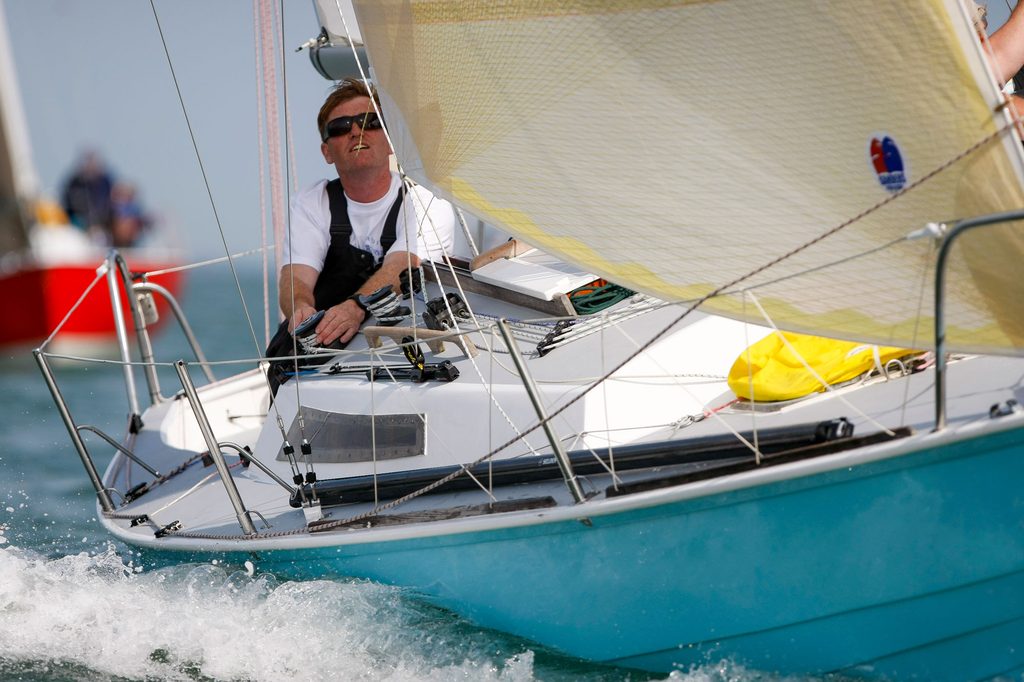
Whether you’re racing around the cans, crossing the Channel or disappearing over the horizon for a few months, the fundamental principles remain the same. You want sails that create efficient forward drive, maintain their designed shape and remain manageable as conditions change. That doesn’t necessarily mean a cruising sail and a racing sail should be designed identically. Far from it. A racing programme might prioritise precise aerodynamic performance, minimal weight and a highly specific range of conditions. A cruising yacht may need a more forgiving sail that performs consistently across a broader wind range, withstands years of use and remains straightforward to handle.
Both require thoughtful design. At Sanders, we believe performance and longevity should work together, rather than compete against one another. Our approach is to understand how you sail, what you want to achieve and how your sails need to behave in the real world. We then combine aerodynamic design, carefully selected materials and construction expertise to produce sails that are genuinely suited to their purpose. Because great sailmaking isn’t simply about creating the most powerful sail. It’s about creating the right power, in the right place, with the right amount of control. And ideally, leaving you with enough energy to enjoy a drink when you get back into harbour.
Conclusion: The Wind Is Free. Making the Most of It Is an Art.
The extraordinary thing about sailing is that we’re using an invisible, constantly changing force to move several tonnes of yacht through the water. No engine required. Just physics, engineering and a healthy dose of judgement. The wind provides the energy, but it’s the sail that determines how effectively that energy becomes speed. Its shape, balance, construction and ability to maintain efficient airflow all contribute to how your boat performs.
And when everything comes together, something rather special happens. The helm goes light. The boat settles into her groove. The sails feel alive, and the yacht seems to glide effortlessly through the water. For a brief, glorious moment, everything just works.
That’s the magic of sailing.
And at Sanders Sails, we’re rather fortunate that making that magic happen is what we get to do every day.