
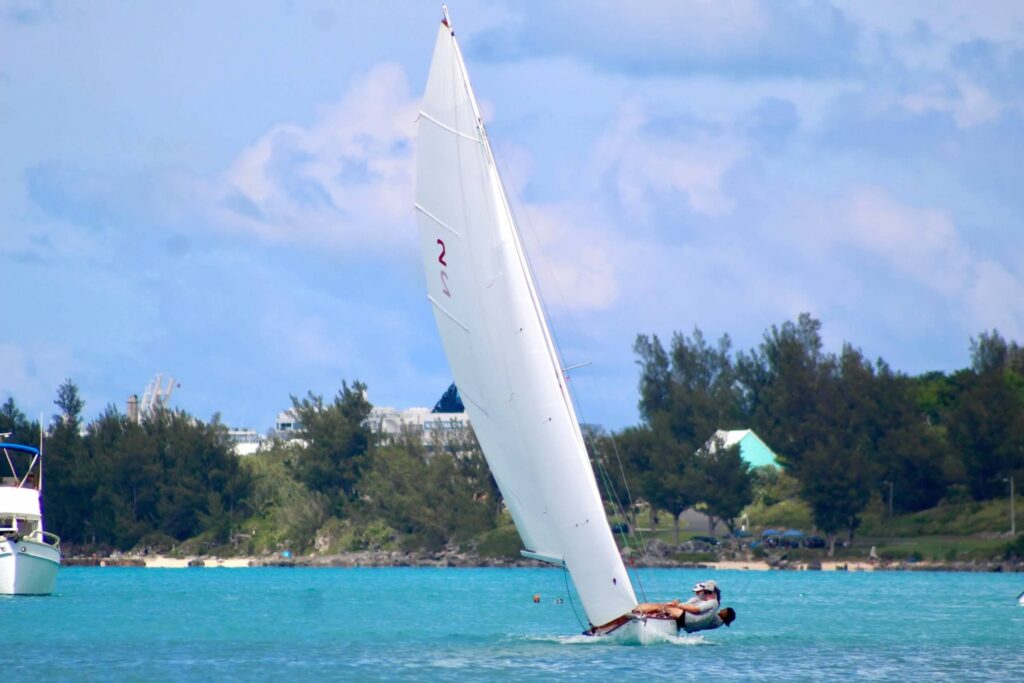
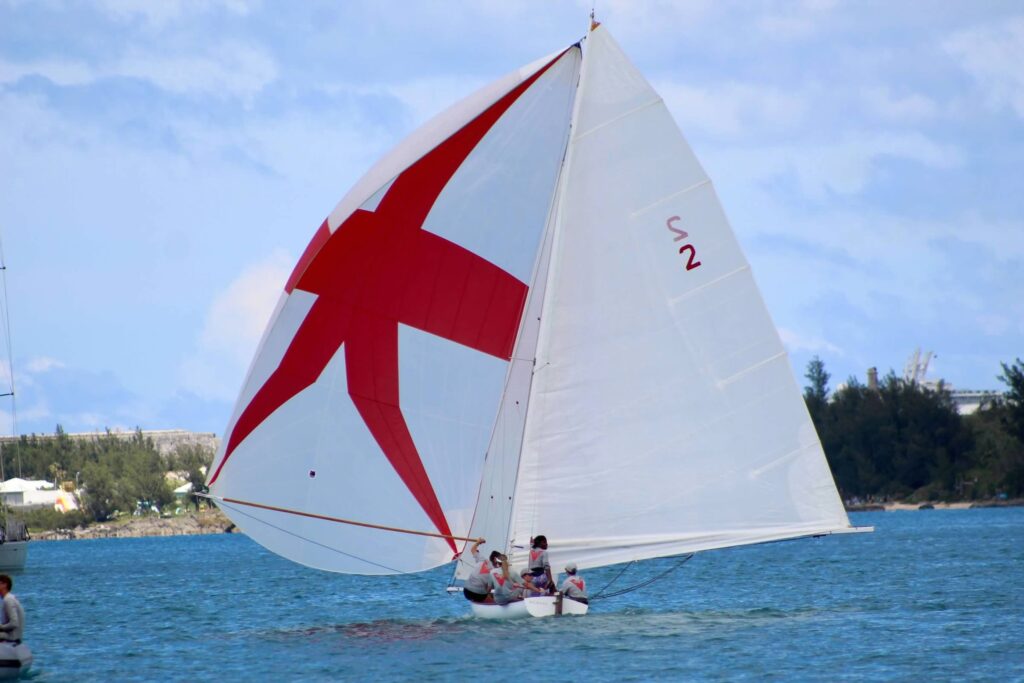
Few sailing classes in the world combine spectacle, history, and sheer physical intensity quite like the Bermuda Fitted Dinghy. With towering rigs carried on just fourteen feet of hull, bowsprits projecting far beyond the stem, and crews stacked along narrow side decks to keep the boat upright, fitted dinghies are not merely raced – they are pushed to the very edge. Every gust, every wave, every adjustment of sheet or body weight plays a role in keeping the boat moving forward.
At the heart of this extraordinary tradition is St. George’s Dinghy & Sports Club, where the legendary fitted dinghy Victory IV flies the club colours under the leadership of skipper Alan Frith. When the Victory team began exploring sail development beyond their local options, they turned across the Atlantic to Sanders Sails. Despite never having seen the boat in person, we were able to work from detailed measurements supplied by the team; digitising both the hull and rig geometry before designing a sail plan specifically engineered for the unique loads and balance characteristics of a fitted dinghy.
The result has been a collaboration built on trust, communication, and a shared respect for one of sailing’s most remarkable traditions. We spoke with Alan about the partnership, the extraordinary demands of fitted dinghy racing, and what it means to compete at the highest level in Bermuda’s most iconic class.
The Bermudan Fitted Dinghy class is one of the most demanding and tradition-rich forms of racing anywhere in the world. When you first began looking beyond local options for sails, what led you to consider Sanders, and what gave you the confidence that we could truly understand and deliver for such a unique boat and class?
We had a few crew members with experience on Sanders-equipped boats, including some custom sails you produced for a Bermuda IRC yacht. That reputation was reinforced very quickly once we started discussing the design. It was clear from the outset that you had done your homework on our class and understood the unique demands of these boats. The level of preparation and attention to detail gave us confidence that you could translate measurements into sails that would actually work on the water.
Trust between sailor and sailmaker is everything at this level – especially when margins are small and conditions change quickly. How did that relationship develop, and what role has communication and collaboration played in extracting performance from the sails over time?
That trust developed very quickly. From the start you were incredibly responsive to what must have seemed like an endless list of questions as we began learning how to tune the new sails. What really stood out was the willingness to help us understand not only the new sails, but also our older suits that hadn’t yet been replaced. That kind of honesty and openness goes a long way, and over time it’s built a genuinely strong relationship.
Since fitting your current sail inventory, Victory has enjoyed an exceptional run of results. Looking back over the past year, what achievement stands out most to you?
There are two that stand out for very different reasons. The first is the Jubilee Cup, which is the second oldest match-racing trophy in the world and the oldest that is contested every year. It dates back to the 1800s, and for our club it had become something of a painful drought where we hadn’t won it for nearly a decade. Personally, I had raced on the boat for 25 years as both crew and skipper without ever winning it. So, bringing the Cup back to the club in 2024 and successfully defending it again in 2025 was incredibly satisfying.
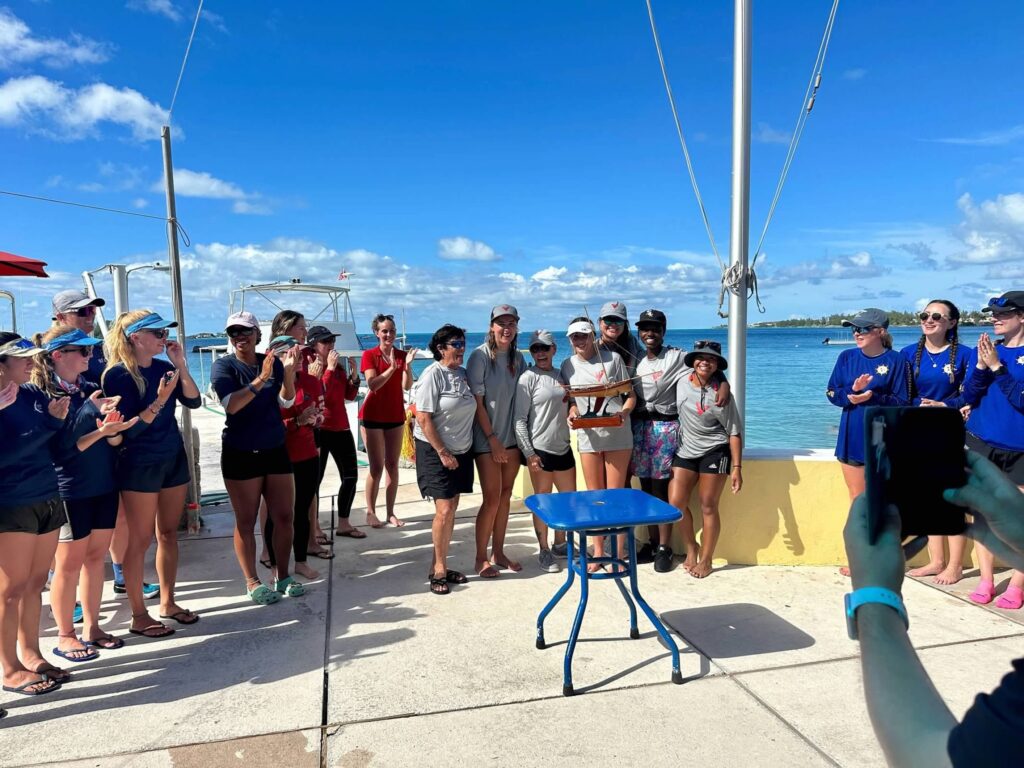
At the other end of the historical spectrum is a much newer event that means just as much to us. In 2023 we introduced the first all-women fitted dinghy race, for the Leatrice Oatley Trophy, named after our Syndicate chair and one of the biggest supporters of women’s sailing in Bermuda. The women who first taught me how to sail a fitted dinghy now race in that event, and it has quickly become one of the biggest spectacles of the season. The women on our team have now won the trophy twice, including defending it in 2025, which makes them the most successful women’s fitted dinghy crew to date.
Fitted dinghies are as much about feel, balance, and timing as they are about raw speed. From a skipper’s perspective, what differences do you notice when the sails are working exactly as intended?
Balance is everything. With a 35-foot mast, an 8-foot bowsprit and six feet of boom overhang on a 14-foot hull, the boat is really more sail than boat. And because the keel carries no ballast, if the sails aren’t working together properly, the boat simply won’t balance. When the sails are right, everything becomes easier. The helm feels light, the boat tracks naturally, and the crew can focus on keeping the platform stable rather than fighting it. I always tell the team that I have the easiest job onboard, because they actually control both the speed and the direction of the boat.
Looking ahead to 2026, what ambitions do you and the team have for Victory?
Our biggest goal is to win the overall season – something we haven’t achieved since 2001. We’ve come closer in recent years than at any point in the past two decades, so it feels within reach. Beyond results, we’re also very focused on growing the next generation of sailors. We’re working to bring more young people into the programme and to broaden participation in what has historically been a very white-male-dominated sport. I’d also like to see more of the younger crew members take the helm during races and start developing their own experience as skippers.