
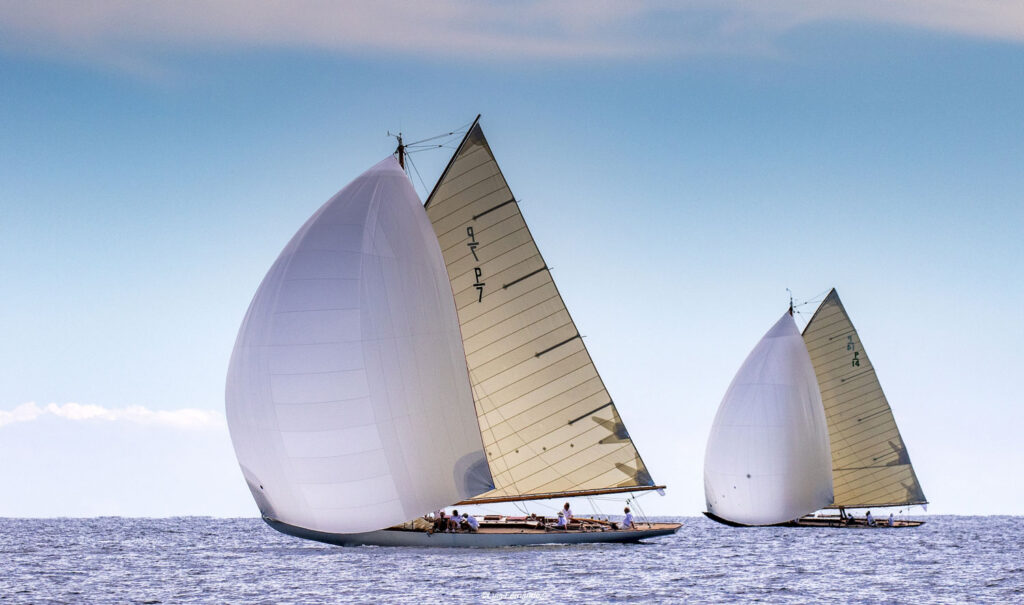
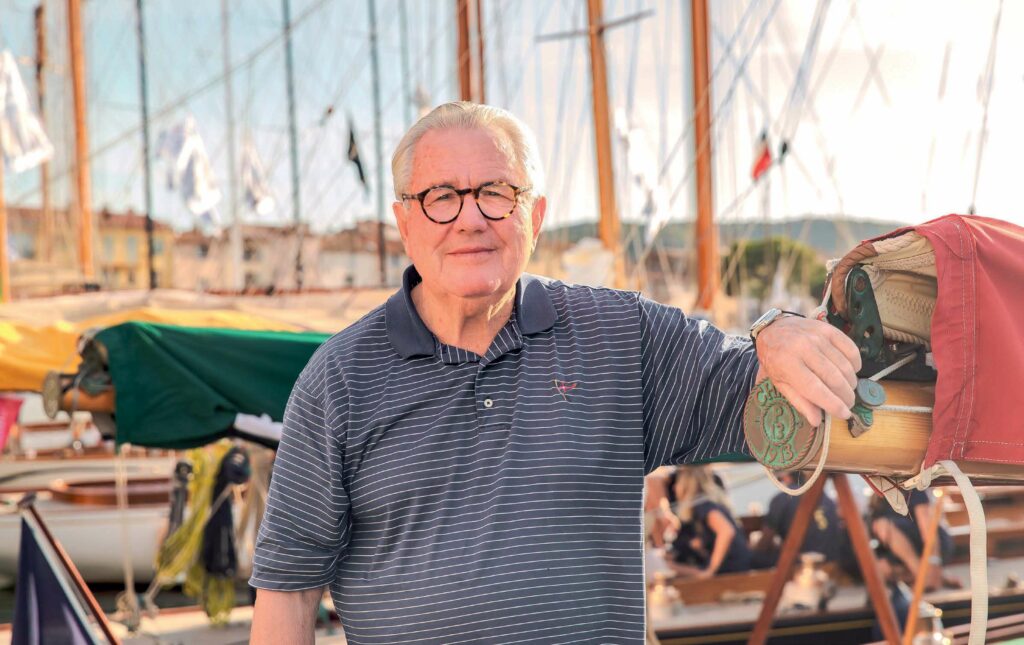
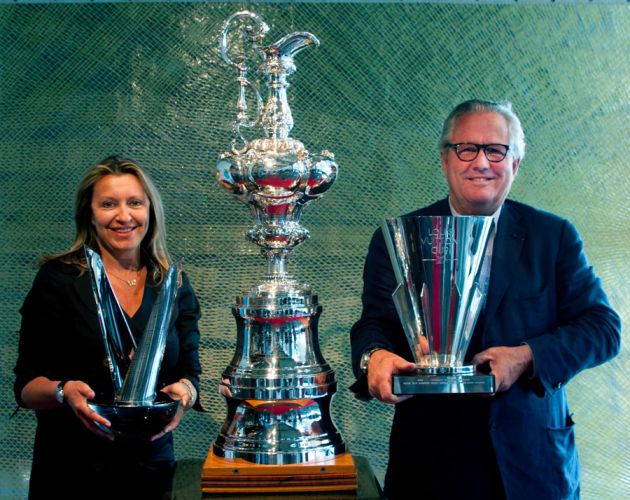
There are sailors who win races…. And then there are sailors who shape the sport itself. Bruno Troublé resides in both. From Olympic-level competition in the Flying Dutchman and Soling classes, to skippering French challenges in the America’s Cup, Bruno stood at the heart of the sport during a period of profound transformation. But his influence did not stop at the helm. Recognising the need to elevate and structure the challenger selection process, he created the Louis Vuitton Cup – an innovation that professionalised the pathway to the America’s Cup while preserving its historic soul. In doing so, he became something entirely new within the Cup’s history: not only competitor, but impresario. Yet for all the grandeur of the America’s Cup, Bruno’s enduring passion for sailing heritage has perhaps found its most poetic expression in the revival of the Universal Rule yachts – particularly the P-Class. With Joyant, a 1911 Herreshoff design resurrected and returned to European waters, Bruno has once again demonstrated his ability to connect eras. These yachts carry the elegance of another century, yet they demand the same precision, understanding and respect as any modern campaign. To be entrusted with producing sails for Joyant has been an immense privilege for Sanders Sails. But more than that, it offers an opportunity to listen; to hear directly from a man whose life has intertwined with Olympic competition, the America’s Cup, and the rebirth of classic yacht racing in Europe. We are honoured to share his reflections.
You first encountered the America’s Cup as a young sailor visiting the New York Yacht Club model room. That moment clearly left a lasting impression. What was it about the Cup and about sailing more broadly, that captured your imagination so completely?
I sailed before walking. When I was 18 in 1964 I brought the 505 I owned with Gilles Fournier (Pintia’s owner) to Larchmont for the Worlds. While there, we were invited to visit the NYYC and we were extremely impressed. The sensation is like entering a church! That memorable day, I decided two things: One to become a member of the Club and Two – to sail the French boat in the America’s Cup which I did in 1977, 1980 and 1983. The America’s Cup become part of my life for 60 years! I am still in love with this old Lady!
You have experienced the America’s Cup both as a competitor and as the architect of the Louis Vuitton Cup. How did your perspective of the sport change when you moved from the helm to shaping the structure behind it?
I admire the America’s Cup a lot. She marks for me the birth of America as a country. Before 1851, America was just an ex – British colony full of cowboys. Nothing more! My links with the Cup didn’t change when I moved from steering the French boat to kind of steering the Cup or more honestly the Challenger series: the Louis Vuitton Cup.
The revival of the P-Class and Joyant in particular, represents a very different expression of sailing heritage. What drew you to these Universal Rule yachts, and what do they offer that modern racing yachts perhaps do not?
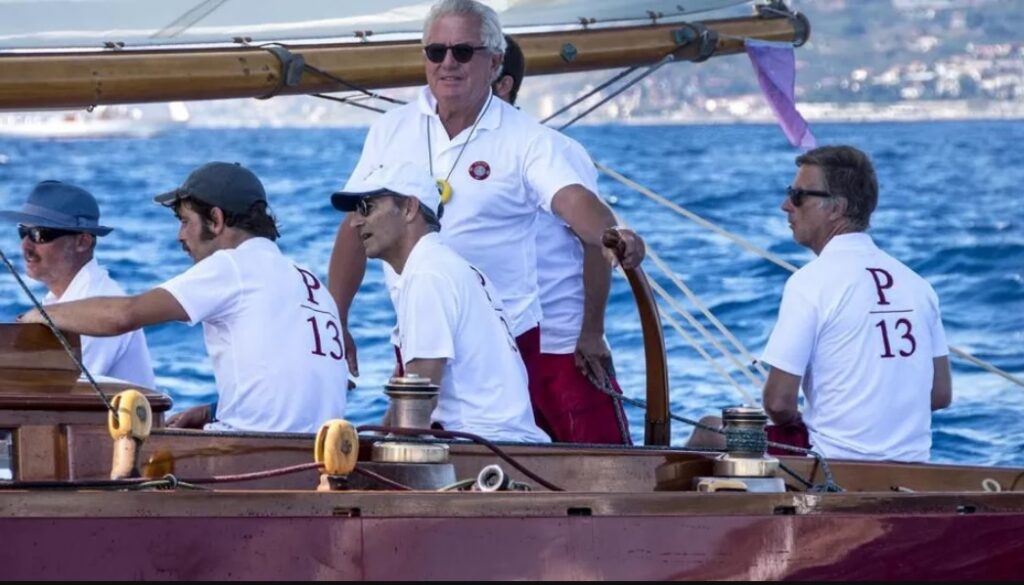
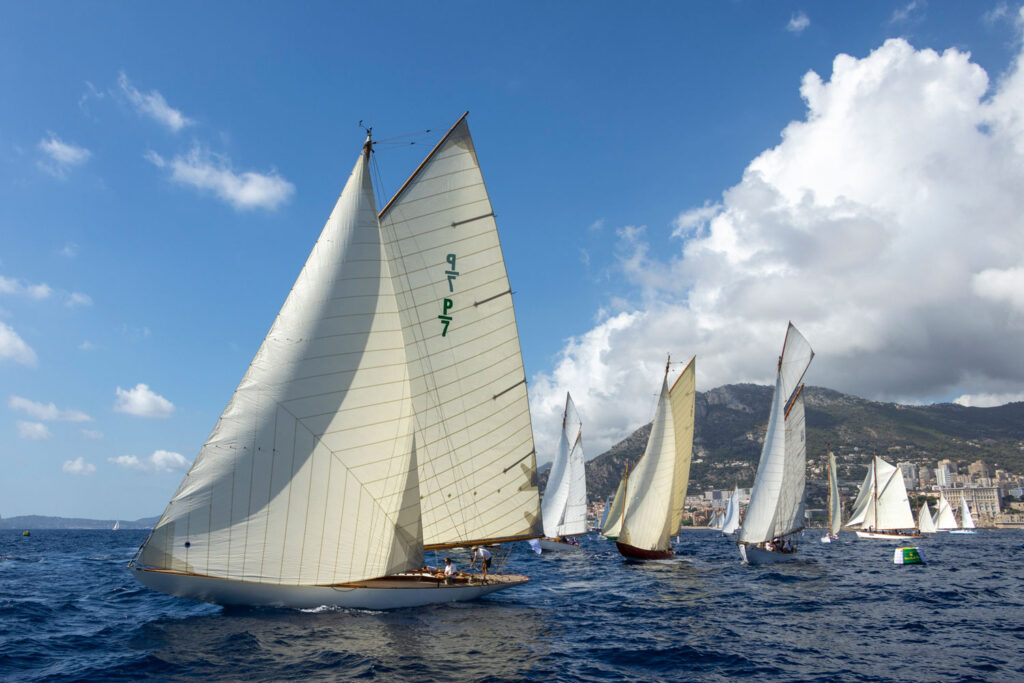
I have always liked Classic boats. We are very lucky that Classic boats are not popular in the United States. No races are organised the way they are organised in the Mediterranean. There is no interest there and you can find treasures abandoned in sheds or under the rain; everywhere – near the great lakes or along the North – East coast. They can all be found relatively cheap. At the turn of the century, those boats (P-Class) were very popular on the east coast because of the America’s Cup 50 years before. Every Monday morning in New York or Boston, sailing was the only sport which appeared in the newspapers. All the weekend’s results were reported. The boats were pure racing boats, which was not the case at the time in Europe. The boats were sleek, overpowered and designed to race short courses in light and flat conditions – nothing we sail nowadays. I have been behind the restoration of 6 yachts over the last 15 years . A real passion! I worked with the best yard on the East coast – John Anderson – where he has already restored 6 boats alone! What we do is very rewarding. We think about the owners, the builders, and the crew of these boats with emotion.
When restoring and racing a yacht like Joyant, authenticity and performance must exist in delicate balance. How do you approach preserving historical integrity while ensuring the yacht remains competitive and enjoyable to sail today?
Performance is our only goal! Those boats were not designed for cruising. Obviously, we add an engine, but we put a little more sail area to compensate. Peter Sanders and Sanders Sails are very good at that.
After decades at the heart of Olympic sailing, the America’s Cup, and classic yacht revival, what continues to motivate you? What does sailing still give you?
Sailing is my life! But not offshore racing. I hate to watch my competitors with binoculars. I love to feel them; to have them very nearby – side by side (behind if possible!).