
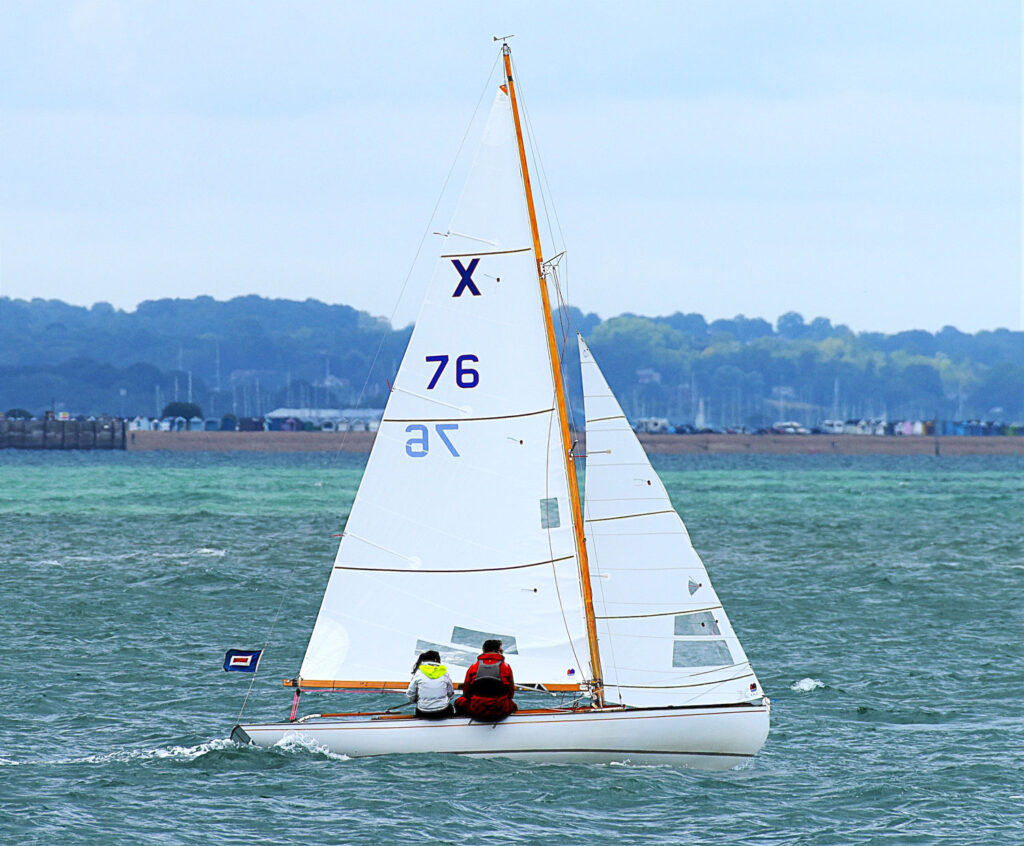
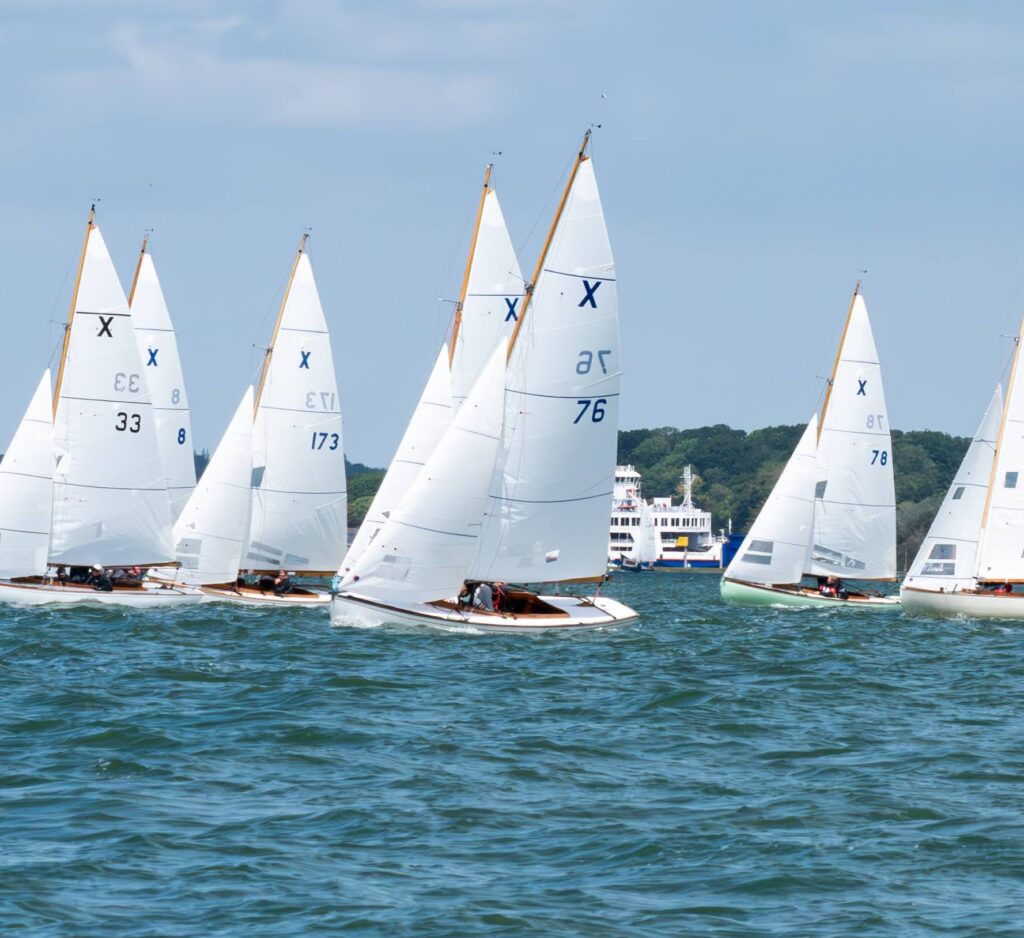
Few classes on the Solent combine heritage, close racing and pure sailing skill quite like the X One Design. Designed by Alfred Westmacott in 1909, the 21-foot keelboat has been a cornerstone of Solent racing for more than a century and continues to produce some of the tightest one-design competition anywhere in the UK. Among the front-running boats in recent seasons has been Myrtle (X76), helmed by Cordelia Ellis and sailed with her husband Richard. Competing as a relatively light team, Myrtle has become a standout performer in the fleet, combining sharp boat handling with a carefully developed sail wardrobe tailored to their style of racing. The 2025 season proved particularly memorable, with Myrtle delivering an outstanding performance at Cowes Classics Week, winning five of the seven races in a commanding display and securing the overall victory in the highly competitive XOD fleet. Working closely with Sanders Sails, Cordelia and Richard have refined their sails to suit both their crew weight and their racing ambitions. The result is a boat that feels perfectly balanced and consistently quick across a wide range of Solent conditions. We spoke to Cordelia and Richard about how they first became involved in XOD racing, the story behind Myrtle, and what continues to make the class so addictive.
The X One Design is one of the most iconic one-design classes on the Solent, with more than a century of racing history behind it. How did you first become involved with XOD sailing, and what was it about the class that captured your imagination?
Cordelia’s first experience of an XOD came after being invited to helm Heyday in the MacNamara bowl, sailing with Pat Dodd and her sister Penny. They were coached by the class’s perennial coaching legend, David Bedford, and went on to win the event several times. We have both always preferred the real sailors’ challenge of one-design racing, be it Cadets, 420s, Lasers, Contessa 32s, or the highly competitive Cowes Etchells fleet. The ultimate test of one-design racing, together with the classic beauty of the X’s we saw on the pontoon at CCYC, had us intrigued. An innocent inquiry call mobilised the Cowes Captain, and with the help of the late Mick Till and David Heritage, Myrtle was available and the cheque written before I knew better! It is good to see the Macnamara Bowl reinstated this year.
Myrtle has become a very successful boat in the fleet, particularly over the past couple of seasons. Could you tell us a little about the boat herself and how you and Richard approach preparing and racing her each year?
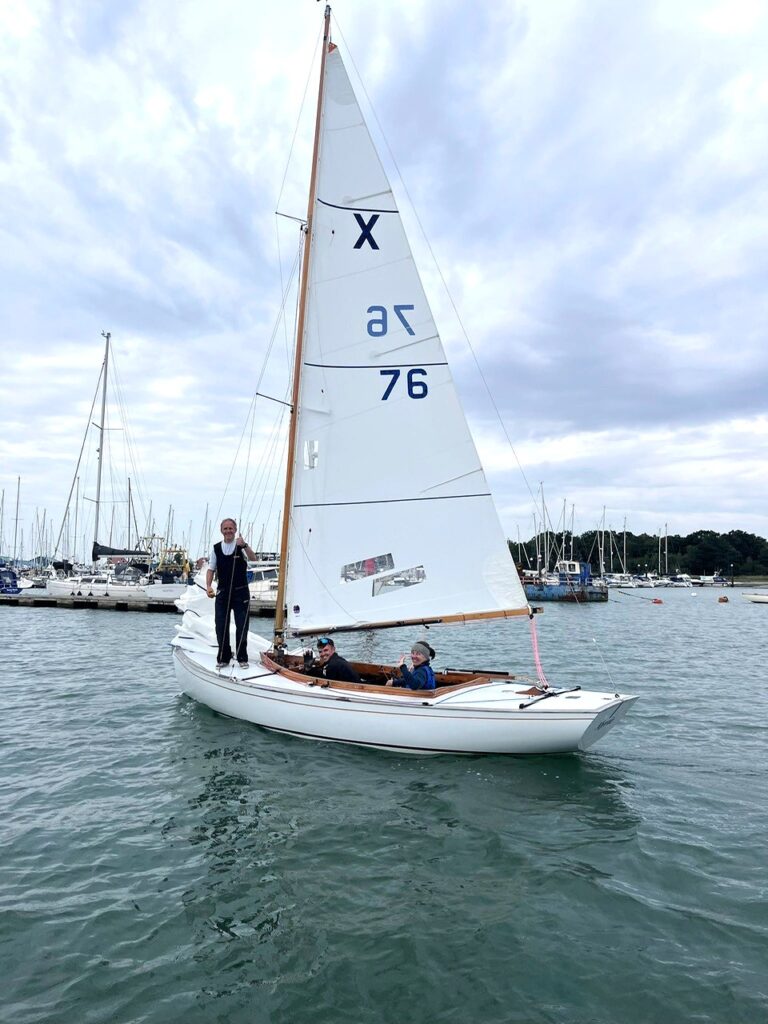
Myrtle had an odd start in life: a Woodnut built in 1930 to XOD design, but with a cuddy roof and a small engine, to be used as a tender in Poole harbour. Only in the early 50s was she converted to full XOD status and given the number 76. Myrtle has been under the care of David Heritage Race Boats for many years. Each year, we incorporate learning and new ideas from the previous season. But we are ‘only’ 9 years in and still feel at the apprentice stage of X knowledge. In the last few years, we have leant on the experience of Chris and the team at Sanders in the discussions about the best marriage of rig and sail cut.
You sail Myrtle as a relatively light team, which creates its own set of challenges in a competitive fleet. How has that influenced the way the boat is set up and the sail wardrobe we’ve developed together?
With Sanders’ advice, we have both looked to build a sail plan that suits being 80 to 100 kg lighter than the heavier teams, and that best fits the different conditions we expect. It may still be the same Solent, but the conditions in Bouldner Bay off Yarmouth, to Lymington and the Central Solent can be very different. In recent years, we found that moving to a two-jib plan has helped us. Rig controls have been updated to help a lighter crew with less grunt at the back. We also avoid lining up at the start next to the big guns!
Last season was a particularly special one, including your impressive victory at Cowes Classics Week where Myrtle won five of the seven races. Looking back on that week, what do you think made the difference and allowed the boat to perform so consistently well?
Last year’s Cowes Classic week was raced in Osbourne Bay, which, when the wind is from the south, behaves much like a big inland lake. We both started sailing Cadets on ponds, so we felt more at home in the shifty, gusty conditions. We chose the sails and rig set-up to fit the expected flatter water. So, with an inland mindset and racing in a relatively small fleet, we looked to make clean starts, keep the boat fast, and stay in phase with the shifts. We also avoided the risk of banging the corners upwind; yes, sometimes it pays large dividends near the trees in the bay, but it can also be catastrophically bad. The highlight of the regatta for us was sailing our first open event with our son, Freddie. Myrtle may not be as cool as an Etchells, but we think he did secretly enjoy the racing. The Childerleys were another family boat at the event, with Mum Lisa, son Ben and daughter Abby on helm, returning to their lovely X Palassie, and getting up to speed scarily quickly. The whole event was well run by the Royal Thames race team and was great fun… come along and try it. Fun fact: unbeknownst to us, we both sailed the very same Cadet, Hot Gossip, which was sold onto Cordelia’s family after the Ellis’.
The relationship between sailor and sailmaker can be a crucial part of success in a one-design class. How important has that collaboration been in developing Myrtle’s sails, and what do you value most in that partnership?
Putting it candidly, moving to Sanders made a noticeable difference to our boat speed, and not just from the sails but also from the discussions about rig setup and gear changing in different conditions. And not just because you are asking the questions, but the in-depth XOD experience and time sailing the boat is evident. There is something rather special about visiting the Lymington loft, where the sails are made just a stone’s throw from the water.