
Some sailors chase trophies. Others chase horizons. Competing in the Golden Globe Race places you in rare company – alone at sea, navigating by traditional methods, relying solely on seamanship, preparation and mental resilience. It is one of the most uncompromising endurance challenges in modern sailing. Guy Waites is one of the few who has taken that challenge on. Round-the-world solo sailing demands far more than speed. It demands reliability of systems, of equipment and of sails. When you are thousands of miles from land with no shore team and no margin for error; durability becomes paramount.We are proud that Guy has trusted Sanders as part of that equation, supporting him through the realities of offshore endurance. But Guy is not one to stand still. Today, he is once again circumnavigating – this time as one of the professional skippers in the Clipper Round the World Yacht Race. We caught up with him between legs of this extraordinary event, where he now leads crews of mixed experience across oceans, translating solo resilience into collective leadership. Having faced one of sailing’s most formidable solo tests and now guiding others through their own round-the-world challenge, Guy represents a rare blend of endurance sailor and offshore mentor. His continued pursuit of the horizon is not simply about distance; it is about growth, responsibility and pushing beyond comfort.To sit down with Guy is to explore the mindset behind these decisions: the preparation, the risks, the quiet moments offshore and the lessons learned when it is just you, the boat and the ocean and now, when it is you and a crew depending on your judgement. We are delighted to share his story.
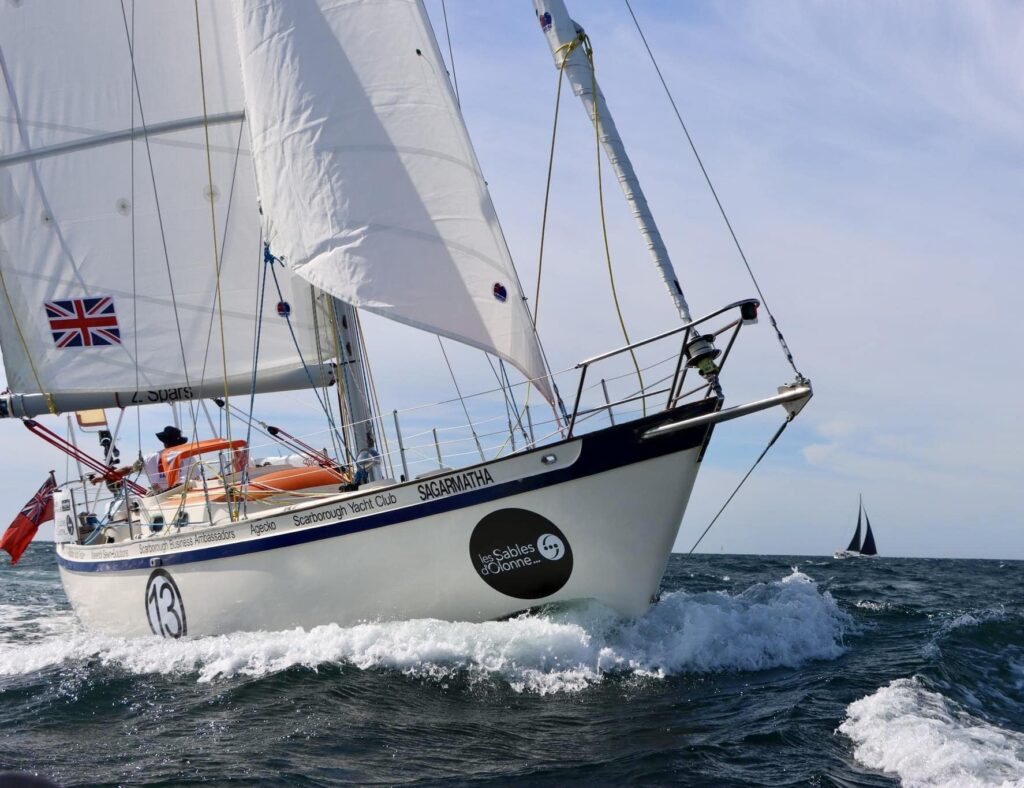
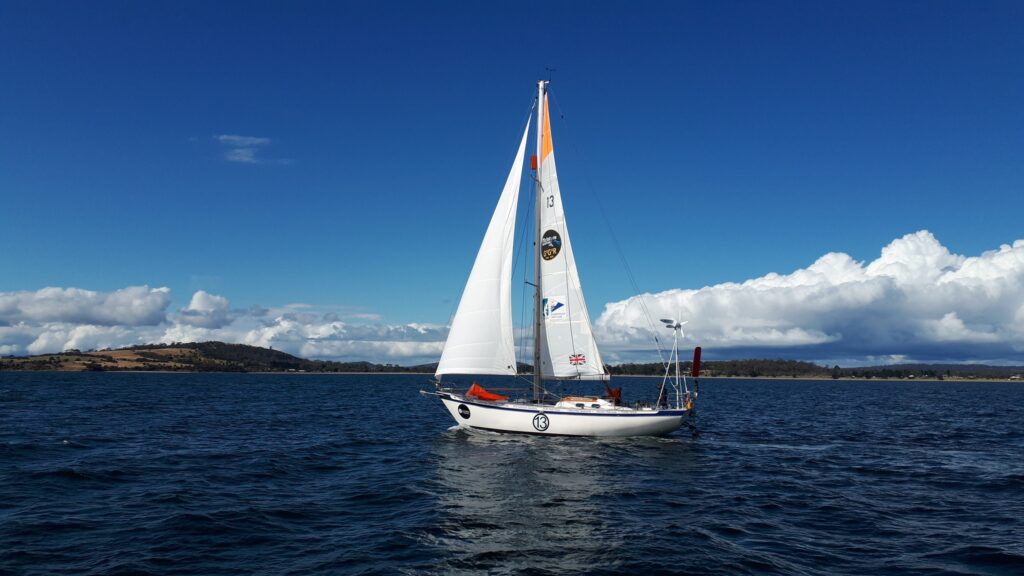
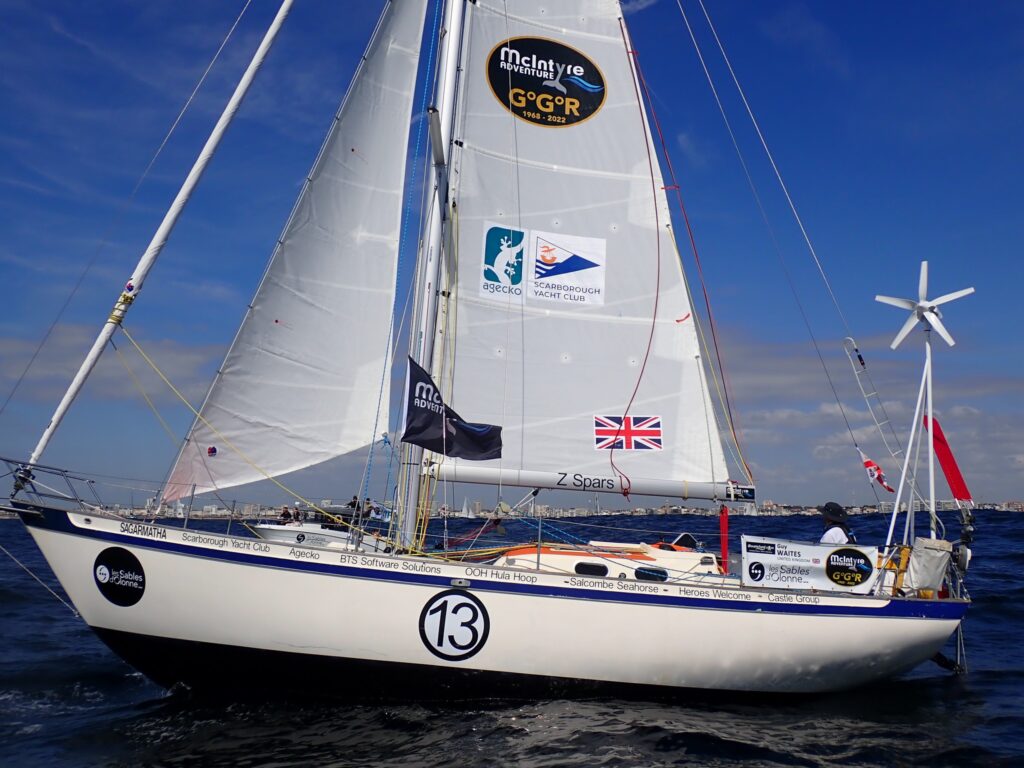
The Golden Globe Race is often described as one of the toughest challenges in sailing, not just physically, but mentally. Having sailed everything from Corribees and Contessas to a full circumnavigation attempt in Sagarmatha, what makes the GGR fundamentally different from other long-distance or round-the-world races you’ve experienced?
Endurance is the word that comes to mind here. The GGR is a race for relatively old, slow heavy displacement boats – they simply aren’t that physically demanding to sail, but you have to be in it for the long haul. Fortunately, there are a number of solo or shorthanded around the world races available to date. This is great news as there is something for everyone.
Your path to the Golden Globe wasn’t a straight line – it was built through small boats, self-reliance, failures, repairs at sea, and sheer persistence. Looking back, how important were those early, difficult miles in shaping the sailor you needed to be for a race like this?
All of my solo experiences have been founded on a budget basis. I simply could not afford to do it any other way; the Jester Challenge represents a great opportunity for people to get into shorthanded sailing on a budget. I sailed the 2010 jester challenge to Newport, Rhode Island in a Contessa 26, that being my first experience of Sanders, when Pete adjusted a main sale with the addition of a third reef for me. It is fundamental for any solo sailor to be resilient, having sails that you can depend upon in all weathers are a great step in the right direction. Building my experience in small boats has been the backbone of my solo experience. It gives me enormous confidence in my ability to overcome problems at sea; being self-sufficient is all part of resilience.
The Chichester Class restart and the realities of time limits, rules, and recovery add another layer of pressure to an already demanding event. How did you manage the psychological challenge of restarting, knowing that you had to change a goal that you had been working towards for so many months?
The decision to stop in the Golden Globe Race when I pulled into Cape Town was a no brainer, with Sagarmatha hanging in goose barnacles and painfully slow through the water. All of my enthusiasm for sailing had all but drained away. I simply had to stop, lift her out of the water, clean the hull, re-anti foul and get going again, as soon as I did – I very quickly regained my love of sailing and I have never regretted that decision to this day. The second stop in Hobart due to the life raft being broken off the deck by a breaking wave was not one that was really within my control, at this point I was out of the race effectively disqualified under the Golden Globe Race rules, in fact this was enormously freeing in my circumnavigation, the decision to continue without the support of the Golden Globe Race management was really one of the easiest decisions to make, from then on it was pure sailing without rules, without boundaries and from there to the finish was a relative breeze.
Sagarmatha is a boat with extraordinary history and has now carried you through a significant chapter of your own. From a sailor’s perspective, what qualities do you value most in a boat and sail plan when everything depends on reliability and balance and how did you utilise Sanders Sails to help in this?
At the time that I acquired Sagarmatha, it was a very simple decision again. I did not have the budget for a potentially race winning boat and saw myself from the very beginning as a budget entry with the aspiration purely of making it round and completing my circumnavigation, reliability and dependability mattered to me most and my choice of both Sagarmatha and Sanders Sails afforded me that reliability, with Sanders long history associated with the Tradewind 35, in which I sailed coupled with good solid British workmanship. I thought of no one else!
Looking ahead to WorldStar 2026, which brings together many of the world’s most experienced solo sailors, how are you thinking about preparation this time around? What lessons from the Golden Globe will shape your approach, and what role do sails and sailmaking play in giving you confidence for another global challenge?
I returned from the Golden Globe race with nothing more than a broken stanchion and a few missing wind turbine blades, no sail damage to speak of, fundamentally Sagarmatha was a well-found boat thoroughly prepared for the rigours of sailing 250+ days around the world and therefore the perfect choice to make my second attempt at a single-handed non-stop circumnavigation of the globe via Capo Horn. As I am currently a skipper in the Clipper Round the World Race, I in fact have very little time for preparation between the end of the Clipper race and the start of the Worldstar 2026, taking Sagarmatha for a second circumnavigation was a very simple and economical choice. I have very little preparation to make given the short time between races and a craft I clearly know very well having made all of the preparation work myself in recent years. Sagarmatha is a well-founded, solid boat and I know she will look after me a second time around the world. Once again; I will be choosing Sanders Sails for the same reasons – reliable, dependable, cost-effective, British made by a sailmaker with whom I have built a good relationship, one I can trust.