
Round the Island Race: A Practical First-Timer’s Playbook
The Round the Island Race is one of those rare events that feels bigger than racing. It is a full lap of the Isle of Wight with hundreds of boats around you; from weekend cruisers to serious race teams. That mix is exactly what makes it special, but it is also what can make a first attempt feel intimidating. This guide is written for sailors who want a good, safe, enjoyable race and a clean result. You don’t need to be a hardened racer. You do need a plan, tidy boat handling, and a focus on clear air and simple decisions. Here are our 10 pointers to help you get the most from your opening Round the Island Race.
1) Before you leave the dock
A smooth day starts with boring details done well. Have a short crew brief. Who is on time, who is on navigation, who calls crossings, who runs halyards, who handles foredeck, who is the “calm voice” when it gets busy. Check the basics that end races early: fuel, engine cooling water, anchor secured, mainsail hoists and drops cleanly, jib sheets run free, spinnaker gear (if you’re using it) rigged so it can’t become a knot sculpture at the worst moment. Agree your “no hero” rules. For a first RTI, it’s completely fine to keep manoeuvres conservative, give marks and other boats space, and avoid last-second squeezes. The race is long enough that you’ll gain places simply by not making mistakes.
2) The start without the stress
The start is busy, noisy, and full of boats doing different speeds and different plans. Your job is not to win the start. Your job is to get going cleanly, in control, with your sails set. If you can find a lane of clear air, protect it. That often means doing the simple thing even when you technically have rights. Ducking one boat early can save you five minutes of sailing in dirty wind later. Keep your headsail slightly under-trimmed in the first few minutes. A jib that’s a touch open is forgiving, accelerates better, and makes it easier to steer through traffic without stalling.
3) Your number one rule all day: clear air
This is true of so many boats: clear air beats clever theory most of the time. If you’re constantly blanketed, forced to tack, or stuck under someone’s wind shadow, you’re losing speed and control at the same time. Make one or two deliberate moves to get free, then settle in. Think of it as sailing your own race inside a moving crowd.
4) The big compression points
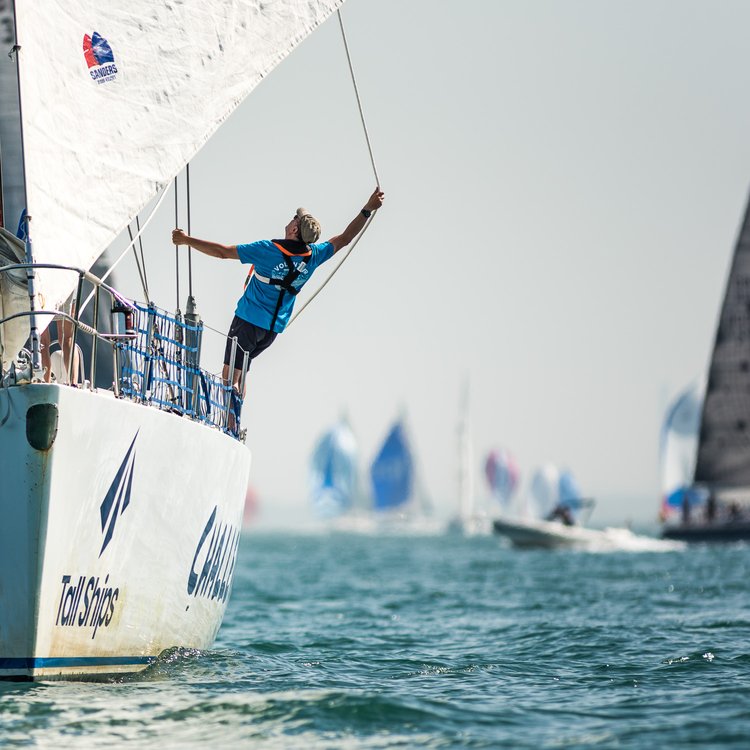
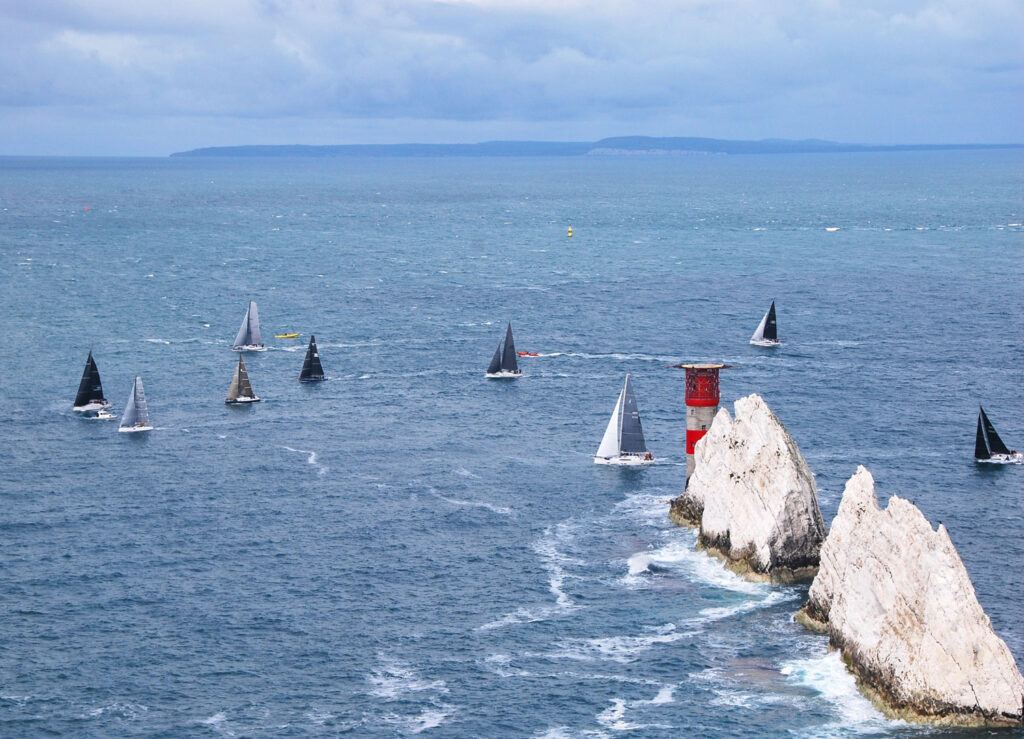
There are a few places where the fleet naturally bunches up. These are the moments that cause most of the drama, so treat them with respect.
- Approaching headlands and marks: traffic converges, boats slow unexpectedly, and wind can be patchy.
- Any “inside option” that tempts people to cut too close: it’s rarely worth risking damage or a penalty.
- Areas with overfalls and disturbed sea state: a small mistake becomes a big one when the boat is loaded up.
The beginner’s win is to arrive early enough that you have choices. That means preparing sails and crew well before the turn, not at the last moment.
5) Tides and local effects, made simple
You can go very deep into Solent tides, but you don’t need to for a good first race. Keep it simple:
- Know when the tide turns and whether you’ll have it with you or against you on each side of the island.
- If you are in a slower boat and fighting foul tide, it can be worth staying inshore and out of the worst of it, rather than sailing the “perfect line” in stronger adverse flow.
- Do not trade all your wind for a tiny tide gain. If you lose pressure and end up parked, the tide advantage disappears instantly.
6) Sail trim that helps in real RTI conditions
The Round the Island Race is rarely “steady state” sailing. You will see traffic, disturbed air, wind bends, and lots of small course changes. A few trim habits make life easier:
- Do not over-sheet the jib. A slightly open leech keeps the slot working and gives you a wider steering groove.
- Keep the boat on its feet. Excess heel is slow and makes the helm heavy, which encourages over-trimming and stalling.
- Prioritise acceleration after manoeuvres. Get back to speed first, then squeeze height.
- Reef early if you are overpowered. Carrying too much sail loads the boat up, slows you down, and increases the chance of mistakes in traffic.
7) Spinnaker or white sails?
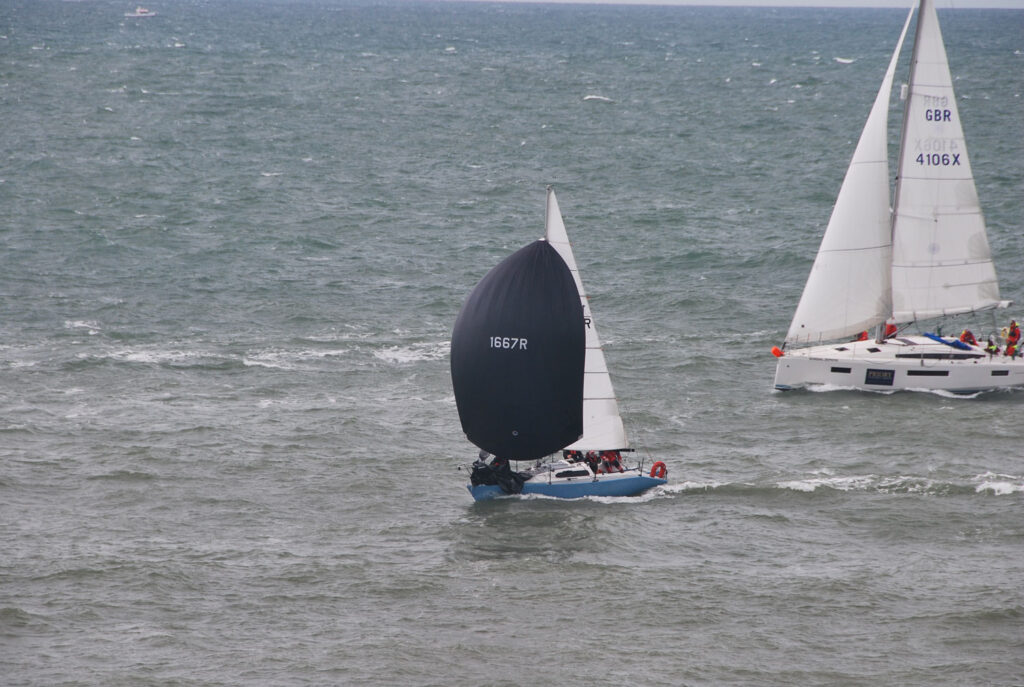
For a first attempt, it is completely reasonable to go round under white sails only, especially if your crew is learning or you expect heavy traffic. If you do fly a kite, keep it simple:
- Choose safer hoists and drops, not the “best” ones.
- Give yourselves time before each manoeuvre.
- Aim for steady pressure and a stable shape rather than maximum depth at all costs.
8) The finish trap
People relax too early. That’s when places get thrown away. The last section can take longer than you expect, and tired crews make scruffy sail changes and slow tacks. Keep it tidy, keep talking, and keep sailing the boat until you are through the finish line.
9) A good result looks like this
For first-timers, a great Round the Island Race is not defined by the trophy list. It is defined by a boat that stays moving, a crew that stays calm, and a day that finishes with everyone smiling and the gear intact. If you’d like advice on sail choice, trim priorities, or what upgrades make handling easier for your boat, we are always happy to talk it through. The right sail setup doesn’t just make you faster – it makes the whole day easier.
10) Have Fun
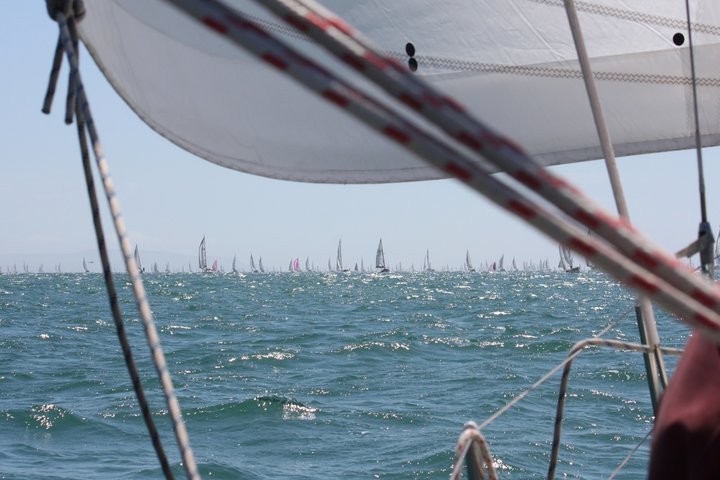
Above all else, remember that the Round the Island Race is meant to be enjoyed. It’s a long, memorable day on the water, so fuel the crew properly, keep spirits high, and don’t forget to soak it all in. A few sugary snacks at the right moment can work wonders. Take photos, capture the moments, and enjoy being part of one of the most spectacular mass-participation sailing events in the world. And if you’re flying Sanders Sails, we’d love to see them out there – tag us on your social channels so we can follow your day and share in the fun.