
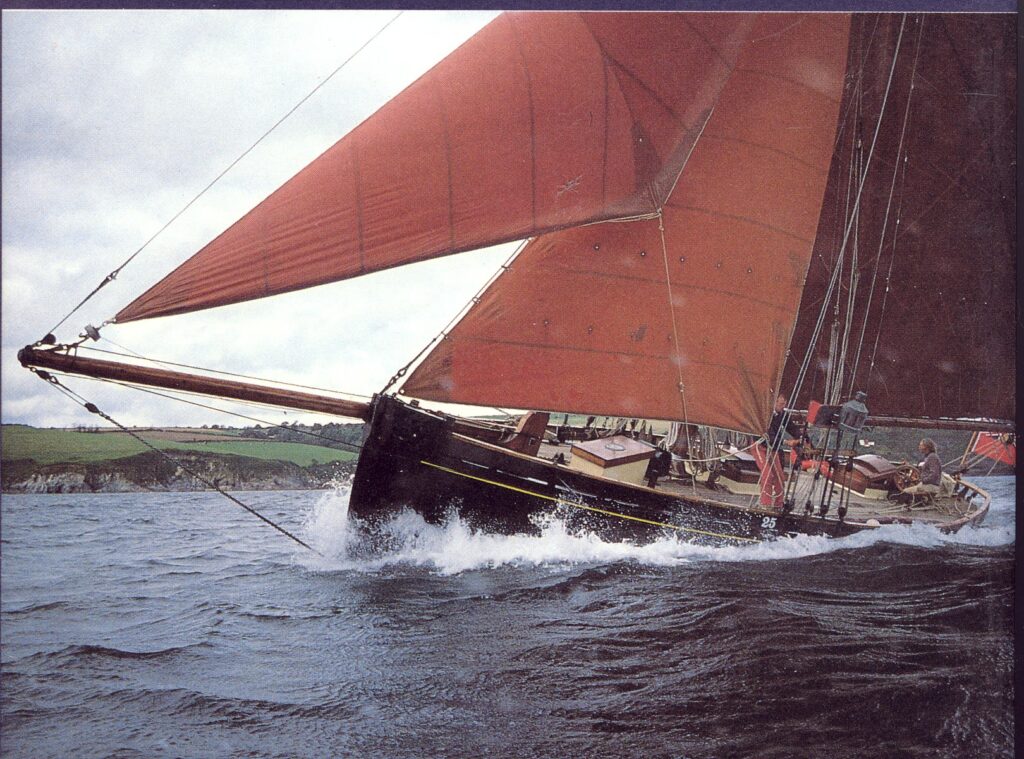
There are certain names in sailing that transcend classes, fashions and generations. Tom Cunliffe is unquestionably one of them. Author, sailor, teacher, broadcaster, raconteur and adventurer, Tom has spent a lifetime sharing the sea with others. Through his books, television work, lectures and articles, he has educated and inspired sailors across the world; from complete beginners finding their feet afloat, to experienced offshore skippers searching for deeper seamanship and understanding. Yet what has always made Tom so admired is not simply his knowledge, but the way he communicates it. Honest, practical, humorous and deeply rooted in real experience, his writing and storytelling have a rare ability to make readers feel as though they are sitting beside him in the cockpit, listening to the lessons of a life genuinely lived at sea. From the Bristol Channel pilot cutter Hirta, to the unforgettable Westernman, and now aboard the beautifully balanced Mason 44 Constance, Tom and Ros have continued to cruise extensively and thoughtfully, proving that seamanship is not about fashion or complexity, but understanding your boat, your crew and the sea itself.
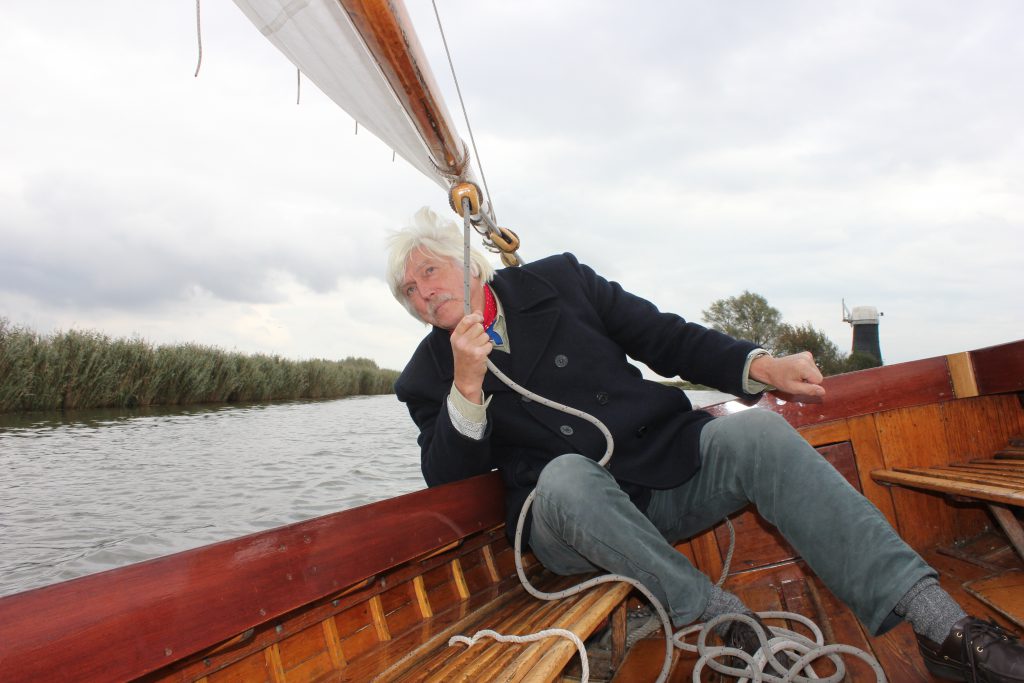
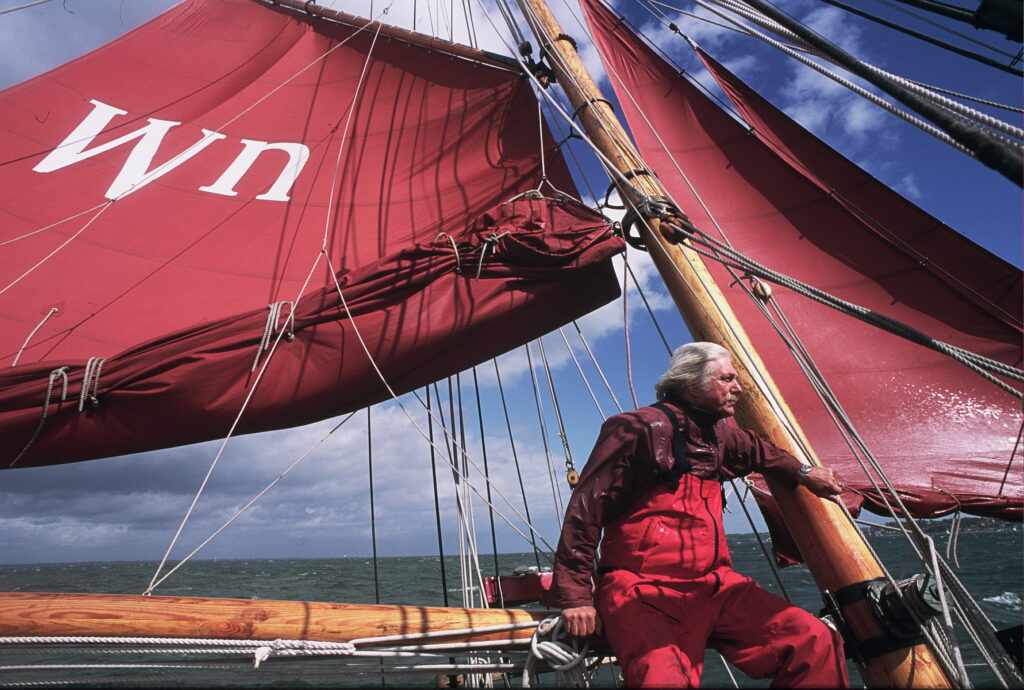
At Sanders Sails, we have been privileged to share a relationship with Tom spanning decades. Over the years, a particularly close friendship developed between Tom and Peter Sanders, built on mutual respect, craftsmanship and a shared appreciation for traditional seamanship blended with practical innovation. Working closely with Tom on Constance’s genoa, drifter and in-boom furling mainsail has been another chapter in a relationship we are incredibly proud of. For this edition of Meet the Sailors, we sat down with one of the true gentlemen of British sailing to talk about the boats, the voyages, the lessons and the enduring magic of life under sail.
You have sailed and taught through an extraordinary period of change in the sailing world. From traditional working craft to modern cruising yachts, what do you feel has remained timeless about good seamanship throughout all those years?
I just saw a Facebook reel of a boat approaching a narrow, iron-bound lee-shore harbour in a gale with waves breaking across the entrance. The boat literally surfed in. The skipper must have done something right in another life because her survival seemed to me a direct manifestation of the mercy of the Almighty. Attempting the entrance in those conditions was bonkers. The lee shore never changes. Sailors should have an instinctive dread of it, knowing when not to attempt a suicidal harbour entrance and when to stay at sea where, though uncomfortable, they should be safe enough. That’s one thing that never changes. Something else is the need to keep alert at all times and look for trouble before it happens so that you can make sure it doesn’t – especially near the end of a passage when you’re tired.
Many sailors know you through your books and television work, but your stories always seem deeply connected to the boats themselves. Looking back across vessels such as Hirta, Westernman and now Constance, which boat has taught you the most about yourself as a sailor, and why?
A sensible sailor never stops learning. These days, I spend four months of the year sailing my boat in a sort of semi-retirement, but some lesson or other crops up every time, so even with the Bermudan-rigged Constance there’s plenty of enlightenment waiting for the sailor with eyes to see.
That said, I do believe that making long voyages in serious gaff-rigged boats has given me a level of understanding I might not otherwise have achieved. Not only have they set me straight on basic deck seamanship like splicing, knotting, coiling, stowing and the rest, they have also taught me how there’s no point in trying to fight the sea. ‘He fought the ocean and won,’ is the sort of nonsense nobody who has been out there for long would ever come out with. You can’t defeat something inanimate. You can’t even do battle with it. What you can do is respect its power and use the elements to aid your cause. Pre-planning and having the boat in the right place at the right time can thus be vital in coastal situations. Out on the ocean, you must have a plan for surviving an ultimate storm. My gaffers with their traditional hulls, designed and built by men who’d been there, done it and knew what they were talking about, were remarkable in their ability to look after themselves. One cannot say the same about some modern boats. The trick is to understand a yacht’s limitations.
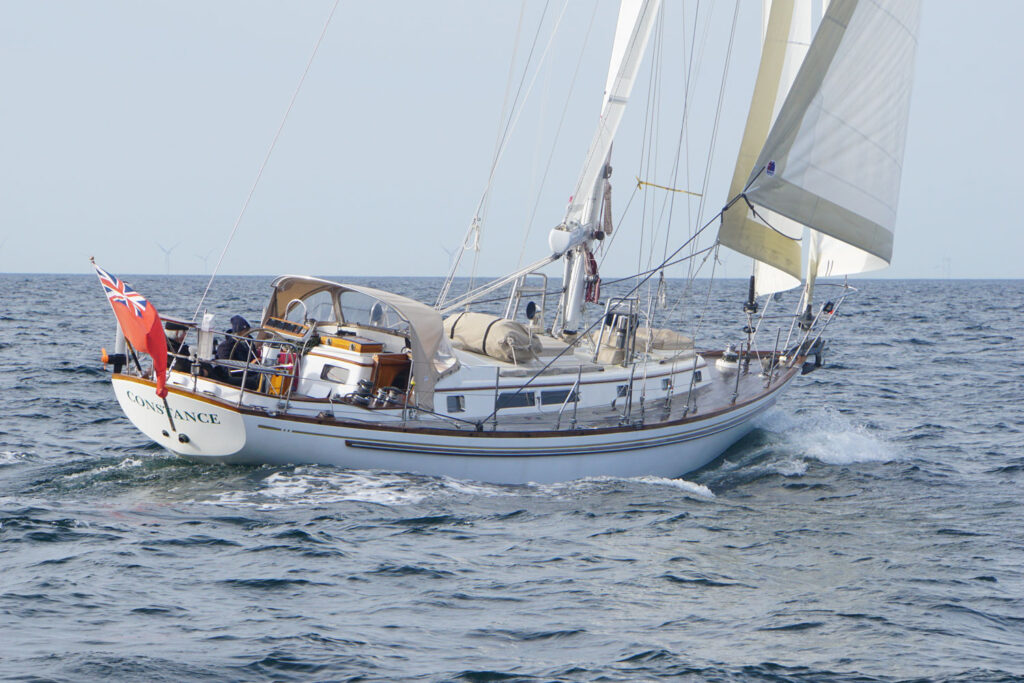
Your Mason 44 Constance beautifully blends traditional offshore values with practical modern systems, including her in-boom furling setup. What drew you to this style of yacht and how has she shaped the way you and Roz cruise today?
We were still sailing the 22-ton gaff cutter Westernman with 1500 square feet of fore-and-aft sail and no useful winches, when we had bus passes. Shortly after we had two-handed her to North Africa and back, we decided that it might make sense to quit while we were on top. As age slowly sapped our strength, we didn’t want to end up with a boat that was asking too much of us to sail her properly. We’d always admired the North American centreboard yawls designed by such masters as Rhodes, Stevens and Alden, so away we went to the US in search of a fibreglass version. We wanted GRP because after a lifetime of service to the wooden-boat cause we could see the time coming when the maintenance would be more than we chose to do. In the end, we couldn’t find quite what we were looking for, but we did come across a top-of-the-line Mason 44 which had many of the characteristics of the yacht of our dreams. She wasn’t a yawl, she didn’t have a centreboard and she drew 7 feet, but an old pal once remarked that you can’t have everything in this life, so we took her on. We renamed her Constance after my late mother and began what has so far been 15 years of great satisfaction. Roz and I are still very active although my joints are getting stiffer but we have the boat rigged so everything leads to the cockpit, including the control lines for the in-boom mainsail. Coupled with an electric winch, this has removed the need for any heroics on the foredeck. My only visits there at sea are to unroll or roll away the code zero which we set all the time unless it’s just blowing too hard. We love that sail. It’s so much easier in every respect than the genoa and it brings the boat to life. We also enjoy the fifty-horse Yanmar, which we are happy to fire up whenever it will make our day. After all, we sailed our 13-ton Colin Archer around the Oceans for years with no effective engine at all, so we have nothing to prove.
You have inspired generations of sailors through your writing and teaching. When you meet younger sailors today, what qualities or attitudes do you most hope they continue to carry forward into the future of sailing?
Humility in the face of the might of the ocean, a zest for real life, inherent self-belief together with a refusal to give up in the face of the hardships which will inevitably come, a convivial nature and a desire never to stop learning. These, together with an appreciation that boats, technology and life always develop, and that we are simply one ripple in the stream. To understand ourselves and make the most of what we have to offer, we need to appreciate the history of seafaring and those who have gone before, as much as we must look forward and see where a life at sea might lead us.
After a lifetime at sea, countless miles sailed and stories gathered around the world, what is it that still makes you smile when you step aboard and cast off the lines?
Time was when casting off your lines and setting out across the ocean to another continent meant nobody knew where you were or what you were doing for a month or more. The bank manager couldn’t catch you, the unpaid parking fines could be tossed to the four winds and any social difficulties you’d incurred were consigned to history. Modern communications have knocked all this freedom on the head and people now chat to each other across unimaginable distances as though they were talking over the garden fence. Most folks like this. I don’t. The first thing I did when I bought Constance was sell the HF radio on eBay. One thing remains above all others, however. It’s the feeling when you swing off the wind for the first time in a season, the mainsail fills and the yacht leans to the breeze. You unroll the headsail and she comes to life. If you have a tiller, you get the whole experience because you can feel the mystery of flowing air being converted by keel and rudder into forward motion through your hand. Most of us have wheels now, but it’s still happening. When all’s been said and done, it’s the magic of actually sailing that makes all the grief worthwhile.