
Understanding What Makes a Good Cruising Sail
Cruising sails are often asked to do more than any other type of sail we make. They need to be forgiving, easy to handle and durable, while still performing across a wide range of conditions – often with minimal crew and without constant adjustment. When sails are working well, the boat feels balanced, predictable, and enjoyable to sail. When they are not, control becomes harder work, heel increases and progress slows.
Getting the most from your cruising sails is not about chasing outright speed, but about maintaining good sail shape over time. Poor shape usually caused by stretch, material fatigue, or inappropriate construction, sits at the root of most cruising performance issues. Choosing the right cloth and construction for how you sail is therefore one of the most important decisions you will make.
This guide focuses on the core working sails within a cruising inventory and explains how different materials and build methods influence performance, durability, and long-term value.
How Cruising Sails Are Built
At a fundamental level, cruising sails fall into three broad categories: woven, laminate and membrane sails. The differences between them are less about raw speed and more about how well they hold their designed shape as loads, time, and conditions take their toll.
For cruising sailors, ‘performance’ usually means:
- Reduced heel and weather helm
- A wider steering groove
- Predictable handling in changing conditions
- Sails that continue to work properly years down the line
All of this comes back to stretch control.
Construction Methods
There are two common construction approaches used in modern cruising sails:
Cross-cut construction
Panels run horizontally across the sail using woven or laminated cloth. Simple, proven, and cost-effective, but more prone to stretch over time.
Tri-radial construction
Panels are oriented from the corners to better follow primary load paths. This improves shape stability and longevity, especially when paired with composite materials.

Endurance Wovens
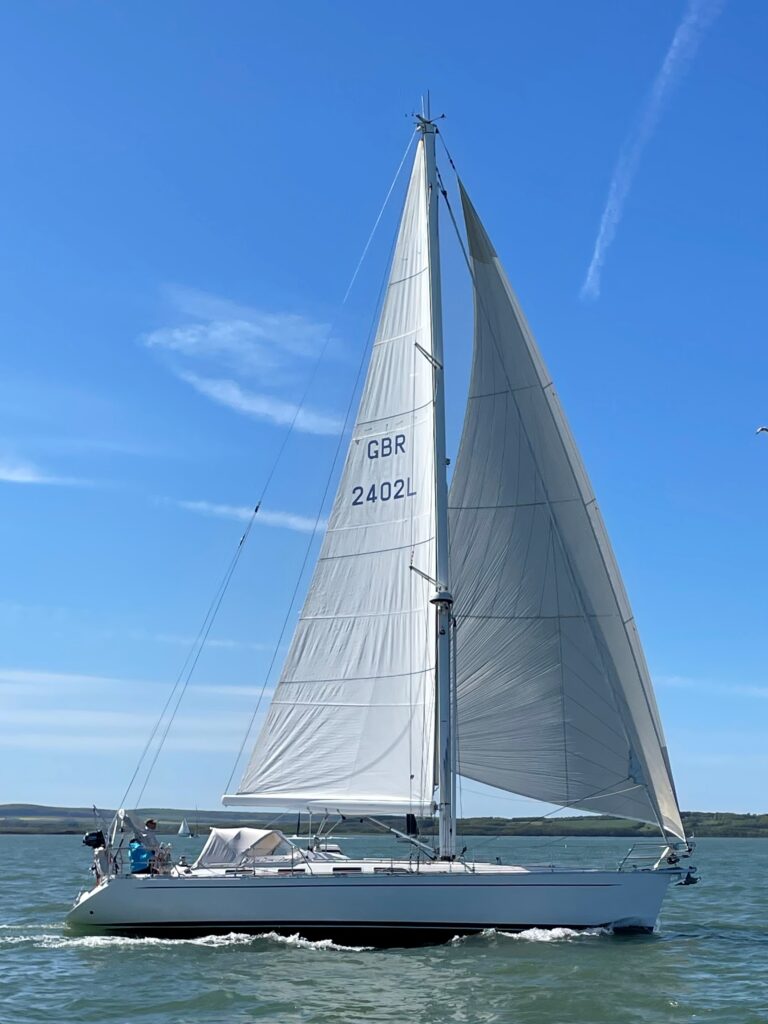
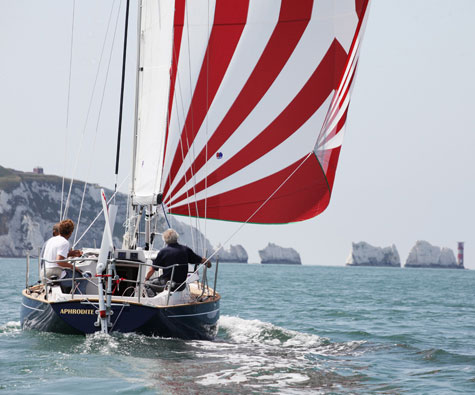
High-quality woven polyester remains a very strong choice for many cruising boats. Our endurance wovens are engineered for stability, using tightly woven yarns, controlled resin systems, and careful finishing to reduce stretch and prolong usable life. Woven sails tend to lose performance gradually. As the resin wears and fibres relax, the sail becomes fuller, draft moves aft, and control suffers – often well before the sail reaches the end of its structural life. That said, a well-designed endurance woven sail, properly matched to the boat and sailing style, can deliver many years of reliable service and excellent value. Tri-radial woven constructions can further improve shape retention at a modest increase in cost, offering a worthwhile upgrade for more active cruisers.
Durable Laminates
Durable laminates bridge the gap between traditional wovens and full membrane sails. These materials use straight, load-bearing fibres laminated between protective skins, dramatically reducing stretch compared to woven cloth. Because the fibres are not woven over and under each other, they carry load more efficiently and resist distortion under sustained pressure. The result is a sail that holds its designed shape far longer, maintaining a cleaner entry, controlled depth, and improved balance. Modern cruising laminates are far more robust than earlier generations, but they still benefit from good care and ventilation, particularly in warm or damp climates. For many cruisers, durable laminates represent an excellent balance of performance, longevity, and cost.
Sanders Filmless Membranes (SFM)
Sanders Filmless Membranes represent the highest level of cruising sail construction. Rather than working within the limitations of pre-made cloth, SFM sails are built as a panelled structure with fibres placed exactly where the sail needs strength and stability. This approach allows us to engineer shape within horizontal seams with exceptional precision and smooth load paths. The result is a sail that holds its designed form for far longer, resists stretch extremely effectively, and delivers consistent handling across a wide wind range.
SFM sails are particularly well suited to:
- Larger cruising yachts
- Boats sailed frequently or offshore
- Owners seeking maximum longevity and control
- Applications where sail shape consistency is critical
- Boats where weight saving is important
How Cruising Sails Age
All sails change over time – the difference lies in how they change.
- Woven sails tend to soften and stretch progressively, with performance declining steadily.
- Laminates and membrane sails typically retain a high level of performance for much longer, before experiencing a more abrupt drop-off near the end of their usable life.
Regardless of material, sail life is influenced by:
- Sailing hours and conditions
- UV exposure
- Flogging and handling habits
- Storage and winter care
Regular inspections allow small issues to be addressed early and, in some cases, enable recuts or adjustments that extend the sail’s effective life.
Visit our materials page for more details.
A Note on Mainsail Stowage
How a mainsail is handled and stowed has a significant influence on both design and material choice. Conventional slab-reefed mainsails stacked on the boom remain the most mechanically simple and widely trusted option. Lazy jacks, stackpacks, and upgraded luff tracks can make handling far easier, particularly as sail size increases.
Batten configuration and reef placement are key design considerations here. In-mast furling mainsails prioritise ease of use, but impose tighter constraints on shape and material stability. Because these sails must roll smoothly into the mast, controlling stretch is critical. This is where radial constructions, durable laminates, and membrane technologies offer real value – allowing proper depth and shape without compromising furling reliability. Vertical battens can add area and performance, but introduce additional wear points that must be carefully engineered.
Choosing the Right Inventory
Many cruising inventories benefit from at least two headsails, typically a working jib and a larger genoa. Offshore sailors may require a broader range for safety and versatility, while day cruisers can often simplify.
As a general rule:
- Choose the smallest sail that still performs well in your typical conditions
- Prioritise shape stability over raw size
- Consider how sails will be reefed or partially furled in practice
Roller furling systems remain the most common solution for headsails, valued for their simplicity and reliability.
In Summary
Cruising sails don’t need to be extravagant, but they do need to be right.
The best cruising sails are those that are:
- Designed specifically for your boat and rig
- Built from materials suited to how you sail
- Able to retain their shape as loads and years accumulate
Whether that points you toward endurance wovens, durable laminates, or Sanders Filmless Membranes, the goal is the same: a sail inventory that makes the boat easier to sail, more balanced, and more enjoyable every time you leave the dock. If you are unsure where to start, that conversation is exactly what we, at Sanders are here for.
Visit our cruising page for more details.