
Making Downwind Sailing Safer, Simpler, and More Enjoyable
There are many moments in sailing where the theory is easy but the reality can quickly become complicated. Spinnakers are a perfect example. Hoisting a large downwind sail can feel wonderfully effortless, but bringing it back on board; particularly when short-handed can be a very different story. This is exactly why the spinnaker sleeve, often referred to as a spinnaker sock, has become such an essential piece of equipment on modern cruising and short-handed performance yachts. When used correctly, it transforms the management of large downwind sails, allowing a single sailor or small crew to hoist, control, and recover a spinnaker with confidence.
At Sanders Sails, we recommend and supply ATN spinnaker sleeves exclusively. In our experience they represent the most reliable and thoughtfully engineered system available. Their design, developed in the mid-1980s and refined ever since, solved many of the problems that early spinnaker socks suffered from -particularly control line tangles and inefficient outlets for trapped wind when dousing. The result is a system that simply works.
The Origins of the Modern Spinnaker Sleeve
The concept of containing a spinnaker inside a sleeve date back several decades, but the early versions were often unreliable. Control lines would twist around the sail, sleeves would snag during hoists, and the mouth at the base struggled to gather large sails cleanly. It was not until the development work carried out by French sailor and engineer Etienne Giroire, founder of ATN, that the modern sleeve truly became a dependable sailing tool. His key innovation was separating the control line into its own side sleeve, ensuring that it could never foul with the sail itself. Combined with an oval-shaped mouth and a closed-loop control system, the ATN sleeve transformed the practicality of handling large downwind sails. Today thousands of sailors around the world rely on this simple but highly effective solution.
Why a Spinnaker Sleeve Makes Such a Difference
The real advantage of a sleeve becomes clear the first time you need to recover a spinnaker in fresh breeze or when sailing short-handed. Instead of wrestling a full sail down through the foredeck hatch while it remains partially powered, the sleeve allows the sail to be contained first. Once the sock is pulled down over the sail, the spinnaker instantly becomes manageable, losing its power and collapsing safely inside the sleeve.
For many cruising sailors this is the moment where downwind sailing becomes far less intimidating. It allows larger sails to be used more confidently and extends the range of conditions where they can be deployed safely. In short, the spinnaker sleeve turns what was once a physically demanding manoeuvre into something controlled and predictable.
Preparing the Sail and Sleeve
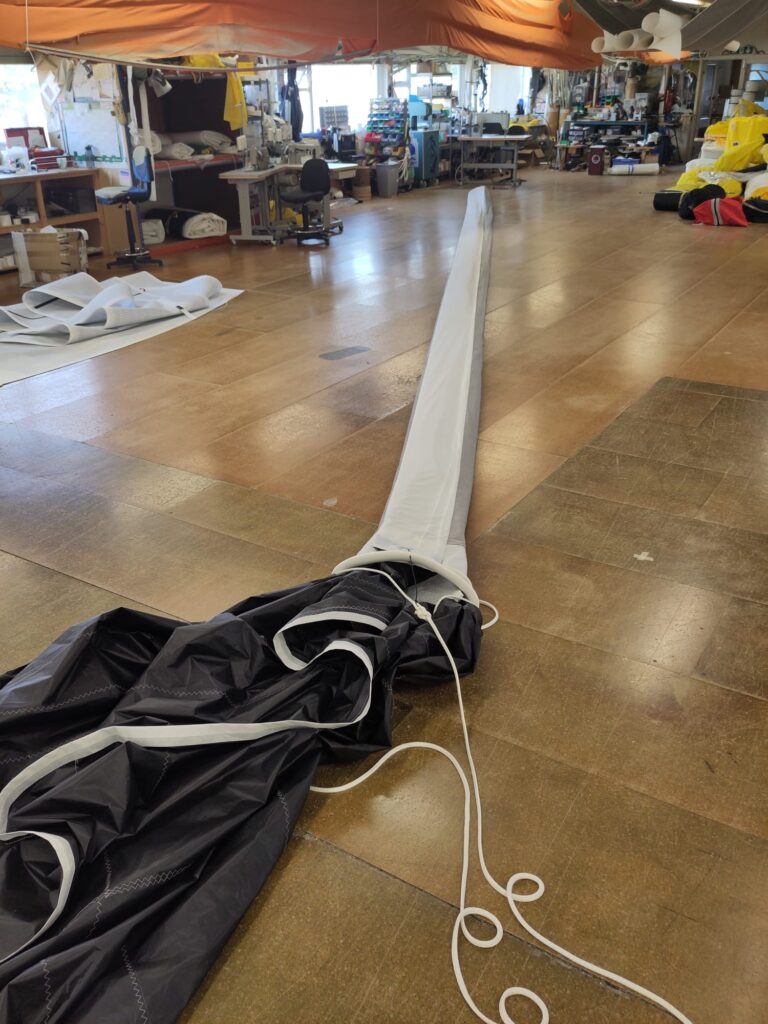
The most reliable way to prepare a spinnaker sleeve is ashore or on a calm pontoon where the sail can be laid out fully. With the sail stretched out, the sleeve can be fed down over the spinnaker starting at the head, ensuring that the control line and the sleeve itself are completely free from twists. A simple visual check along the length of the sleeve’s contrasting stripe quickly reveals whether the sock is twisted. This small detail, incorporated into ATN’s design, is extremely helpful during preparation and hoisting. Once the sleeve is correctly installed, the spinnaker can be packed normally into its sail bag or foredeck locker with the funnel positioned at the top, ready for hoisting.
Hoisting the Spinnaker
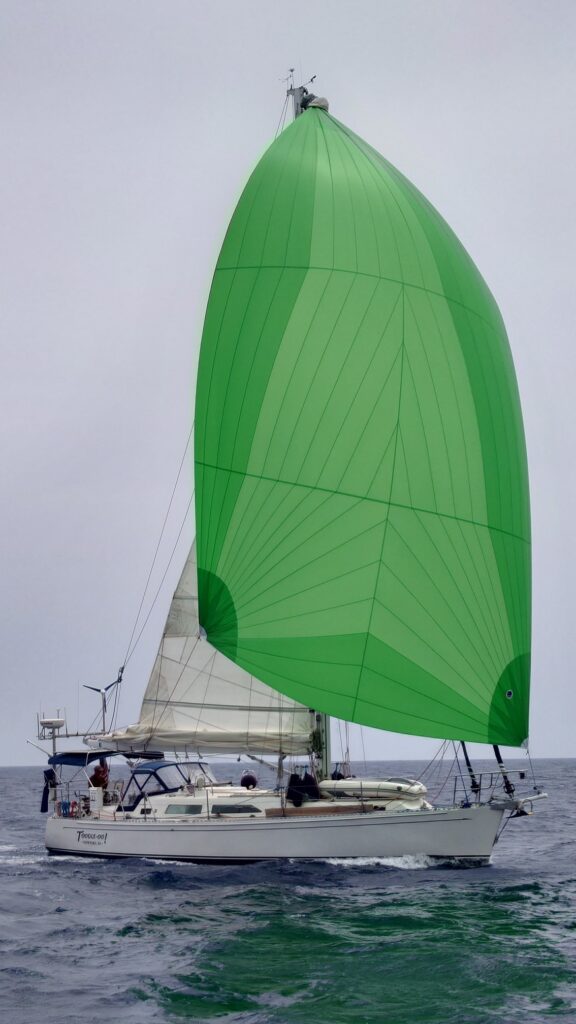
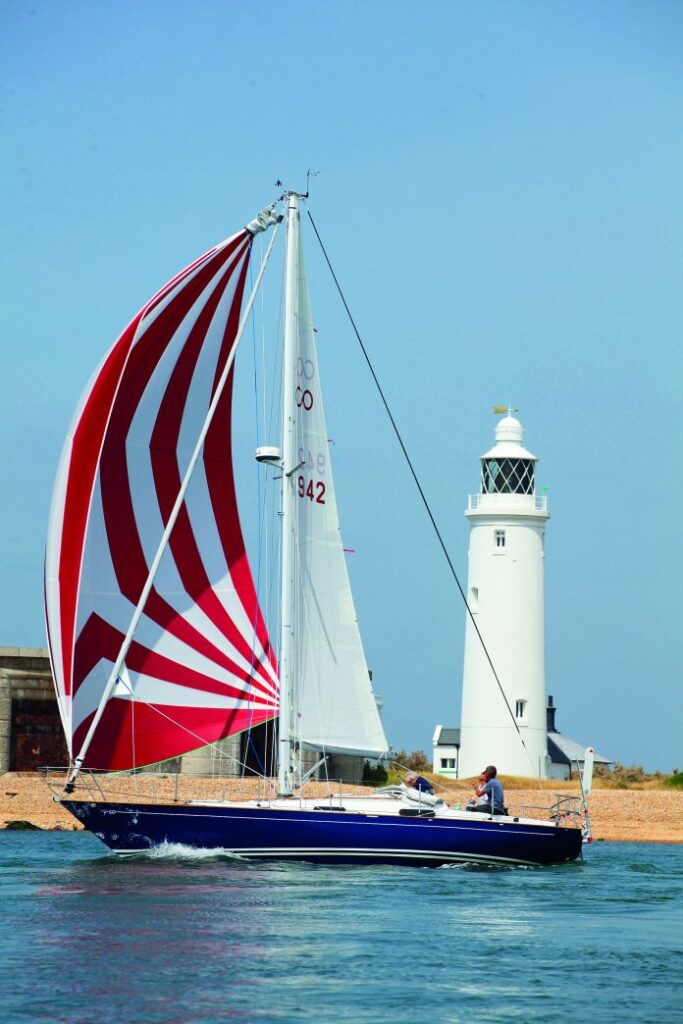
Hoisting a spinnaker with a sleeve differs slightly from a traditional hoist. Because the sail is already contained within the sock, the hoist itself is controlled and relatively stress-free. With the halyard attached and the sheets and tack line prepared as usual, the sleeve and sail are hoisted together while the boat is sailed on a broad reach. This angle keeps the sleeve clear of rigging and ensures the sail remains sheltered behind the mainsail during the hoist. Once the halyard is fully tensioned, the sleeve control line is pulled, raising the mouth and allowing the spinnaker to emerge smoothly from its containment. As the sock travels upward, the sail fills progressively and the boat settles into its downwind groove. It is a remarkably calm manoeuvre compared to a conventional hoist.
Dousing the Spinnaker Safely
The true value of a sleeve becomes most apparent during the drop. When it is time to recover the sail, the boat is typically steered onto a broad reach to deep run so that the spinnaker sits in the wind shadow of the mainsail. This reduces pressure in the sail and makes it far easier to control. From here the sleeve control line is pulled in the opposite direction, drawing the funnel down over the sail and progressively collapsing it. Once fully contained inside the sleeve, the sail loses almost all its aerodynamic load and can be lowered calmly on the halyard. Instead of a chaotic foredeck operation, the entire manoeuvre becomes orderly and predictable.
A Tool That Expands Possibilities
For sailors who enjoy short-handed cruising or offshore passage making, the spinnaker sleeve has quietly become one of the most useful additions to modern sail handling systems. It allows larger sails to be flown with confidence, reduces the physical effort required to manage them, and dramatically improves safety during hoists and recoveries. It also makes spinnakers accessible to sailors who might otherwise avoid using them altogether. Combined with the thoughtful engineering of the ATN system, the sleeve has evolved from a clever idea into an indispensable piece of sailing equipment.
Sanders Sails and ATN Spinnaker Sleeves
At Sanders Sails we recommend the ATN Spinnaker Sleeve / Snuffer because it consistently proves to be the most reliable system available. The combination of a robust mouth, breathable sleeve construction and a separated control line ensures smooth operation and minimal risk of fouling. Each sleeve is built to match the dimensions of the sail it will contain, ensuring it functions exactly as intended when deployed at sea. If you are considering adding a sleeve to your spinnaker setup, our team is always happy to discuss sizing and configuration to ensure the system works seamlessly with your sail and deck layout.
Visit our online shop where you will find further information on the ATN Spinnaker Sleeve and details on how to order one through Sanders Sails.