
Few yachts demonstrate the enduring appeal of classic performance cruisers quite like the Trapper 300. Designed by the late great Canadian naval architect Bruce Kirby, of Laser dinghy fame, as a quarter tonner for the 1975 Quarter Ton Cup in Deauville, the boat has built a reputation over the years for combining seaworthiness, balance, and rewarding sailing characteristics in a remarkably capable 26-foot package. For Pat Stables, Google Eye represents far more than simply a boat – it is a platform for competitive racing, careful optimisation, and a deep understanding of how thoughtful sail choices can unlock performance. Working closely with Sanders Sails, Pat has developed a sail wardrobe specifically tailored to the demands of her racing programme. From high-performance Dimension-Polyant PX laminates in the headsails to the durable and responsive Vectron mainsail, every choice has been made with a clear purpose. We spoke to Pat about the journey with Google Eye, the decisions behind her sail inventory, and what continues to make the Trapper 300 such a rewarding boat to race.
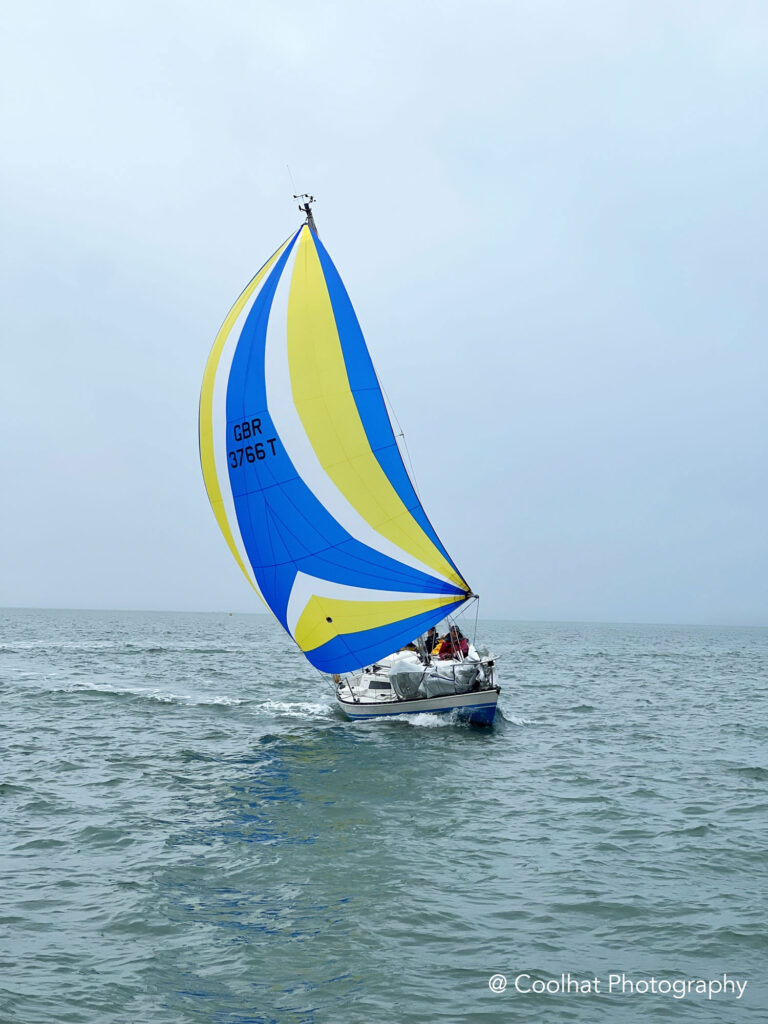
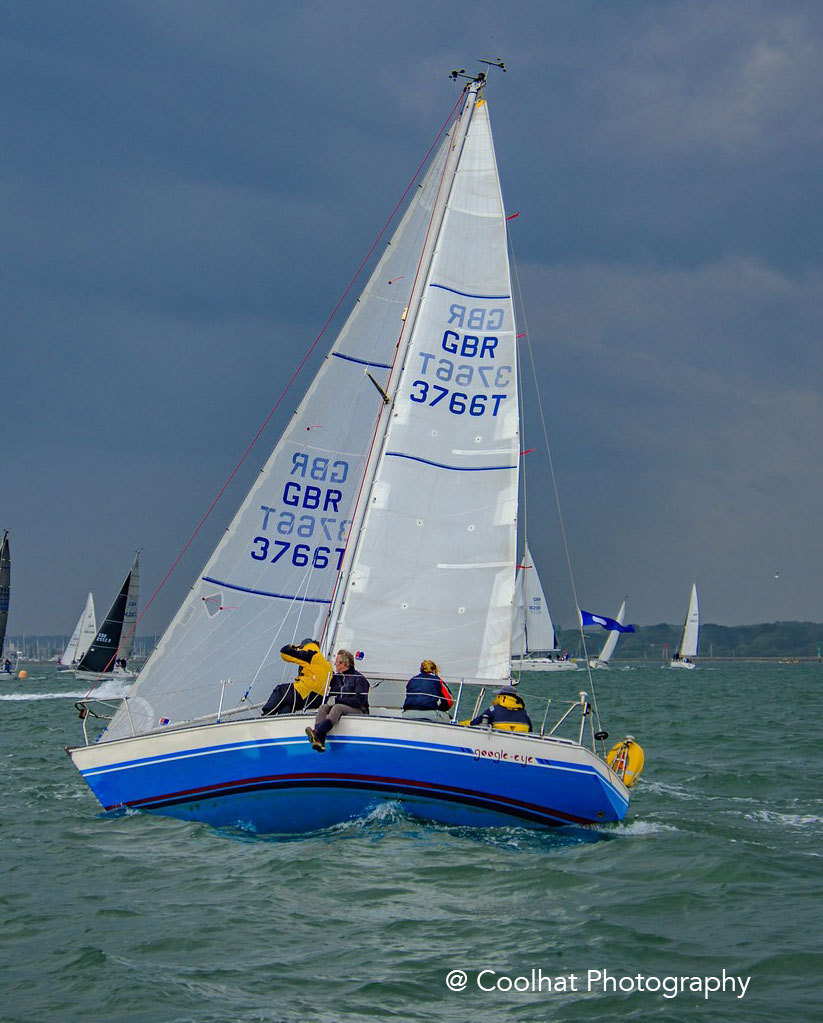
The Trapper 300 is a yacht with a strong reputation for performance and seaworthiness. What originally drew you to this design, and what made you feel that Google Eye was the right boat for the type of sailing and racing you enjoy most?
I wanted a boat primarily to race, but also to cruise the West Country and the North coast of France, but could not afford a large one. There was an active fleet of small cruiser racers in Lymington at the time like the Sadler 25, Sadler 26, Sonata and Folkboat. A friend suggested a Trapper 300 – a much sportier boat than the Sadler 25 I was considering. It also then had a very active Class Association, holding cruising rallies and events, and had its own one design class in the Round the Island Race, attracting about 20 boats, as well as about 5 entries in the Channel Handicap Class 6 at Cowes Week, both events which we were keen to participate in, together with the Royal Southampton’s Double Handed Series (another very competitive series). We looked at one at Deacons in Bursledon, where the latter 300’s were built, and liked the boat immediately; it just looked right and was perfect in terms of layout (Mark 1). The cabin was like a “Tardis” with 5 decent 6-foot berths and almost standing headroom. However, the boat itself was in a dreadful condition with the bilge swimming in water and the ply bulkhead soaking it all up. Funnily enough that same boat, Crazy Horse, is now on the Lymington River having been renovated to a very high standard (on the outside), and the soggy bulkhead removed and replaced. So, I started to look at Trapper 300’s more seriously and went to see Google-Eye at the Benfleet Yacht Club, where it was owned by a couple of brothers who had owned and raced her for a year, but were desperate to buy an Oyster 26. She was in immaculate condition for 11 years old and although I had not really intended to actually buy one at that point in time felt that it was an opportunity not to be missed. It also had the advantage of having a factory fitted 6-inch lead shoe like some of the Hunter Impala’s, which made it much less tender. However, I did want to test sail it first and also to check out the engine. Needless to say she sailed beautifully, very light and responsive on the helm, despite a windy and rough day off Southend Pier, so bought her and have never looked back.
Over time you’ve developed a very considered sail wardrobe for Google Eye. Your number one genoa is built from Dimension-Polyant PX laminates (PX10 and PXST) from our Grand Prix range. What led you towards this style of polyester laminate, and how have you found it performing in the conditions you most often race in?
The boats strength is in its light weather performance so any reduction in the genoa overlap would compromise that performance. In addition, as a boat with a pinched stern it does not plane under spinnaker unlike a boat with a flatter wider stern, so even if we did reduce our foresail area with a corresponding reduction in rating we would still lose out on speed downwind in stronger winds. Therefore, being a masthead rig with a 150% overlapping genoa the material needs to be tough enough to take a battering when passing the shrouds and also the babystay when in use. With the extra taffeta in the material this has proved to be very resilient, unlike a previous set of mylar sails, and holds its shape well over a number of years. This is the second number one we have had using this laminate and the other 2 foresails, numbers two and three, are also made of the same material. We like to buy sails that do last a few years.
For the mainsail you chose Vectron 062, which is known for its durability and shape stability. How well has that cloth suited the style of racing you do, and what differences do you notice on the water when the mainsail is working exactly as intended?
The Trapper 300 has a very small mainsail, the main power being in the genoa, so it is unnecessary to use any exotic material. I had always admired the stiff Dacron of the Folkboats and XOD’s, which set so well, but knew that it would not survive as long with continuous flaking, as opposed to rolling, when dropping the sail, especially when cruising. Peter suggested the Vectron, which some of the Contessa 32’s had been using, and who have a similar sail plan to the Trapper 300. The cloth is much stiffer than the ordinary Dacron and it sets perfectly, but surprisingly it is more sensitive to sail trim, so we are having to learn how to be a little more delicate with tension both on the halyard, mainsheet and kicker, unlike with the old Dacron main. We do seem to be able to hold a full main for a little longer before we reef, which is useful on occasion.
The relationship between sailor and sailmaker can be an important part of developing a successful racing programme. How has your collaboration with Sanders evolved, and what aspects of that partnership have been most valuable in getting the best from Google Eye?
I decided to sail the boat for a few years before purchasing new sails to ascertain what was required. However, we knew we needed a small spinnaker as in heavier winds and seas with a boat with a pinched bow and stern it was very easy to broach and made the mistake for our first sail purchase to fall for an offer at the Southampton Boat Show from a Southampton sailmaker. Other than the fact that it is indestructible, it does not set well at all. Having sailed on other boats with Sanders sails I should have known better that Sanders made the best spinnakers around, always setting beautifully, almost flying themselves. We knew that the boat was fast (despite the original 10 year old team sails), and we were sailing her well, as in the first Round the Island Race we competed in 1990 in the Trapper 300 class we came third by 2 minutes having spent 5 minutes stuck on Ryde Sands (which never happened again!) watching several other Trapper 300’s sail past us and then picking off many of those on the beat back to the finish. The following year we won the class by 2 minutes and in 1993 with new sails by 20 minutes, a huge difference in performance. So, for our real first set of sails (including a new large spinnaker) we went local with Peter Sanders. We knew nothing about sailmaking or materials but being a sailor himself, he understood immediately what we required and also did not try to sell us expensive and exotic materials, which were just starting to be used by club racers at that time. It paid off and in that year 1992 with new Dacron sails much to our surprise came third in the Channel Handicap Class 6 in Cowes Week repeating the feat in 1995 (albeit being the beneficiary of another one of your “Meet the Sailors”, Mark Brown (of Jetpack) in his little Quartet, Quartasia, who unfortunately did not sail the last race, which we actually won). We find it so important to have a sailmaker that understands the boat and client but is also a sailor. We can never keep up to date with the development in sail materials and cuts and Peter is always able to suggest the best appropriate materials for the type of sailing we do and importantly for longevity. Although very much a science, even after all these years I still find sailmaking a bit of a “Dark Art”, but we are fortunate to have such a good professional sailmaker on our doorstep, and who also makes covers as well.
Looking ahead to 2026, what ambitions do you have for Google Eye? Are there particular events, races, or goals that you and the boat are working towards over the next season?
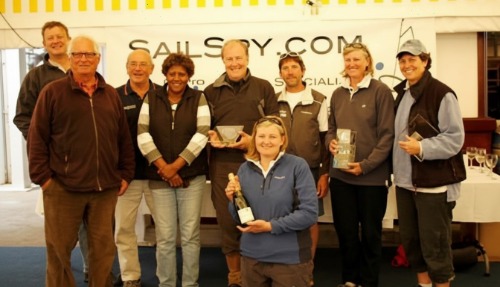
Having finally achieved our goal of winning IRC Class 7 at Cowes Week in 2000, and been successful in Double Handed racing, we are now at the stage where we race for fun with family and friends so only sail locally in the Royal Lymington Spring and Thursday Evening Keelboat series, the Royal Solent’s Taittinger Regatta, and the Lymington Town Sailing Club’s Summer Cruiser Racing Series and Solent Circuit. If we can win the odd race against the best sailors in Lymington or even a series, we are happy. We still, like many others, are dreaming of winning the Island Sailing Club’s Gold Roman Bowl in the Round the Island Race having achieved a 5th place overall in the IRC class in 2005, but know that if the conditions are not light with flat water, where the Trapper 300 excels, and can make use of the full sail plan for which she is rated, that is highly unlikely, but with a bit of luck you never know though! We will continue to cruise having sailed from Brighton to the Scillies in the UK and St Valery-en-Caux to Roscoff in France but our crew these days are not keen on sleeping on a shelf anymore!