
Three Sails, One Direction and Hopefully No Shouting from the Foredeck
There was a time when sailing downwind was a fairly predictable affair. You either poled out the genoa, goose-winged your way towards the horizon and accepted that progress might be leisurely, or you decided to hoist the spinnaker. The latter usually involved assembling a small army of willing volunteers, untangling several hundred metres of suspiciously intertwined rope, locating a missing spinnaker pole fitting and explaining to somebody on the foredeck why the red rope was definitely not the one they should have just released.
If everything went to plan, you were rewarded with a magnificent balloon of colourful nylon pulling the boat effortlessly downwind. If it didn’t, you were rewarded with an equally colourful vocabulary. Thankfully, the world of downwind cruising has evolved considerably. Modern sail design, improved furling systems and clever handling equipment mean that enjoying a proper downwind sail no longer requires a full racing crew, an advanced qualification in rope management or a particularly understanding marriage. At Sanders Sails, we offer three dedicated cruising downwind options, each designed to deliver enjoyable sailing with different levels of handling, versatility and performance.
The Cruising Chute, Code S and Symmetric Cruising Spinnaker
But which one is right for you? And, more importantly, how do you get the best out of it? Let’s untangle the options. First: What Do We Actually Mean by Downwind? Before we unleash the colourful sails, it’s worth understanding that not all sailing with the wind behind the beam is quite the same. There is a considerable difference between reaching across the wind, broad reaching and running almost directly downwind.
As you sail progressively deeper, the apparent wind moves aft and generally reduces in strength. This changes how a sail fills, how much area it presents to the wind and how effectively it drives the boat forward. A sail designed to perform beautifully on a beam reach may become rather uncooperative when asked to sail directly downwind. Equally, a wonderfully full running spinnaker may protest rather dramatically if you try to sail too close to the wind. This is why sail shape matters. You may already have come across our Code 0, Cableless A3/0, Cruising Gennaker and Screecher ranges. These are fantastic options for reaching and higher apparent wind angles, filling the performance gap between conventional headsails and deeper downwind sails.
However, for this particular article, we’re concentrating on the sails designed to take you further downwind, where the breeze is coming from comfortably behind and the destination is hopefully getting closer. If you’re looking for reaching performance, explore our Cruising Code Sails page instead.
1. The Cruising Chute – The Colourful Crowd-Pleaser
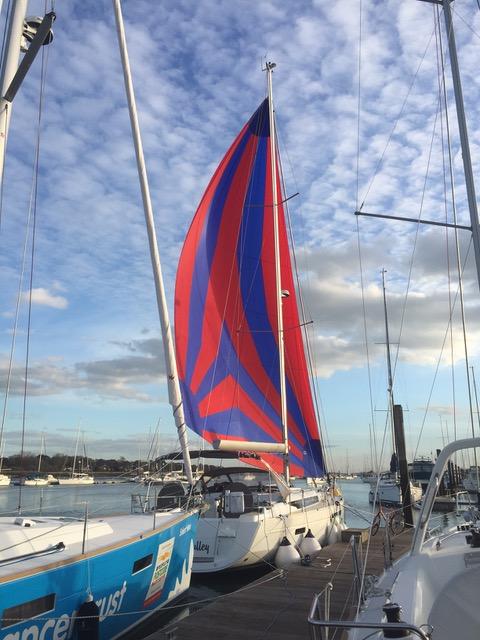
The cruising chute is probably the most recognisable modern downwind cruising sail, and for good reason. Fundamentally, it is an asymmetric spinnaker, meaning that unlike a traditional symmetric spinnaker, it has a permanently defined luff, leech, tack and clew. Its triangular shape allows it to fly from the bow or bowsprit without the need for a conventional spinnaker pole. Compared with a dedicated racing asymmetric, a cruising chute is generally designed with a more forgiving shape, manageable area and a wider, more comfortable trimming range. The objective isn’t to squeeze every last fraction of a knot from the boat while somebody on the rail shouts about apparent wind angles. It’s to give you dependable power, straightforward handling and the opportunity to enjoy sailing when your normal headsail is struggling to keep the boat moving. And, of course, to make the boat look absolutely magnificent.
The Secret Is in the Shape
At Sanders, our cruising chutes are designed with balanced fullness and generous shoulders, helping the sail fill easily and remain stable across a useful range of downwind angles. The sail is manufactured from lightweight ripstop nylon, with cloth weight and construction selected to suit the size of your boat and the conditions in which you intend to use it. A particularly important consideration is weight. Too heavy a sail in light conditions can be rather like trying to fly a damp bedsheet. It might have plenty of area, but without sufficient pressure to support the fabric, it simply hangs there looking disappointed. A correctly specified lightweight sail fills earlier, responds more readily to changes in wind pressure and makes light-air cruising considerably more enjoyable.
How to Get the Best from Your Cruising Chute
One of the most useful controls on a cruising chute is the tack line. This allows you to adjust the height and tension of the tack, changing how the luff behaves as your sailing angle changes. When reaching higher, bringing the tack down helps maintain a more controlled luff and a stable sail shape. As you sail deeper, easing the tack line can allow the luff to rotate further to windward, helping the sail project away from the mainsail and into cleaner airflow. Don’t get too carried away, though. Easing everything until the sail resembles an airborne jellyfish is rarely the fastest solution. The sheet is equally important. A cruising chute should generally be eased until the luff just begins to curl, before being trimmed back sufficiently to maintain a stable flying shape. Over sheeting is one of the most common mistakes. Pulling the sail in tightly might feel reassuring, but it can close the leech, restrict airflow and reduce drive. Remember, the objective is to let the sail fly, not hold it hostage.
The Snuffer – Your New Favourite Crew Member
For many cruising sailors, the real transformation comes from fitting a snuffer, often referred to as a spinnaker sleeve or ATN Sleeve. This is essentially a long, lightweight fabric sock that surrounds the sail when it is not in use. The sail can be hoisted while safely contained inside the sleeve. Once everything is ready, the snuffer is raised, allowing the sail to fill. When it’s time to drop, the process is reversed. Bear away onto a suitable deep sailing angle, blanket the chute behind the mainsail, ease the working sheet to depower it and pull the snuffer down over the sail. Once fully contained, the halyard can be lowered in a controlled manner. Suddenly, the prospect of hoisting a large downwind sail becomes considerably less intimidating. One small piece of advice: make sure the snuffer control line remains accessible after the hoist. Discovering that it has disappeared somewhere near the masthead is an excellent way to turn a relaxing afternoon into an unscheduled adventure. For a detailed explanation, take a look at our How to Use a Spinnaker Sleeve guide.
Best suited to: Cruising sailors looking for a versatile, forgiving downwind sail, particularly those sailing with smaller crews who prefer the simplicity of a snuffer rather than a dedicated furling system.
2. The Code S – The Cruising Chute That Learnt a New Trick
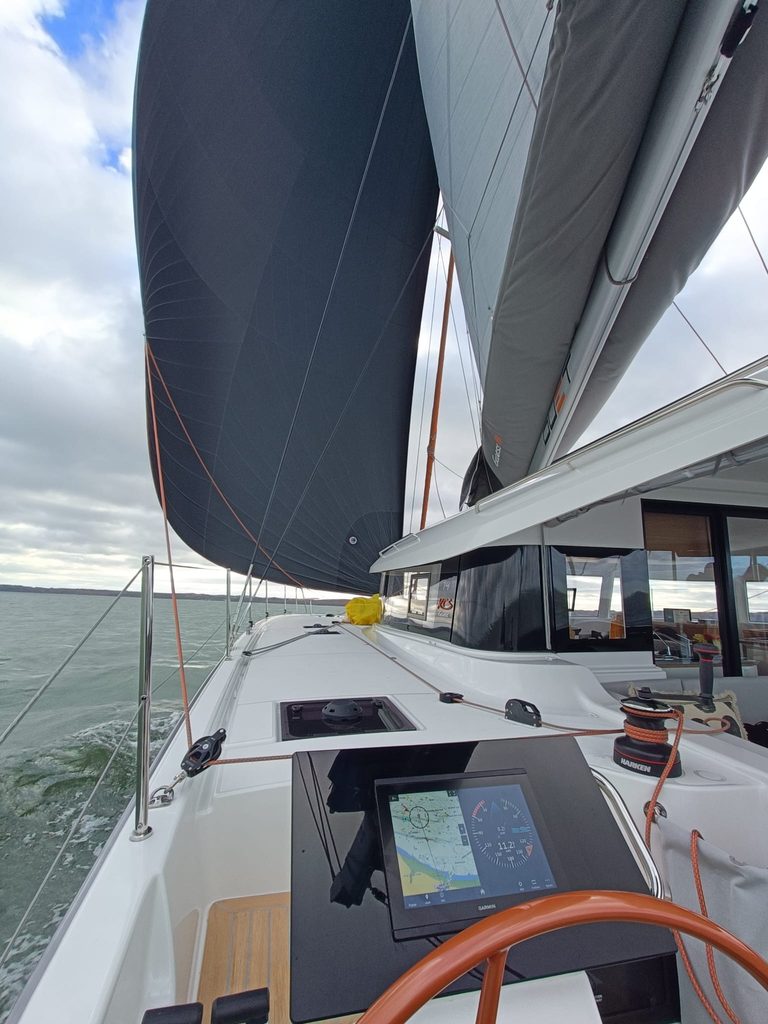
The development of modern furling systems and torsional stays has been one of the biggest advances in downwind sail handling. What was once relatively specialist equipment has become increasingly accessible, with a fantastic range of reliable systems available for cruising yachts. At Sanders, this development inspired our Code S, a furling asymmetric that combines much of the versatility of a cruising chute with the convenience of a dedicated furling system. The concept is wonderfully straightforward. Take the familiar cruising chute, adapt the sail shape with a straighter, more controlled luff and incorporate a torsional stay that allows the sail to be furled from the bottom upwards. The result is a downwind sail that can be hoisted while furled, deployed when required and rolled away again without having to wrestle a large collection of loose nylon onto the foredeck. For a cruising couple, this can be something of a revelation. Particularly if one of you has previously announced that they are never, under any circumstances, going near that spinnaker again.
What Does the Torsional Stay Actually Do?
The torsional stay is the clever part. It runs along the luff of the Code S, connecting the furling drum at the bottom to the swivel at the head. When the furling drum rotates, the stay transfers that rotation upwards, allowing the sail to roll around the stay. Unlike a conventional forestay, the torsional stay is designed specifically to transmit rotational force efficiently. Without sufficient torsional stiffness, the drum might rotate several times before the head of the sail receives the message. And as we all know, poor communication between the top and bottom of a sailing boat rarely ends well. 😉 With the correct system, the Code S can be hoisted in its furled configuration, with considerably less windage than an open sail. Once the boat is settled on the appropriate course, the furling line is released under control and the sheet is pulled to deploy the sail. Where fitted, a light retaining Velcro tab at the clew helps keep the sail neatly furled until deployment. When it’s time to finish, ease the sheet to depower the sail and operate the continuous furling line to roll it away. Simple in principle, wonderfully effective when correctly set up.
How to Get the Best from Your Code S
The Code S is designed to work across a useful range of reaching and running angles, although its straighter luff means there are compromises compared with a fuller, free-flying cruising chute. For the best performance, pay particular attention to luff tension. Unlike a conventional cruising chute, where the tack can be eased substantially to encourage rotation, the Code S relies on sufficient torsional stay tension to maintain a stable flying shape and furl reliably. Too little tension can lead to an unstable luff and inconsistent furling. Too much can unnecessarily restrict the sail’s designed shape or overload the equipment. Correct halyard tension and a properly matched furling system are therefore essential. The sheet should still be eased progressively to encourage a clean, open sail shape, particularly as you sail deeper. And when furling, remember that a Code S should be unloaded as much as practical. Attempting to furl a fully powered sail can place unnecessary strain on the drum, torsional stay and sailcloth.
Best suited to: Short-handed cruising, coastal passages and sailors who value the convenience of furling over the broader downwind capability of a conventional cruising chute.
Why Not Just Put Every Cruising Chute on a Furler?
An excellent question. As asymmetric sails become fuller, with greater area and broader shoulders, they become more difficult to control with a conventional bottom-up furling arrangement. There comes a point where a top-down furler is a more suitable solution, allowing the broad upper sections of the sail to be captured first. This is why the sail design and furling equipment must be considered together. At Sanders, we specify our Code S and its furling system as a complete package, ensuring the sail shape, luff construction, torsional stay and hardware work together. For those wanting to understand the differences, our How to Choose Between Top-Down and Bottom-Up Furlers article explains the engineering behind both systems.
3.The Symmetric Cruising Spinnaker – The Old Favourite Still Has Plenty to Offer
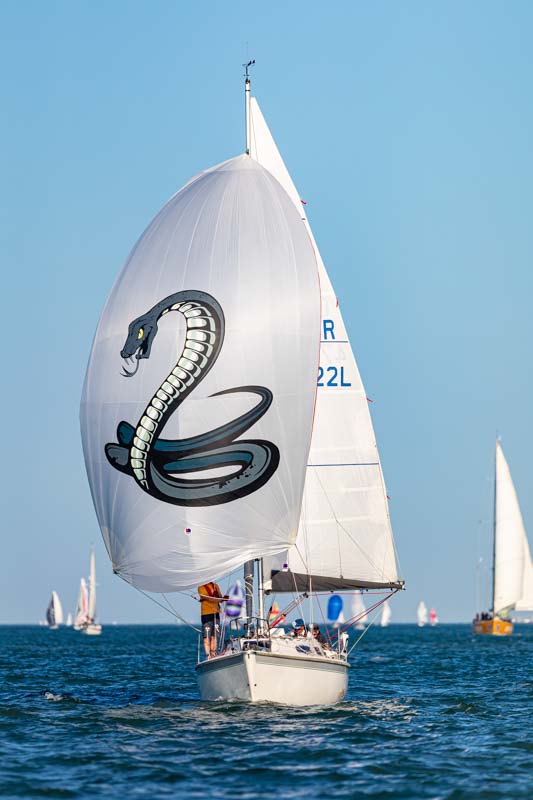
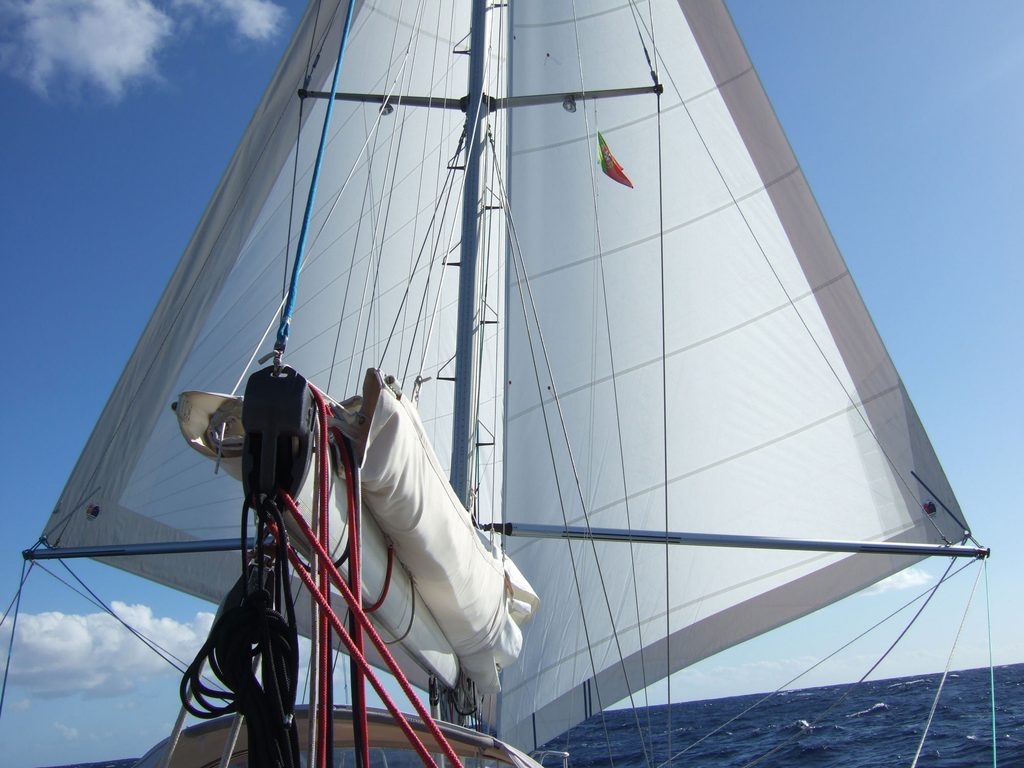
With all this talk of clever furling systems, bowsprits and modern asymmetric sails, you might be forgiven for thinking the traditional symmetric spinnaker has been quietly retired to a museum. Not a chance. For deep downwind sailing, particularly when running close to square, a well-designed symmetric spinnaker remains an exceptionally effective solution. Unlike an asymmetric sail, a symmetric spinnaker has two matching sides and is flown from a conventional spinnaker pole. This allows the sail to be projected to windward, away from the mainsail and into cleaner airflow. And this is where the symmetric spinnaker really earns its keep. When sailing directly downwind, an asymmetric sail can become increasingly blanketed by the mainsail. A symmetric spinnaker, supported by its pole, can maintain a much more effective projected area across the wind. In practical terms, this can mean sailing a more direct course towards your destination rather than having to sail higher angles and gybe your way downwind. For long passages, comfortable running and those glorious afternoons when the wind is perfectly behind you, this can be a considerable advantage.
The Pole Isn’t the Enemy
We appreciate that some cruising sailors regard spinnaker poles with a degree of suspicion. They are long, occasionally awkward and have a remarkable ability to find something expensive to collide with. However, with the correct setup and a little practice, a symmetric spinnaker can be remarkably manageable. The pole allows you to position the windward corner of the sail independently, while the sheets and guys control the sail’s angle to the wind. By adjusting the pole height, pole angle and sheet tension, you can maintain a stable, efficient sail shape across a wide range of running conditions. For many cruising yachts already equipped with a spinnaker pole and suitable rigging, choosing a symmetric cruising spinnaker can also make excellent financial sense. There is no need to invest in a new bowsprit or furling arrangement when much of the equipment is already on board.
How to Get the Best from Your Symmetric Spinnaker
The first consideration is selecting the correct sail. A cruising spinnaker should be designed for the wind conditions in which you realistically intend to use it. There is little benefit in specifying an unnecessarily heavy sail if your favourite cruising conditions involve sunshine, a gentle breeze and the occasional cup of tea. Lighter nylon can make an enormous difference to how readily the sail fills, particularly when the apparent wind becomes very light on deeper sailing angles. The next consideration is pole position. As a general starting point, keep the pole approximately perpendicular to the apparent wind, adjusting it as the wind direction and sailing angle change. Pole height should be adjusted to help the sail fly evenly, with the two clews at broadly similar heights as a useful initial reference. The sheet should be eased until the windward shoulder begins to curl, then trimmed just enough to maintain a stable shape. Too much sheet tension can choke the sail and encourage rolling or instability. Too little, and your beautiful spinnaker may decide to perform an enthusiastic impression of a washing machine on its spin cycle. A balanced spinnaker, properly trimmed and flying clear of the mainsail, can provide wonderfully stable and efficient downwind sailing.
Can You Use a Snuffer on a Symmetric Spinnaker?
Absolutely. Although the traditional spinnaker pole remains part of the equation, a snuffer can simplify the hoisting and lowering process considerably. The sail can be hoisted inside the sleeve, with the pole and control lines prepared before deployment. When dropping, the sail is blanketed behind the mainsail and depowered before the snuffer is lowered over it. This removes much of the drama associated with handling a large open spinnaker, particularly when sailing with a smaller crew. You will still need to manage the pole and associated running rigging, but the sail itself becomes much easier to control.
Best suited to: Cruising yachts sailing predominantly on deep downwind angles, longer passages, boats already equipped with a spinnaker pole and sailors who value efficient running performance.
Don’t Forget the Most Important Part – Actually Using It!
One of the biggest mistakes we see with downwind sails isn’t necessarily choosing the wrong sail. It’s choosing a sail that is so complicated to handle that it rarely leaves its bag. A beautiful spinnaker sitting permanently in the forepeak is about as useful as a chocolate winch handle. When selecting your downwind wardrobe, think carefully about the practicalities of hoisting, trimming, gybing and lowering. If you regularly sail with just two people, the convenience of a snuffer or furling system may be worth considerably more than a small theoretical performance advantage. If you spend most of your time running deep downwind, a symmetric spinnaker may deliver the most comfortable and efficient sailing. And if you want a simple, versatile sail that transforms light-air cruising without demanding too much additional equipment, a conventional cruising chute may be exactly what you need. The most successful cruising downwind sail is the one you feel confident enough to hoist regularly.
The Sanders Approach – Designed Around Your Sailing
At Sanders Sails, we don’t believe in offering a one-size-fits-all solution. Every cruising downwind sail we manufacture is designed specifically for the yacht, taking into consideration its rig dimensions, displacement, existing equipment and intended sailing programme. We look carefully at the sailing angles you want to achieve, the wind strengths in which you expect to use the sail and the handling arrangements that will make it enjoyable. From selecting the correct nylon weight and panel layout to specifying tack arrangements, furling systems, snuffers and finishing details, our objective is to deliver a sail that performs beautifully without becoming a burden to use. All our cruising downwind sails are designed and manufactured in our Lymington loft, combining modern sail design technology with decades of practical sailmaking experience. And naturally, there is the important matter of choosing your colours. Whether you prefer something elegant and understated or a design that can be identified from the opposite side of the Solent, our Spinnaker Studio allows you to explore the possibilities and create something distinctly your own. Because if you’re going to arrive at your favourite anchorage under a magnificent cloud of colourful nylon, you might as well look good doing it.
Ready to Make More of Your Downwind Sailing?
Explore our Cruising Downwind Sails to discover the Cruising Chute, Code S and Symmetric Cruising Spinnaker ranges. Or get in touch with the Sanders Sails team to discuss the best sail and handling setup for your yacht. We’ll help you find the right solution, whether your ambition is to sail further, sail faster or simply spend a little less time untangling ropes.