
Understanding What’s Really Happening Inside the System
From the cockpit, most or our downwind furling systems look identical. There is a drum at the bottom, a torsional cable running up the luff, a swivel at the head and a continuous furling line leading aft. Pull one line and the sail rolls away. Simple; but what happens inside the system and more importantly, where the sail begins to furl, makes a significant difference to reliability, control, and sail longevity. Let us break it down properly.
Bottom-Up Furling: Starting from the Tack
In a bottom-up system, the tack of the sail is fixed directly to the furling drum. A torsional cable runs up the luff to a swivel at the head. When you pull the furling line, the drum rotates. That rotation twists the cable, and the sail begins to furl from the bottom, starting at the tack and working its way upward toward the head. For flatter, narrower sails, this works beautifully. Code sails and tighter-angle reaching asymmetrics typically have modest mid-girth measurements and less fabric in the upper sections. When furling begins at the bottom, the sail wraps neatly and progressively because there is less projected area in the head to fight against the roll. For these sails, bottom-up furling is:
- Lightweight
- Efficient
- Mechanically simple
- Ideal for Code 0 and reaching sails
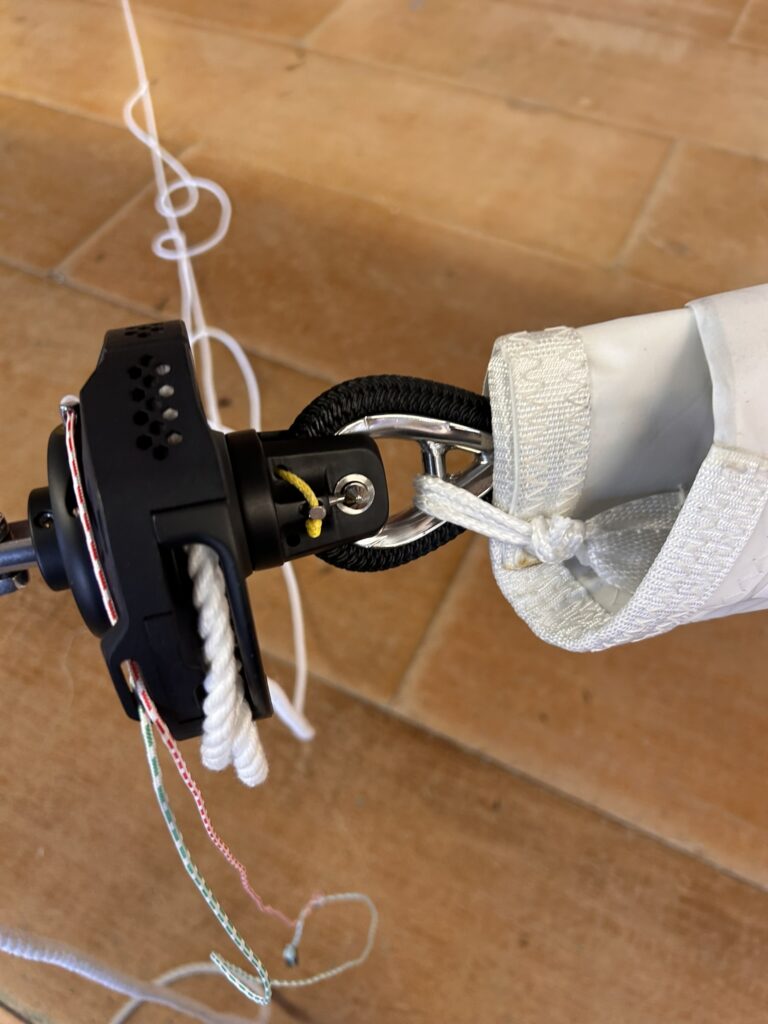
Where Bottom-Up Begins to Struggle
As sails become broader and deeper; particularly true asymmetric spinnakers designed for 100° to 160° true wind angles – things change. These sails carry significant area forward of the straight-line luff. The head and upper third of the sail contain substantial projected fabric. When furling starts at the tack on these larger sails, the lower third may wrap cleanly, but the upper sections can resist. Excess fabric collapses, the sail may twist unevenly, and furling becomes inconsistent. In simple terms: there is too much cloth aloft to be controlled effectively when the roll starts from the bottom. That is where top-down furling comes into play.
Top-Down Furling: Controlling the Hardest Part First
A dedicated top-down system introduces one key difference: a free-floating tack swivel mounted above the drum. When furling begins, the drum rotates and the cable twists as before. However, the tack swivel remains static. This allows torque to travel up the cable to the head of the sail, initiating the furl at the top. The sail now rolls from the head downward. This approach captures the broadest, most unstable section of the sail first. The head wraps securely, controlling the excess fabric early, and the foot and clew furl last. For wide, deep sails, this dramatically improves reliability and control. Top-down systems have therefore become the preferred solution for:
- Cruising gennakers
- Asymmetric spinnakers
- Shorthanded sailing
They allow sailors to:
- Furl safely from the cockpit
- Avoid Spinnaker falling in water during takedowns
- Reduce foredeck workload
For many cruising crews, this isn’t just convenient – it transforms how often the sail is used.
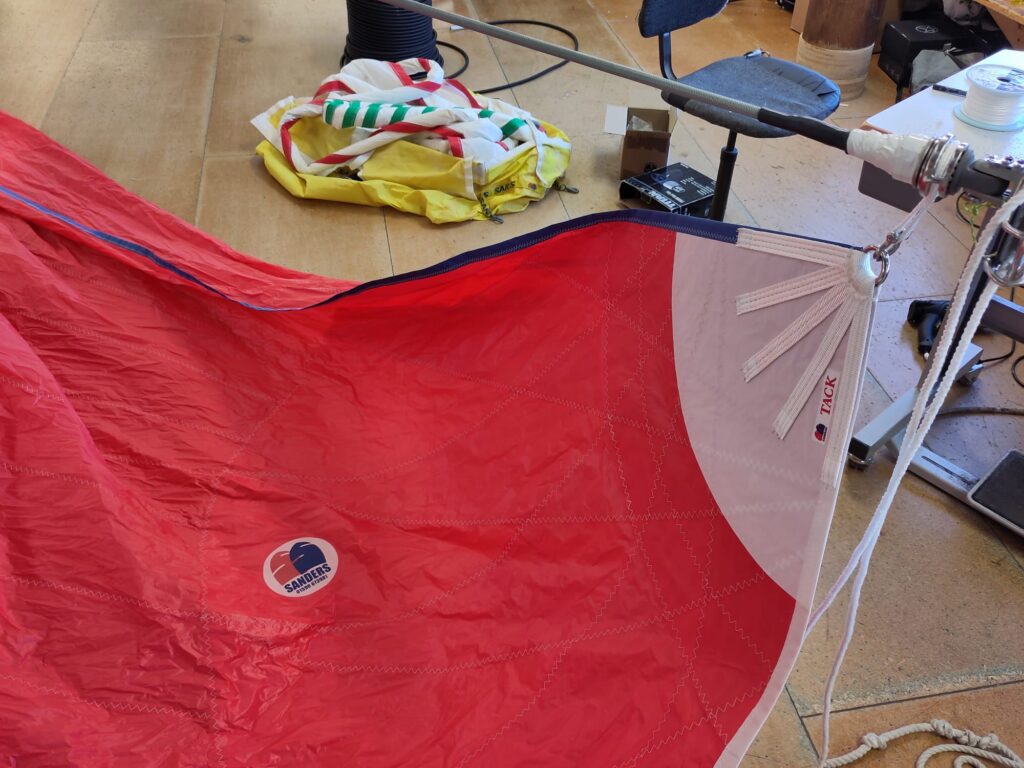
Top-Down Adapters
Popular among cruising sailors, a top-down adapter is a stand-alone tack swivel fitted above a standard bottom-up drum. This allows one drum to serve both Code sails and broader asymmetric gennakers. The advantages are clear:
- Cost-effective
- Flexible across multiple sails
- Efficient cruising solution
- Expansive racing solution
Independent Tack Line (Performance Racing Option)
On larger performance yachts, the tack may be attached directly to a deck pad eye via a 2:1 tack system, independent of the furling drum. This is the lightest configuration and allows active luff tension adjustment while sailing. However, it requires:
- Experienced crew
- Precise coordination during furl and unfurl
- Upfront investment of additional equipment
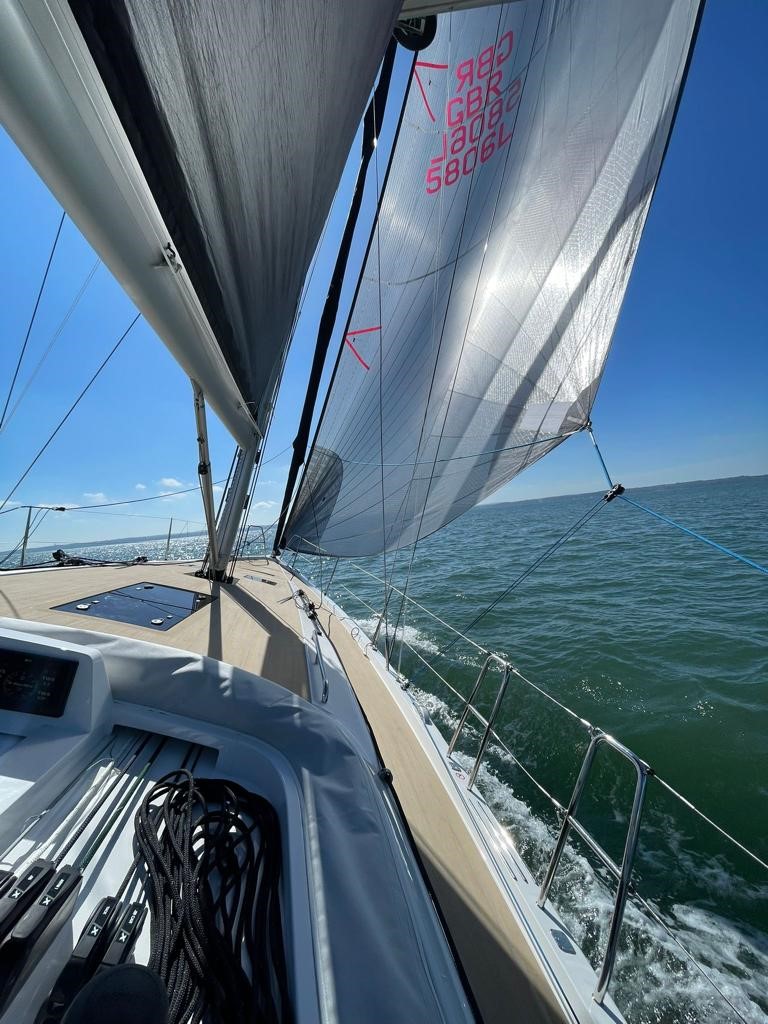
So Which System Do You Need?
The answer usually comes down to two simple considerations:
- Is your sail relatively narrow and designed for tighter reaching angles?
→ Bottom-up is likely ideal. - Is your sail wide, deep and designed for broader angles?
→ Top-down is strongly recommended.
We are not tied to any single manufacturer, which allows us to provide independent, unbiased advice across the full range of downwind and reaching furling systems available on the market.
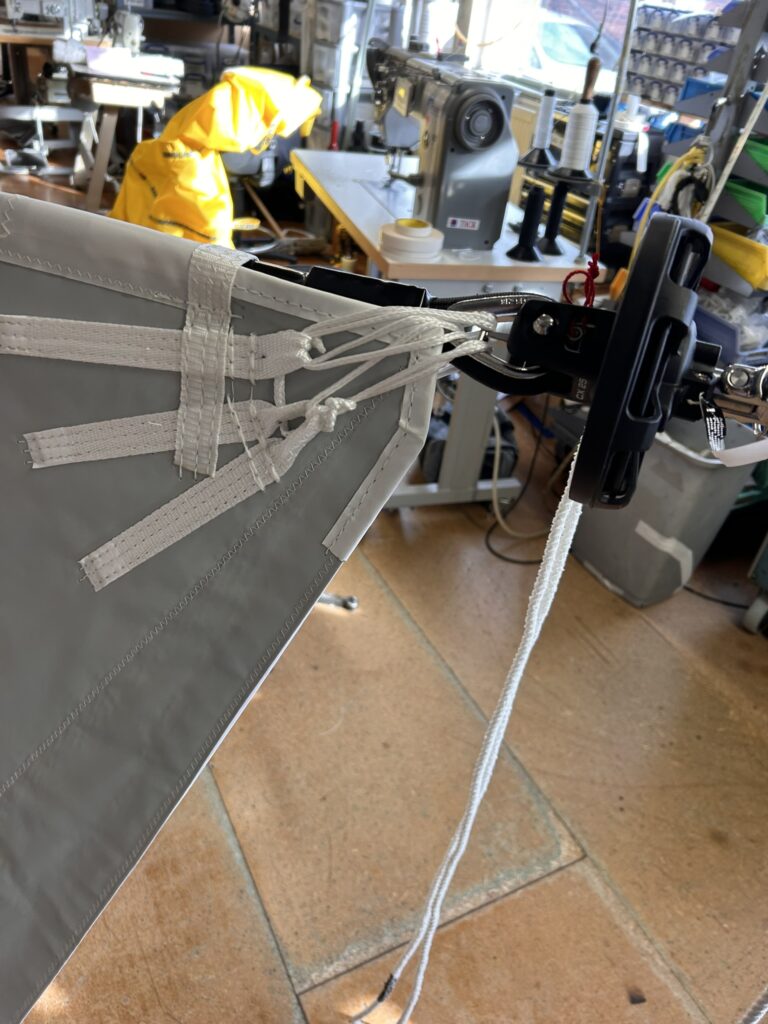
The Sanders Approach
At Sanders, we never specify the sail without considering the furling system alongside it. Cable stiffness, torsional characteristics, luff design and tack geometry must work together. A mismatched system can:
- Furl inconsistently
- Unfurl unpredictably
- Distort sail shape
- Accelerate wear
Specified correctly, however, a furling system transforms a powerful downwind sail into a repeatable, manageable tool, and that ultimately determines how often you fly it, and how much enjoyment you get from it.