
Few names are as instantly recognisable on the British sailing scene as Andy Ash-Vie. For decades he was the face and driving force behind Harken UK, helping shape how performance hardware was specified, sold and used across everything from dinghies to grand-prix race yachts. But Andy has always been far more than a distributor. A sailor first and foremost, his background spans classic Finns at Keyhaven, technical 6 Metres, J/Boats, and a lifetime spent understanding how boats really work – on paper, on deck, and under pressure. We’ve been incredibly proud to support Andy across a succession of his own boats; from his 6 Metre, to a J/80, and now his J/29 – supplying sails built to race hard, last well, and be refined through close collaboration. Last season saw the introduction of Sanders Filmless Membrane (SFM) sails mid-campaign, giving a fascinating insight into how modern sail technology can transform a familiar boat. We sat down with Andy to talk sailing, careers, communication, retirement (sort of), and what really matters when you’re trying to make a boat go well.
Your journey into the marine industry started long before Harken, with yacht design, boatbuilding and hands-on sailing all feeding into one another. Looking back now, what moments or decisions do you think most shaped the path that eventually led you to running Harken UK and did it ever feel like a “career plan”, or simply the natural next step for a sailor following his instincts?
My father, despairing of me ever becoming a mechanical engineer like himself, showed me an advert for the Yacht and Boat Design course at Southampton College which was a bit of an eureka moment. Of course, actually making a decent living in yacht design was exceptionally difficult and I had to recognise that I didn’t have what it took to be successful so had to look around. That led to another eureka moment when a mate of mine got a job with the old Harken agency and I realised that would have suited me well. When he told me he was leaving the role, I leapt in initially as a sales rep. My wife Cathy and I had worked well together in the past so our dream was to run a business together. We often imagined what it would be like to have the agency ourselves. So, when the circumstances allowed, we held hands and jumped in feet first.
When you and Cathy established Harken UK in its own right, the business evolved far beyond simply supplying sailing hardware. How did your background as a sailor influence the way you built the company, particularly in terms of technical support, problem-solving, and long-term relationships with customers and what do you feel most proud of from those years?
We came up with 5 words to describe how we wanted the company to run, it’s code if you like, one of which was “friends”. Our customers were our friends and you made your sales by solving their problems, be it a technical solution for a deck layout or a commercial solution for the right range of products in a chandlery. We took those technical solutions into other areas including industrial and working at height using the sailor’s knowhow to handle loads with rope. One thing I developed was turning mainsheet track and traveller systems into a certified mobile tether system. A customer installed it in a factory and the very next day after it was commissioned, it saved a falling worker’s life.
You’ve trusted us with sails across several very different boats, from your 6 Metre through to your current J/29. From your perspective as a highly experienced sailor, how important is the communication between sailor and sailmaker and how do you like that relationship to work when you’re developing a sail plan, refining shapes, or solving performance problems?
How important? It is critical! I remember way back when I skippered an OOD34, Pete (Sanders) and I discussing how it shouldn’t be necessary to torture a mast into bending enough to flatten the mainsail because the luff curve was excessive. Likewise working with Pete on the both the shapes and the fine detailing, produced some superb 6m sails. With a 174% overlapping genoa, you really need it to work in harmony with the mainsail. The result was we repeatedly won both the British and the French Open championships against the pro teams from another well-known international sailmaker.
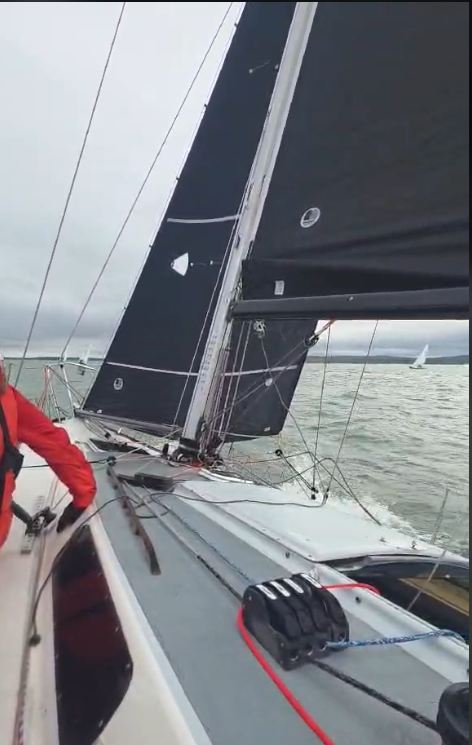
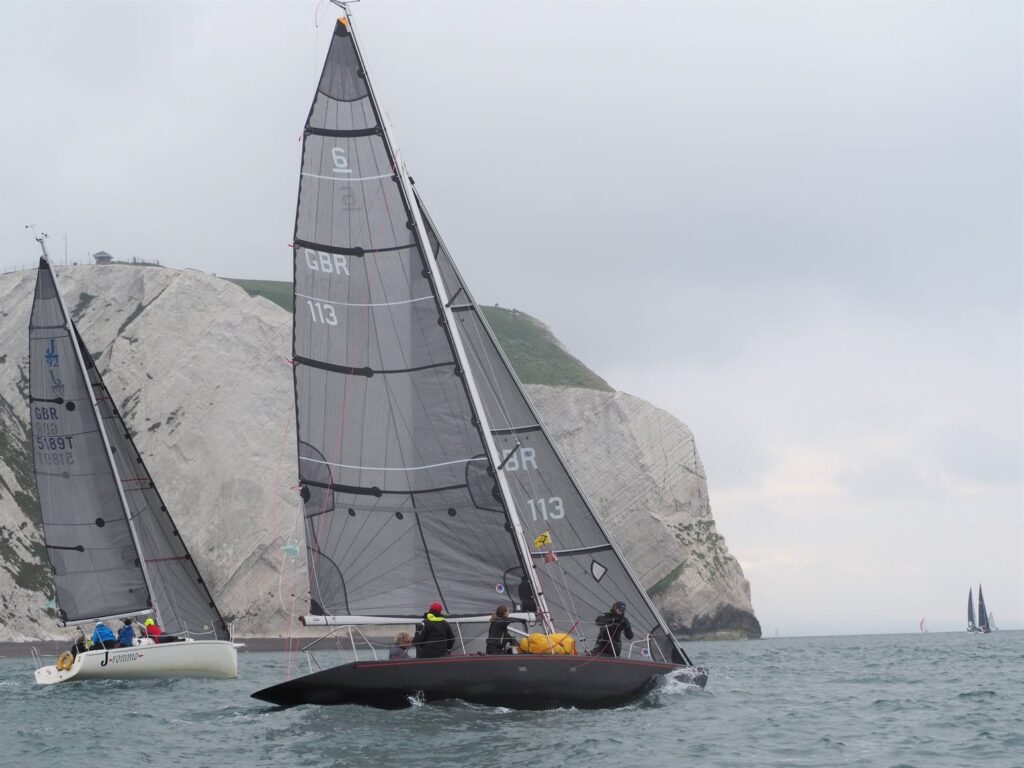
Halfway through last season we introduced new SFM sails to your J/29 – always a revealing moment, especially when a boat and crew are already well understood. What differences did you feel on the water? How did the sails change the way the boat sailed, trimmed, or performed and what does that say to you about modern membrane technology when it’s properly matched to the sailor and the boat?
It was like we found another gear. It was extraordinary, we were higher, faster with lower heel. Heck, even trimming was easier, especially the leeches which had been a problem. We had been out of contention and the SFM sails immediately put us back in the running.
Retirement for you still seems to involve a healthy mix of racing, classic boats, politics (which we will avoid) and simply going sailing for the joy of it. How are you enjoying this new chapter, and has stepping away from the day-to-day pressures of the industry changed how you view sailing, competition, or even equipment choices?
Life is great, least ways it’s a lot better than the alternative! I never really imagined achieving a laid-back life but I am enjoying it immensely. Just got back from cruising and snorkelling around the Galapagos Islands, it was fantastic to enjoy every moment without stressing about the work you were coming back to. I still enjoy competing, but winning doesn’t quite have the same value it used to. Enjoying being out there is enough with your mates, and if by chance you do well, you can wind up your fellow competitors with a bit of a gloat. By the way, did I tell you about my Galapagos trip?