
Understanding Sail Lifespan and Performance
Sails are the heart of your boat’s performance. They drive you upwind, downwind, and everywhere in between, carrying significant loads every time the boat is sailed. Over time, those loads change the shape and efficiency of a sail; often long before the cloth itself shows obvious signs of failure. How long a sail remains effective depends not only on how it is built, but how it is used and what is expected from it.
At the highest levels of racing, sails may be replaced frequently to maintain peak performance, while club racers often plan regular replacement cycles for their most heavily used sails. Cruising sailors tend to prioritise durability and ease of handling, but sail condition still plays a major role in efficiency, balance, and control. As sails age, they do not simply become slower. Poor shape can increase heel, make the boat harder to steer, reduce pointing ability and place greater loads on both rig and crew. Knowing when a sail has reached the end of its effective life is therefore just as important as knowing how to trim it. This guide highlights ten key signs to look for when assessing sail condition, helping you decide whether a sail can be serviced, reshaped, or is ready to be replaced.
Ten Signs it May be Time to Replace Your Sails
1. Loss of Shape and Performance: Draft Moving Aft
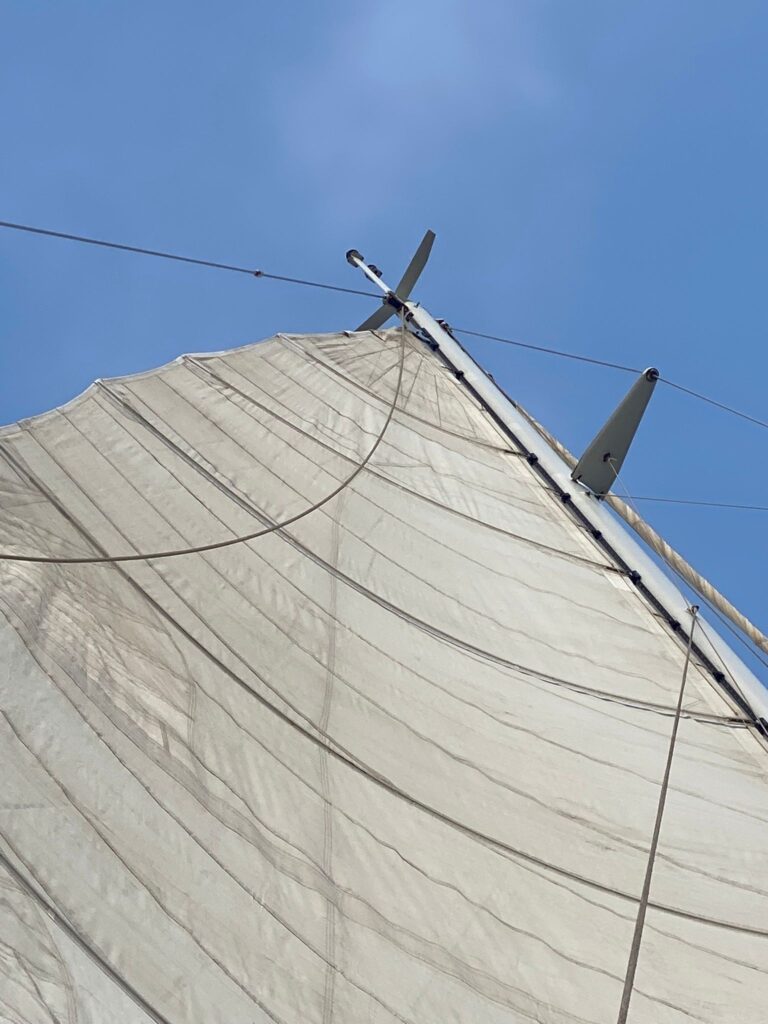
One of the most common signs that a sail is past its best is when the draft (the deepest part of the sail) progressively moves aft. As a sail ages, the fibres of a woven sail stretch and the designed shape moves backward, increasing drag and reducing pointing ability. If you find yourself needing to constantly adjust controls just to keep the boat moving well upwind, it is likely the sail’s shape is no longer working as intended.
2. Visible Wear and Stress Indicators: Cloth Distortion
Look for:
- Horizontal creases across the sail face
- Permanent wrinkles that don’t disappear with proper trim
- Uneven tension patterns
These typically indicate the cloth has permanently deformed.
3. UV and Sun Fade: Sun Damage
Sailcloth degrades over time due to ultraviolet radiation. UV damage does not always look dramatic, but it is one of the leading causes of sail failure.
Watch for:
- Faded panels compared to less exposed areas
- Chalky or brittle fibres
- Loss of original luff tape stiffness
If a small tear in your sail can be made worse with gentle pressure with your fingers, then it is time to consider replacing your sail.
4. Chafe, Tears, and Edge Wear: Leech Damage
The leech takes a pounding from:
- Flogging
- Reefing
- Sheet tension
Look for:
- Frayed leech tape
- Distorted or stretched batten pockets
- Torn or worn stitching
5. Batten Pocket and Hardware Damage
Battens are integral to sail shape. The pockets and hardware that hold them are critical and often the first failure points on an aging sail.
Signs of batten / pocket issues:
- Battens popping out of pockets
- Loose batten ends
- Detached or degraded batten pocket stitching
Any of these not only reduce performance, but can damage other parts of the sail if left unaddressed.
6. Reefing Problems
Difficulty reefing; especially if the sail refuses to settle cleanly can indicate internal deformation. While reefing issues can sometimes be addressed with tune adjustments, persistent problems often show the sail’s structure has moved beyond repair.
7. Excessive Flogging and Slatting
A well-trimmed sail will stall or flutter occasionally, but recurring flogging (especially in moderate conditions) is a warning sign. Flogging accelerates fabric breakdown and indicates the sail no longer has a stable sail shape.
8. Age and Usage
There is no fixed ‘expiry date’ for a sail, but experience does provide useful benchmarks:
- Woven sails tend to deteriorate gradually, with performance reducing steadily over time as the cloth softens and stretches, long before the sail reaches the end of its structural life.
- Laminate sails typically hold their designed shape and performance for much longer, as they resist stretch far more effectively than wovens. However, when they do reach the end of their usable life, the loss of performance is often sudden rather than progressive.
9. Repairs vs. Replacement
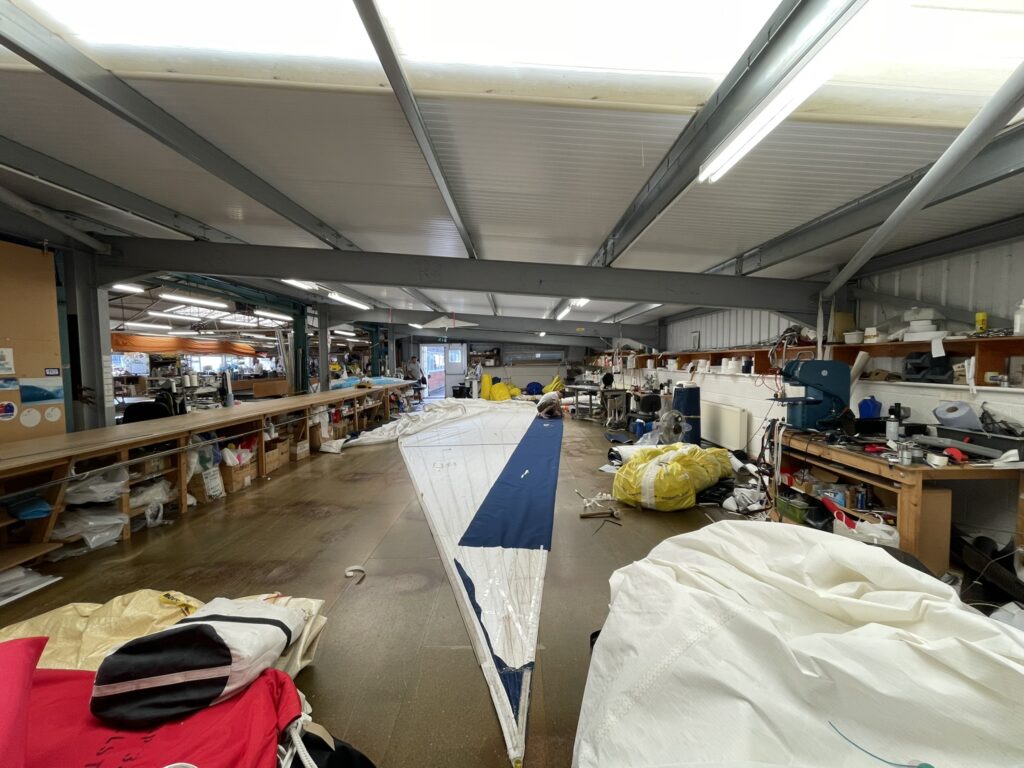
Minor repairs are normal – replacing a few batten pockets, re-stitching edges, or patching small tears can give a lot more life to a sail. However, there comes a point where repairing cost exceeds performance benefit. Frequent repairs that don’t restore shape are a sign replacement might be the better investment. We will always offer honest advice on this and will happily provide both a quote for repair versus a quote for replacement, so you can make your own decision.
10. Performance Expectations
How you sail matters.
- A cruiser who values ease and comfort have different expectations than a performance cruiser
- A racer or club sailor needs a sail that still has form and drive
If your expectations have outgrown the sail’s ability to deliver in typical conditions you sail, that is as valid a reason as any to replace it.
Contact us to chat about how best to move forward with your existing sails.