
Reading the Wind Through Your Sails
Tell-tales are one of the simplest tools on a sail and one of the most powerful. These small strands of wool give real-time feedback on how air is flowing across your sails, helping you trim more accurately, steer more efficiently, and sail faster with less effort. Used well, tell-tales remove guesswork. Instead of relying purely on feel or instinct, they show you exactly what the sail is experiencing in the wind.
What Are Tell-tales?
Tell-tales are lightweight strips of wool or fabric attached to a sail, most commonly near the luff of headsails and along the leech of mainsails. Their job is simple: to make airflow visible. As wind flows over a sail, it either stays attached and smooth, producing lift, or it separates and becomes disturbed. Tell-tales respond instantly to these changes, allowing you to see whether the sail is working efficiently or beginning to stall.
Why Tell-tales Matter
Sails work best when airflow stays attached to both sides of the sail. When that flow breaks down, performance drops quickly. Old sails, poor trim, or steering slightly off course can all cause this.
Telltales help you:
- Trim sails accurately for maximum efficiency
- Find the correct steering angle upwind
- Fine-tune sheet tension and lead position
- Detect stall before speed is lost
- Keep the boat balanced and easier to steer

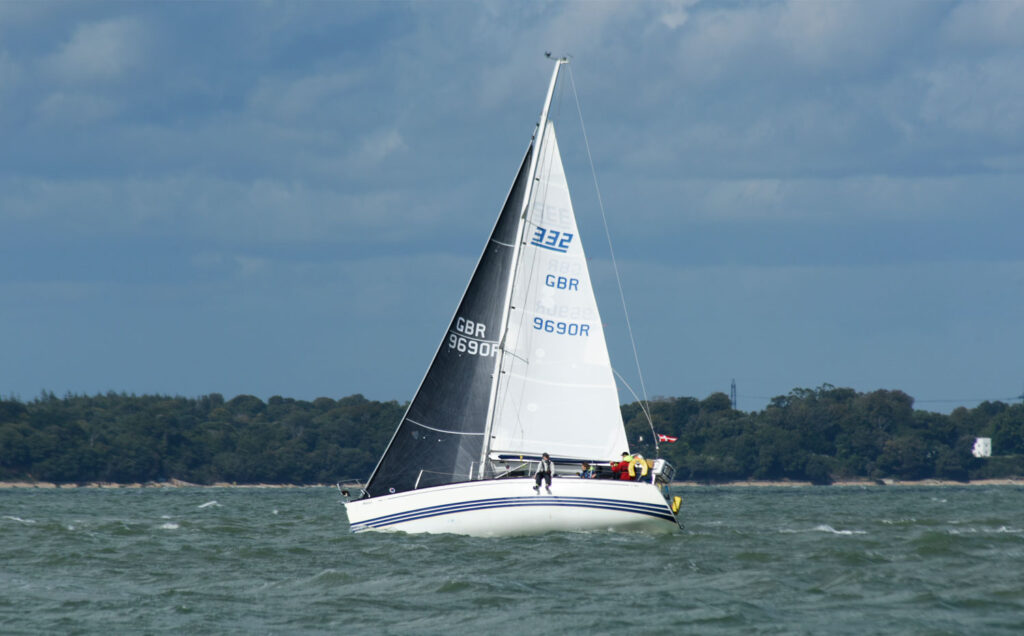
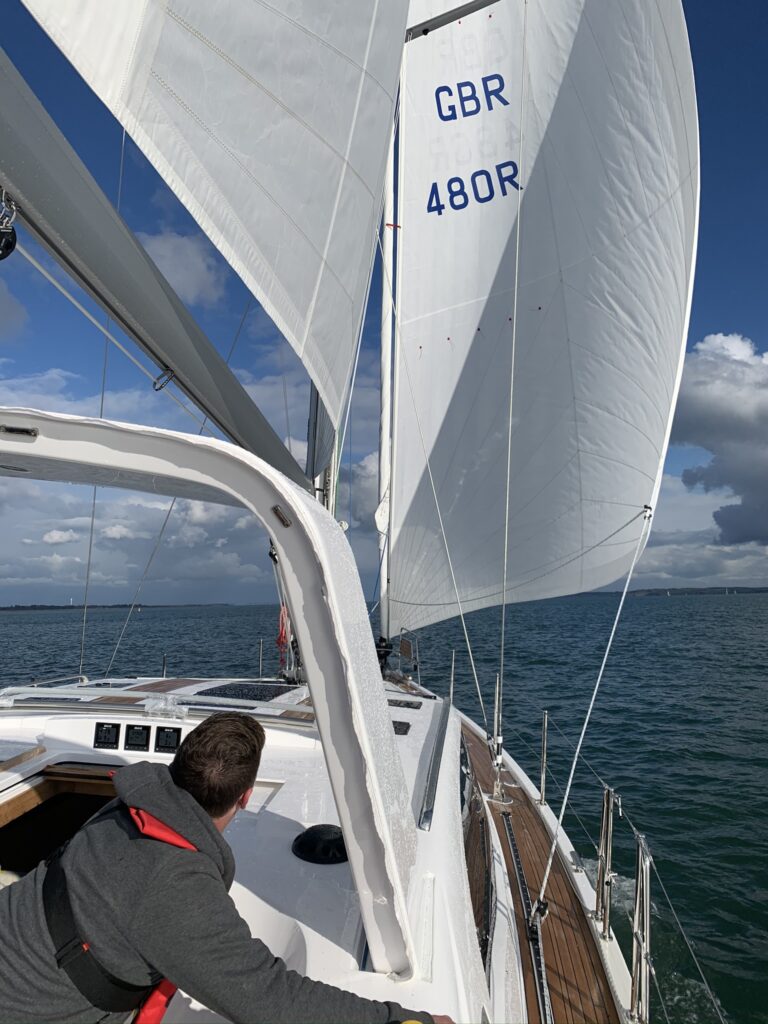
Windward vs Leeward Tell-tales
Most headsails use pairs of tell-tales, with one on each side of the sail.
- Windward tell-tale (the side facing the wind)
- Leeward tell-tale (the sheltered side)
Each tells you something slightly different.
Windward tell-tale
This is your early-warning system. If it lifts or flicks upward, the sail is being sailed too close to the wind and airflow is starting to separate.
Leeward tell-tale
This confirms whether the sail is trimmed correctly. If it stalls or hangs limp, the sail is under-trimmed or the boat is sailing too low.
What ‘Good’ Looks Like
As a baseline:
- Both tell-tales streaming aft
→ Clean airflow, efficient trim - Windward tell-tale lifting first
→ You’re sailing close to the limit (often ideal upwind) - Leeward telltale lifting or drooping
→ Ease sheet or head up slightly - Both tell-tales misbehaving
→ Sail shape or angle needs adjustment
Upwind: it is normal and often desirable for the windward tell-tale to lift occasionally, while the leeward tell-tale continues to stream.
Using Tell-tales to Steer
Tell-tales aren’t just trimming tools, but are great steering guides too.
Once the sail is trimmed correctly:
- If the windward tell-tale lifts, bear away slightly
- If the leeward tell-tale stalls, head up slightly
In light air or waves, sailing ‘to the tell-tales’ helps maintain speed and momentum far better than chasing pointing angle alone.
Reading the Whole Sail
One pair of tell-tales only shows airflow at one height. That is why we recommend multiple sets, evenly spaced from low to high on the luff.
This allows you to see:
- Whether the sail is twisting correctly
- If the lead position is balanced
- Whether the top or bottom of the sail is working harder
A well-set headsail will show similar behaviour across all heights, with subtle differences rather than extremes.
When Tell-tales Stop Telling the Truth
Tell-tales are most useful when the sail is acting like a wing – typically from close-hauled to beam reach.
As you sail deeper downwind:
- Airflow becomes less organised
- The sail is catching wind rather than shaping it
- Tell-tales become less reliable
At that point, focus shifts to sail shape, projected area, and balance rather than telltale flow.
A Note on Practice
No two boats, or sails behave the same. Hull shape, rig geometry, sail design, and sea state all influence what ‘perfect’ looks like. The real skill lies in learning how your sails behave:
- In light air versus pressure
- In flat water versus waves
- As sails age and stretch
Tell-tales accelerate this learning process. The more you watch them, the quicker your instincts develop.
The Sanders Approach
At Sanders, we design sails so tell-tales give clear, honest feedback rather than mixed signals. When sail shape, entry and twist are well balanced, tell-tales tend to behave more consistently and are easier to interpret across a wide range of conditions. If tell-tales seem to be constantly at odds with each other, it is often a helpful cue that something else; be it sail setup, trim, or occasionally the sail itself is worth taking a closer look at.